
In a world grappling with the environmental and economic toll of modern agriculture, a new bibliometric analysis published in the *Journal of Agriculture and Environment for International Development* offers a compelling look at the rise of agroecology as a transformative force in the industry. The study, led by Merve Mürüvvet Dağ of Isparta University of Applied Sciences in Türkiye, scrutinizes over 1,900 research papers spanning three decades to reveal the growing influence of agroecological practices in shaping a more sustainable future for agriculture.
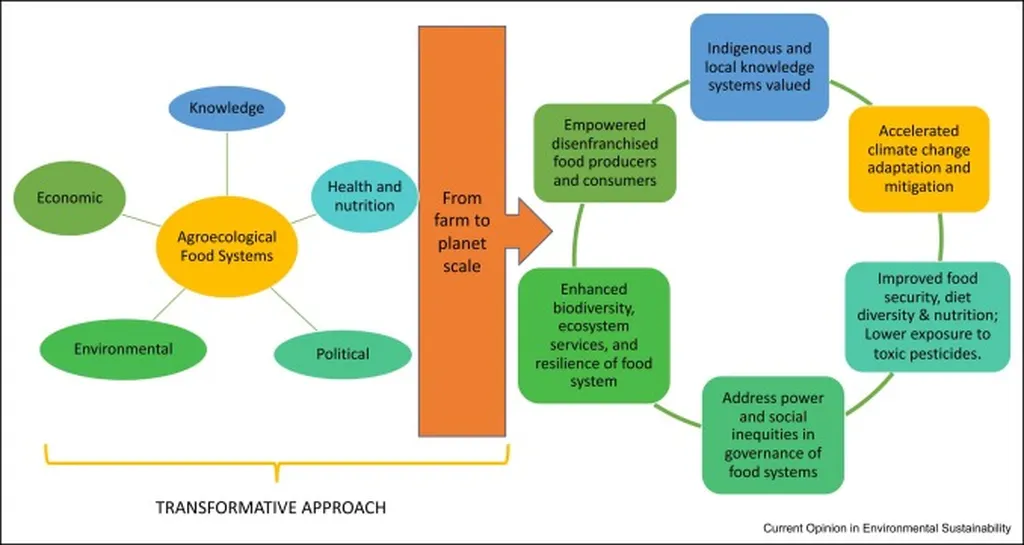
Agroecology, a holistic approach that integrates ecological principles into farming practices, has gained traction as a viable alternative to conventional agriculture. The study highlights how this field is not just an academic pursuit but a burgeoning movement with real-world implications. “Agroecology is more than just a set of practices; it’s a paradigm shift that could redefine how we produce food globally,” says Dağ, emphasizing the potential for agroecology to address critical challenges like environmental degradation and food insecurity.
The bibliometric analysis, which used the Web of Science database and the Bibliometrix package in R, identified key trends and influential figures in agroecology research. Researchers like Alexander Wezel, Miguel A Altieri, and Stephane Bellon have been pivotal in advancing the field, with their work receiving widespread recognition. The study also pinpointed leading countries—such as the United States, France, and Brazil—and institutions, including Montpellier University, Vermont University, and the University of California, Berkeley, as hubs of innovation in agroecological research.
One of the most striking findings is the rapid growth in research and application of agroecological practices. This surge suggests a growing consensus that agroecology could play a crucial role in making agriculture more sustainable, equitable, and environmentally friendly. “The commercial impact of this shift could be profound,” Dağ notes. “Farmers adopting agroecological practices may see long-term cost savings, reduced dependency on chemical inputs, and improved resilience to climate change.”
The study also underscores the interdisciplinary nature of agroecology, encompassing ecological, economic, and agricultural dimensions. This holistic approach could pave the way for new collaborations between researchers, policymakers, and farmers, fostering innovations that align economic viability with environmental stewardship.
As the agriculture sector faces increasing pressure to adapt to climate change and meet global food demands sustainably, agroecology emerges as a promising path forward. The findings of this bibliometric analysis not only highlight the current state of agroecological research but also offer a roadmap for future developments. By embracing agroecological practices, the agriculture industry could unlock new opportunities for growth, sustainability, and resilience in an ever-changing world.