
The global agricultural sector is undergoing a dramatic transformation, driven by a suite of breakthrough technologies that are making farming smarter and more resilient. From artificial intelligence (AI) and the Internet of Things (IoT) to drones and robotics, these innovations are addressing some of the most pressing challenges in modern agriculture, including labor shortages, unpredictable weather patterns, and the need to produce more with fewer resources.
AI is at the forefront of this agricultural revolution, enabling farmers to make sense of vast amounts of data. Traditional farming methods often relied on experience and educated guesses, but AI-powered tools now offer predictive insights that can forecast problems before they become visible. These tools are used for disease detection, pest prediction, yield estimation, and precision spraying. For instance, AI-enabled machines can detect the early symptoms of crop stress, nutrient deficiencies, or pest attacks through smartphones, drones, or satellites. This proactive approach allows farmers to address issues at their onset, rather than reacting after the damage is done.
The benefits of AI in agriculture are tangible. AI-powered tools enable sound decision-making by navigating layers of data that would be impossible for humans to analyze quickly. This leads to more efficient use of resources, as fertilizers, pesticides, and water are applied only where needed. Real-world applications of AI in agriculture include IBM Watson for Agriculture, which assists farmers in analyzing weather reports, soil conditions, and crop monitoring to enhance planning and risk management. Similarly, Plantix allows farmers to identify plant diseases by sending photos of their crops from their mobile phones, making advanced crop intelligence accessible even in remote areas.
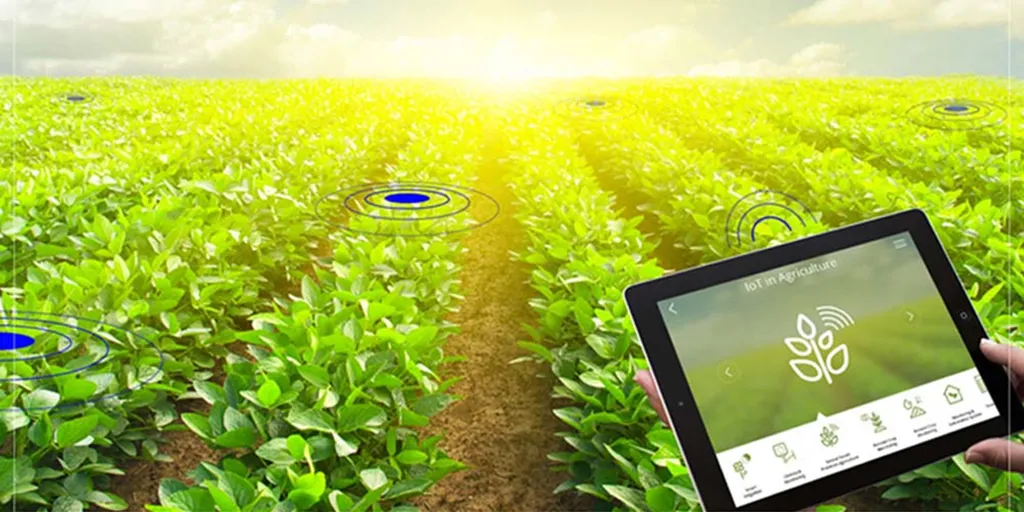
The Internet of Things (IoT) is another critical technology transforming agriculture. IoT devices, such as smart sensors embedded in fields, irrigation systems, storage units, and animal housing, collect and transmit real-time data on soil moisture, temperature, humidity, weather conditions, and livestock movement. This data is accessible through dashboards or mobile apps, allowing farmers to monitor conditions without being physically present. For example, Netafim implements sensor-guided drip irrigation, automating water supply based on plant requirements. IoT applications also extend to livestock management, where wearables monitor animal health and optimize drug usage and timing.
Agri e-commerce has become a significant technological force, enabling farmers to purchase seeds, fertilizers, tools, and equipment directly from verified suppliers through trusted online marketplaces. These platforms also allow farmers to sell their produce directly to buyers, processors, or retailers, removing multiple layers of intermediaries and increasing transparency. The adoption of digital payments, credit facilities, and input financing has further reduced operational challenges, particularly for small and marginal farmers. Recent data shows that global adoption of agri e-commerce platforms reached 45% among smallholder farmers in 2025, up from 28% in 2023, driven by mobile apps in regions like India and sub-Saharan Africa. In the U.S., platforms facilitated $15 billion in direct farm-to-buyer transactions last year, reducing intermediary costs by 20-30% on average.
Robotics and automation are addressing labor shortages by handling repetitive, time-consuming, and physically demanding tasks with speed and accuracy. Farm robots include autonomous tractors, robotic milking systems, automated harvesters, and robotic weeders, equipped with sensors, cameras, and AI to perform tasks with minimal human intervention. Automation enhances efficiency, reduces reliance on seasonal labor, and achieves precision operations at lower costs in the long run. This makes large-scale farming more scalable and shared automation services more attainable for small farms.
Drones have revolutionized agriculture by providing tools for monitoring, mapping, and spraying over vast areas. Imaging drones collect detailed images that reveal crop health, water shortages, nutrient imbalances, and pest infestations. Spraying drones apply pesticides and fertilizers in a targeted manner, reducing chemical exposure and waste. The use of drones allows for quick coverage of large fields, reduces labor needs, and enables early detection of problems, leading to higher yields and lower losses.
The future of smart farming lies in deeper integration of technologies such as gene editing, vertical farming, AI, demand-driven marketplaces, edge computing, and 5G connectivity. Farms will operate as interconnected ecosystems, with information easily accessible to input suppliers, growers, processors, and markets. International bodies like the FAO, USDA, CGIAR, and the World Bank are committed to the global digital transformation of agriculture. As technology becomes cheaper and more mobile-friendly, smallholder farmers will also benefit from these advancements. Farmers in countries such as India, Brazil, Israel, and the Netherlands are already part of the global smart farming movement. Smart farming is no longer about the future; it is about building resilient, profitable, and sustainable farms today.