
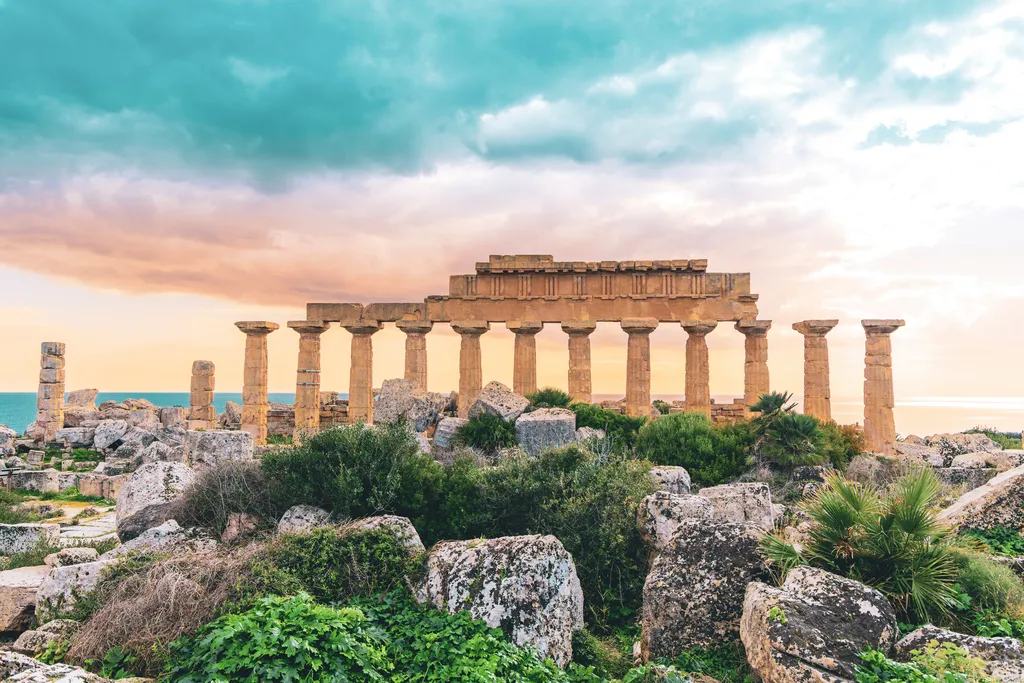
In the heart of Sicily, an ancient Greek colony is revealing secrets that could reshape our understanding of early urban planning and its impact on agriculture. Megara Hyblaia, founded in the 8th century BC, offers a unique glimpse into the resourcefulness of early communities. A recent study published in *Open Research Europe* delves into the colony’s formative years, specifically the early 7th century BC, to assess the feasibility of two monumental construction projects: the city’s first fortification and residential expansion.
The study, led by Eleonora Delpozzo from the Department of Humanities at Ca’ Foscari University of Venice, employs a blend of archaeological evidence, 3D modelling, Building Information Modelling (BIM), and architectural energetics to estimate the labour and time required for these projects. The findings suggest that the second-generation population of Megara Hyblaia could have accomplished both tasks within a year, without disrupting essential agricultural activities.
Delpozzo explains, “By estimating the construction time and labour requirements, we can better understand the community’s capacity and resource allocation.” The study estimates that building the agger-wall, a defensive structure, required approximately 11,478 person-days, while constructing a typical house on plot 113W4 took between 187 and 196 person-days.
These insights are not just historical curiosities; they have significant implications for the agriculture sector. Understanding how ancient communities balanced construction and agriculture can inform modern practices in land use and resource management. “The study highlights the importance of sustainable urban planning and the need to integrate agricultural activities into the broader economic and social fabric,” Delpozzo notes.
The research also underscores the potential of BIM tools in reconstructing ancient architecture and informing digital heritage research. While BIM offers promising avenues for future studies, the article acknowledges its limitations, particularly in the context of ancient construction techniques and materials.
As we look to the future, this study paves the way for further exploration into the intersection of urban development and agriculture. It challenges us to reconsider how ancient communities managed their resources and how these lessons can be applied to modern challenges. The findings from Megara Hyblaia serve as a reminder that the past holds valuable insights for the present and future, particularly in the realm of sustainable development and agricultural innovation.
For those interested in the technical details, the study is available in *Open Research Europe*, with Eleonora Delpozzo leading the research from the Department of Humanities at Ca’ Foscari University of Venice. This interdisciplinary approach not only enriches our understanding of ancient history but also offers practical insights for contemporary agricultural and urban planning.