
China’s vast countryside is undergoing a dynamic transformation, marked by technological innovations and a renewed focus on rural revitalization as the country concludes its 14th Five-Year Plan period (2021-2025). The past five years have seen significant strides in agricultural modernization, with grain production reaching new heights and rural communities becoming more livable.
A drone photo captured the essence of this transformation on June 4, 2025, in Pantang Village of Lizhuang Town, Shangqiu City, central China’s Henan Province. The image showcased harvesters reaping wheat, a testament to the technological advancements reshaping agriculture. Smart agriculture is flourishing across China, with AI, low-altitude technology, and information technology being progressively integrated into farming and grain processing.
The integration of technology into agriculture is evident in various forms. At Youyi Farm Co., Ltd. under Beidahuang Group in Shuangyashan City, northeast China’s Heilongjiang Province, a staff member maintains the autonomous seeding intelligent system. In Chongqing Municipality, a technician checks the growth of seedlings at an intelligent seedling nursery base. Aerial drone photos reveal smart glass greenhouses in Fuyuan City and a potato seeding machine equipped with the Beidou navigation system in Shandong Province.
Farmers are also leveraging drones for fertilizing fields and self-propelled irrigation machines for watering crops. These technological advancements are not only enhancing productivity but also ensuring food security and laying the groundwork for rural revitalization.
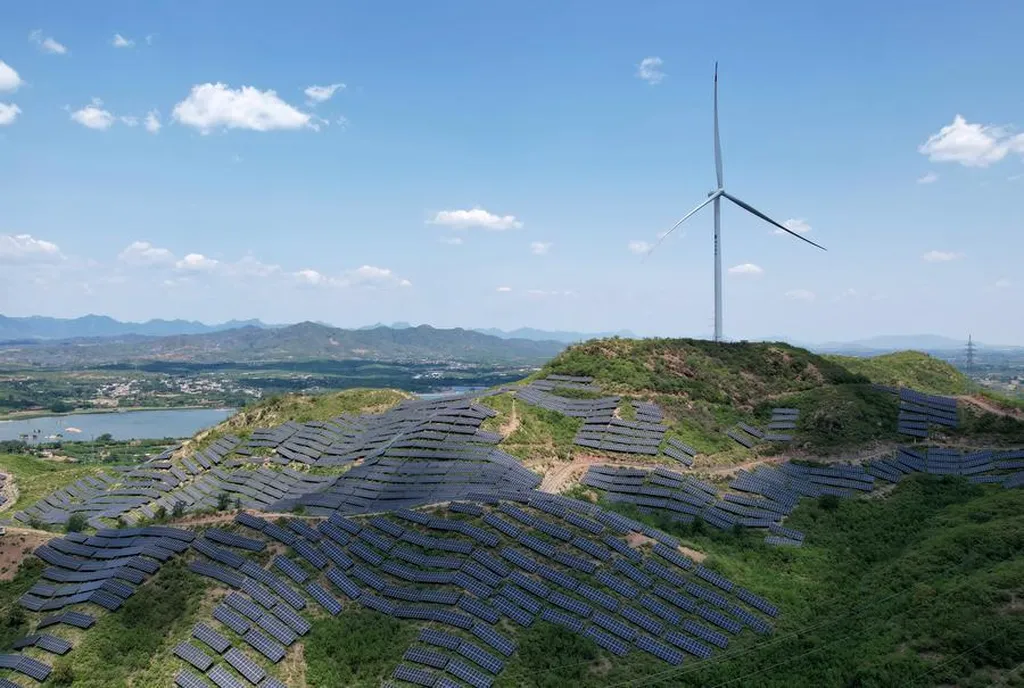
The wave of technological empowerment is also sweeping through rural life, narrowing the urban-rural gap and bringing common prosperity to rural residents. High-speed trains now pass through villages, and wind-solar hybrid power plants are being established near rural communities. Rooftop photovoltaic power projects and integrated photovoltaic charging and storage stations are becoming common sights, providing sustainable energy solutions.
Education and healthcare are also benefiting from technological advancements. Digital classrooms equipped with smart blackboards are enhancing the learning experience for students in rural areas. “Smart mobile clinics” are bringing essential healthcare services to local villagers, ensuring better access to medical care.
The improvements in rural infrastructure and the favorable ecological environment, slower pace of life, and lower living costs are attracting a growing number of highly educated “new farmers” back to the countryside. These individuals are reshaping Chinese agriculture by applying technology and business expertise to fields once dominated by manual labor.
Zhang Guihua, Party secretary of Sunzigou Village, promotes oranges via live-streaming, incorporating family farming cooperatives and e-commerce to boost rural development. Wu Guangrong, a forestry vocational school graduate, has transformed a barren mountain into an ecological park, providing jobs for local villagers. Han Fengxiang, a returned resident of Lishu County, is leveraging mechanized farming and live streaming to enhance grain output and rural revitalization.
The story of He Xiaozhen and Xiao Shenglan in Ningxiang City highlights the potential of social media platforms in promoting agricultural products. Dai Shuying, an 82-year-old villager, uses drones for farm work and promotes agricultural products through live streaming, showcasing the intergenerational impact of technological empowerment.
As China enters the next five-year development period, the dynamic transformations unfolding across its vast countryside promise a future of vibrant, prosperous, and technologically advanced rural communities.