
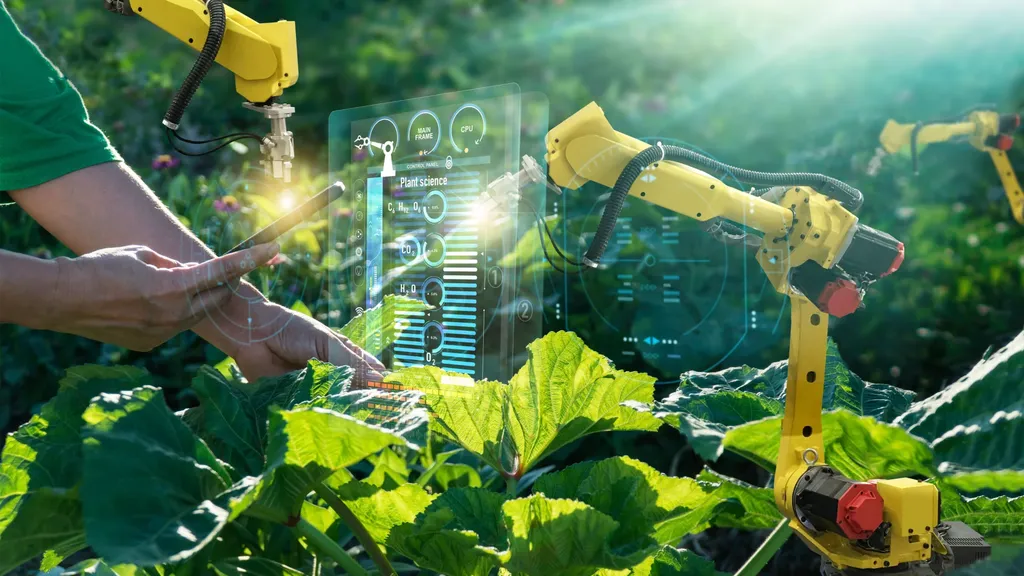
In the heart of Indonesia’s agricultural landscape, a technological revolution is brewing, one that promises to transform the way farmers choose their crops. Researchers from Universitas Muhammadiyah Pontianak have developed a novel system that leverages machine learning to classify crops based on soil and climate parameters, potentially boosting efficiency and productivity in the sector.
The study, published in *Jurnal Tekno Insentif*, focuses on two machine learning algorithms: Naïve Bayes and Decision Tree. These algorithms were trained on data obtained from Kaggle, including key parameters like nitrogen, phosphorus, potassium, temperature, humidity, soil pH, and rainfall. The goal? To create a robust system that can recommend the most suitable crops for a given set of environmental conditions.
The research process followed the six stages of the Cross-Industry Standard Process for Data Mining (CRISP-DM), ensuring a structured and thorough approach. The evaluation was conducted using a Confusion Matrix and Cross-Validation, with metrics such as accuracy, precision, recall, and F1-score.
The results were intriguing. The Decision Tree algorithm achieved an impressive 97.95% accuracy on training data, but this figure dropped to 91.57% on testing data. In contrast, Naïve Bayes demonstrated more stability, with an accuracy range of 95.25% to 95.32%. This consistency makes Naïve Bayes the recommended choice for practical applications.
“The difference in performance between the two algorithms can be attributed to the complexity of the Decision Tree structure, which makes it more prone to overfitting,” explained lead author Roni Roni. “On the other hand, Naïve Bayes, being a probabilistic model, is more stable against data variations.”
The commercial implications of this research are significant. In a sector that has traditionally relied on less efficient, traditional practices, the ability to make data-driven decisions could be a game-changer. Farmers could optimize their crop selection based on precise, data-backed recommendations, potentially increasing yields and reducing waste.
Moreover, this research could pave the way for future developments in the field. As Roni Roni noted, “This is just the beginning. With further refinement and integration with other technologies like IoT and remote sensing, we could create even more powerful tools for farmers.”
The study not only highlights the potential of machine learning in agriculture but also underscores the importance of data-driven decision-making in the sector. As the world grapples with the challenges of climate change and food security, such innovations could play a crucial role in shaping the future of agriculture.