
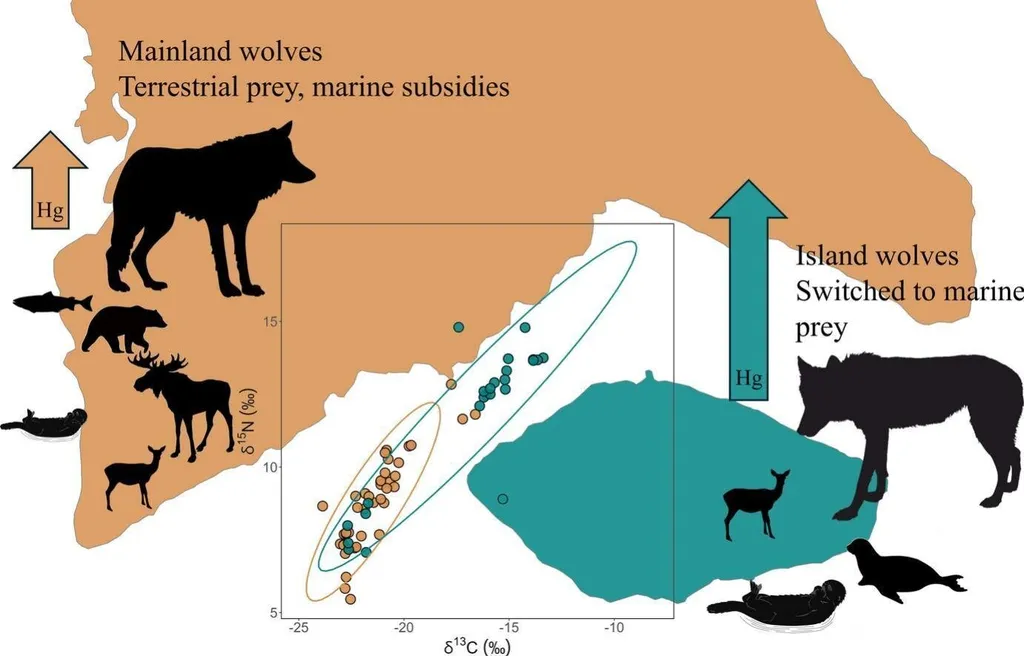
The recent discovery of high mercury levels in Alaska’s Alexander Archipelago wolves, particularly those residing on Pleasant Island, has significant implications for the agriculture sector and investors. The wolves’ adaptation to a diet heavy in sea otters, which accumulate mercury over their lifetimes, highlights a broader environmental issue that could impact various sectors, including agriculture and investment.
Mercury contamination in wildlife can have far-reaching consequences. As glaciers melt due to climate change, they release mercury trapped in the ice or scoured from the bedrock, which then enters the marine food chain. This process can lead to elevated mercury levels in marine mammals, such as sea otters, and subsequently in predators that feed on them. The situation on Pleasant Island serves as a red flag for similar potential issues in other regions where wildlife relies on marine food sources.
For the agriculture sector, the implications are multifaceted. Farmers and agricultural businesses operating in coastal regions may need to be vigilant about potential mercury contamination in soil and water systems. Mercury can enter agricultural lands through runoff from melting glaciers and coastal erosion, potentially affecting crop yields and livestock health. This contamination could lead to increased costs for monitoring and remediation, as well as potential losses in productivity and market access if contaminated products are identified.
Investors in agriculture and related industries should also take note. The discovery underscores the need for sustainable and resilient agricultural practices that can withstand environmental challenges. Investments in technologies and practices that reduce vulnerability to pollution and climate change impacts could become increasingly important. This includes supporting research into mercury sources and their pathways into agricultural systems, as well as developing strategies to mitigate contamination risks.
Furthermore, the situation highlights the importance of biodiversity and ecosystem health. Healthy and diverse ecosystems are more resilient to environmental changes and can better support agricultural productivity. Investors may consider supporting initiatives that promote biodiversity conservation and sustainable land management practices.
The broader implications of mercury contamination in wildlife also extend to food safety and public health. Elevated mercury levels in marine mammals can enter the human food chain through seafood consumption, posing health risks to consumers. This could lead to regulatory changes and increased scrutiny of seafood products, affecting markets and supply chains.
In summary, the discovery of high mercury levels in Alaska’s wolves due to their diet of sea otters serves as a cautionary tale for the agriculture sector and investors. It underscores the need for vigilance and proactive measures to address environmental contamination and its potential impacts on food production, market stability, and public health. By investing in sustainable practices and supporting ecosystem resilience, the agriculture sector and investors can better navigate the challenges posed by a changing environment.