
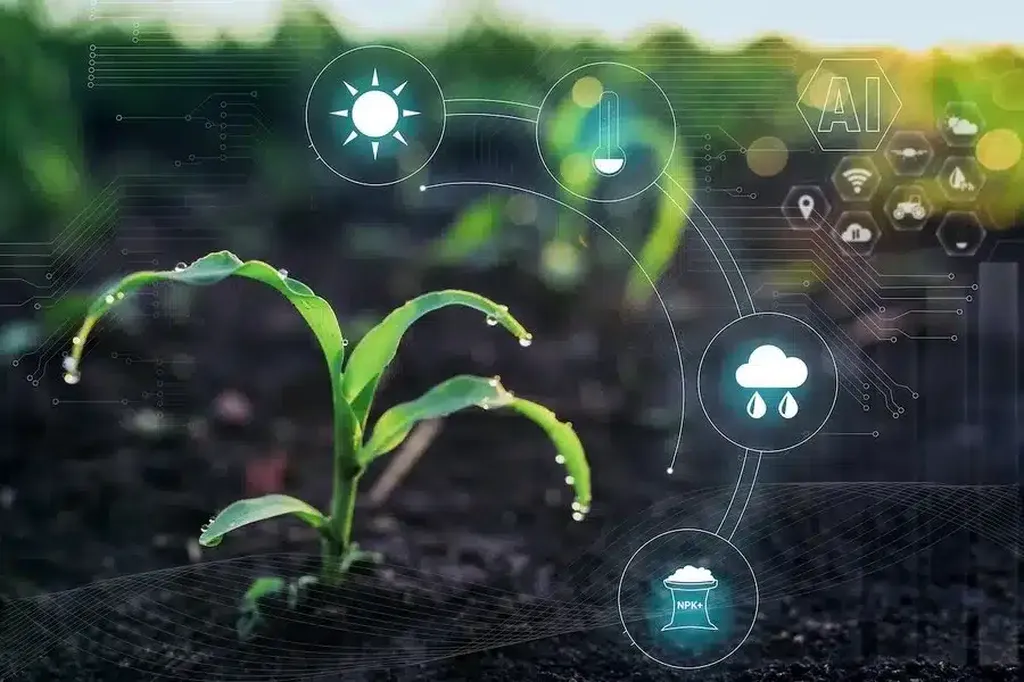
A pioneering initiative at Penn State University is set to train a select group of experts to become ambassadors for artificial intelligence in agriculture. This program aims to equip researchers with the knowledge to leverage AI for enhancing crop growth in varying conditions, with a particular focus on sharing these insights globally. The project, led by associate professor Long He, promises a comprehensive training regimen that includes research, mentorship, career planning, and public speaking, ultimately positioning these doctoral fellows as leaders in AI-driven agricultural advancements and climate change adaptation.
The project, funded by over $738,000 from government and university sources, brings together a multidisciplinary team of experts. The goal is to apply AI and precision tools to address real-world problems in tree fruit farming. “These students will learn how to apply AI and precision tools to solve real problems in tree fruit farming,” He said in the release. This initiative underscores the potential of AI to expedite solutions for diseases, pests, and other tree ailments exacerbated by climate change. NASA has linked Earth’s warming to air pollution, largely driven by the burning of dirty fuels.
However, the rapid adoption of AI comes with its own set of challenges. AI data centers are notorious for their high electricity consumption, which ironically increases demand from fossil-fueled power grids. These centers also require substantial amounts of water for cooling—up to 5 million gallons daily—enough to serve a town of up to 50,000 people, according to the Environmental and Energy Study Institute. Noman Bashir, a fellow and postdoctoral student at the Massachusetts Institute of Technology, highlighted the environmental impact, stating, “Just because this is called ‘cloud computing’ doesn’t mean the hardware lives in the cloud. Data centers are present in our physical world, and because of their water usage, they have direct and indirect implications for biodiversity.”
Despite these concerns, the potential benefits of AI in agriculture are significant. Fast computing can accelerate advancements in various fields, including genetics. At the University of Maryland, experts have modified apple genes to create varieties resilient to intensifying heat waves. Similarly, researchers worldwide are exploring genetic solutions to help crops survive extreme weather conditions. AI processing can support these efforts, and its power demand can be mitigated by cleaner energy sources. Companies like Meta are already investing in renewable electricity to power data centers, and solar energy can be harnessed at home to charge devices, further reducing reliance on fossil fuels.
The Penn State program also aims to foster collaboration between academia, industry, and farmers. “Our hope is that the doctoral students trained in our program emerge as scientists ready to lead innovation in climate-smart agriculture,” He said. This initiative not only promises to advance agricultural practices but also to prepare the next generation of leaders to tackle the challenges posed by climate change through innovative technological solutions.