
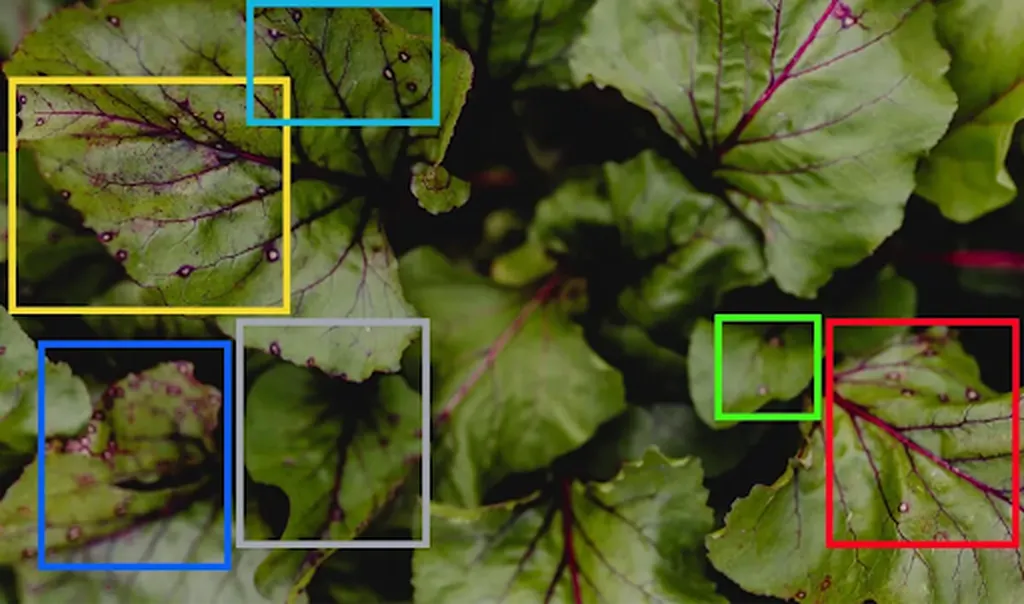
In the face of escalating threats to global food security, a groundbreaking systematic review published in *Maǧallaẗ al-baṣraẗ al-ʻulūm al-zirāʻiyyaẗ* sheds light on the transformative potential of artificial intelligence (AI) in revolutionizing crop disease and pest management. Led by Hajar Hamdaoui from Mohammed First University’s Improvement of Agricultural Production, Biotechnology, and Environment Laboratory in Oujda, Morocco, the study meticulously examines how Convolutional Neural Networks (CNNs) are reshaping the agricultural landscape.
The research underscores a critical shift in the industry, where traditional methods of pest and disease detection—often labor-intensive and environmentally taxing—are being outpaced by AI-driven solutions. By analyzing 100 studies published between 2019 and 2025, Hamdaoui and her team reveal that CNN-based models consistently achieve accuracy rates exceeding 95%, a stark improvement over conventional approaches. “These AI-based approaches outperform traditional visual and manual inspection methods in terms of speed, precision, and scalability,” Hamdaoui notes, highlighting the technology’s potential to redefine agricultural practices.
The implications for the agriculture sector are profound. As climate change intensifies the challenges faced by farmers, the need for efficient, scalable, and sustainable solutions has never been greater. The integration of CNNs with IoT and edge computing platforms promises real-time, field-deployable applications, enabling farmers to detect and manage crop threats with unprecedented accuracy and speed. This could lead to significant reductions in crop losses, improved yields, and a more resilient food supply chain.
However, the path to widespread adoption is not without its hurdles. The study identifies key challenges, including data availability, computational requirements, and the need for robust deployment in resource-constrained environments. Addressing these issues will be crucial for unlocking the full potential of AI in agriculture.
As the agriculture sector grapples with the dual pressures of climate change and increasing demand, the findings of this systematic review offer a beacon of hope. By harnessing the power of AI, farmers and agribusinesses can look forward to a future where crop protection is not only more efficient but also more sustainable. The research not only highlights the current capabilities of CNN-based technologies but also sets the stage for future innovations that could further revolutionize the field. As Hamdaoui and her team continue to push the boundaries of what’s possible, the agriculture sector stands on the brink of a new era—one where technology and sustainability go hand in hand.