
In the quest for sustainable agriculture, researchers are continually exploring innovative methods to enhance soil quality and crop yield. A recent study published in *Scientific Reports* sheds light on a promising approach: the incorporation of bone char with sulfur or humic acid to boost phosphorus availability and spinach growth in calcareous sandy soil. Led by Abdallah M. Barakat of the Soils and Water Department at Assiut University, this research offers insights that could significantly impact agricultural practices.
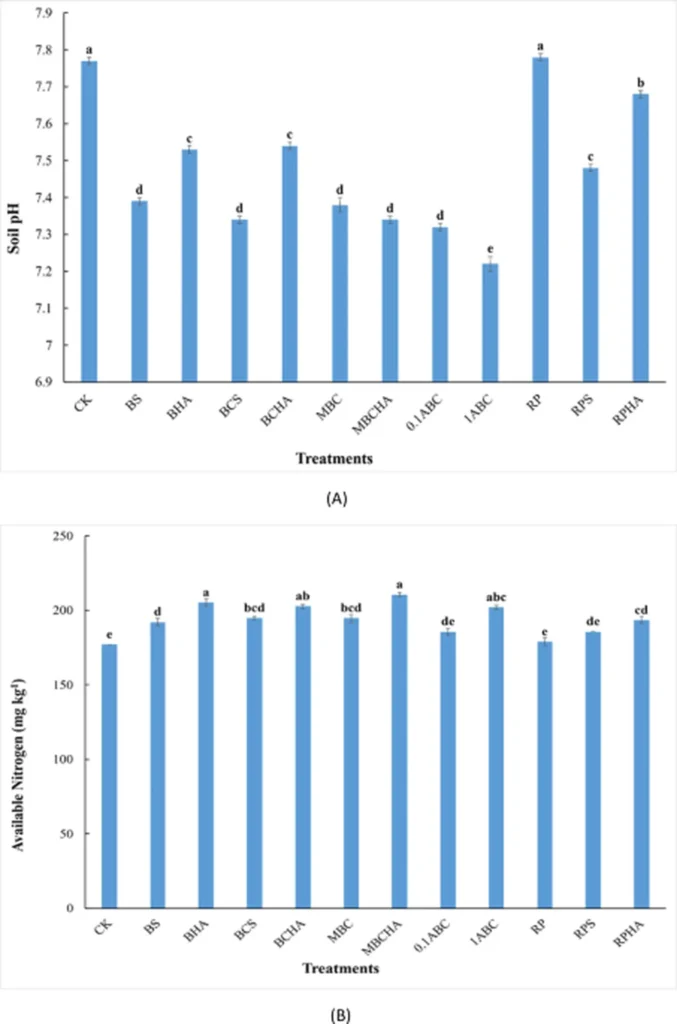
The study, conducted as a pot experiment, evaluated twelve different treatments, including combinations of bone char (BC), modified bone char by sulfur (MBC), sulfur (S), humic acid (HA), and rock phosphate (RP). The findings revealed that all treatments significantly increased soil phosphorus availability, with the most effective being MBC combined with humic acid (MBCHA). “The effectiveness of the treatments in this study on the available phosphorus improvement was in the order of MBCHA > MBC > BCHA > BCS > 1ABC > BHA > BS > 0.1ABC > RPS > RPHA > RP > control,” Barakat explained.
The research also demonstrated that treatments like bone char with humic acid (BHA), bone char with sulfur (BCS), bone char with humic acid (BCHA), MBC, MBCHA, acidified BC with 1 N H2SO4 (1ABC), rock phosphate with sulfur (RPS), and rock phosphate with humic acid (RPHA) significantly enhanced the fresh shoot weight of spinach. The order of effectiveness for improving the fresh weight of spinach was BCHA > BHA ≈ BCS > RPS > MBCHA > MBC > RPHA > 1ABC > control > RP > BS > 0.1ABC.
The implications for the agriculture sector are substantial. “Co-applying bone char with sulfur is optimal for enhancing soil quality indicators and improving fresh and dry shoots of spinach,” Barakat noted. This method not only improves crop yield but also offers a cost-effective solution, making it preferable to add sulfur with bone char rather than humic acid.
The study’s findings could pave the way for more sustainable and efficient agricultural practices. By leveraging bone char and sulfur, farmers can enhance soil fertility and crop productivity, ultimately contributing to food security and economic growth. As the agricultural industry continues to seek innovative solutions, this research provides a valuable blueprint for future developments in soil management and crop cultivation.
In an era where sustainable agriculture is more critical than ever, this study offers a beacon of hope and a practical approach to addressing some of the sector’s most pressing challenges.