
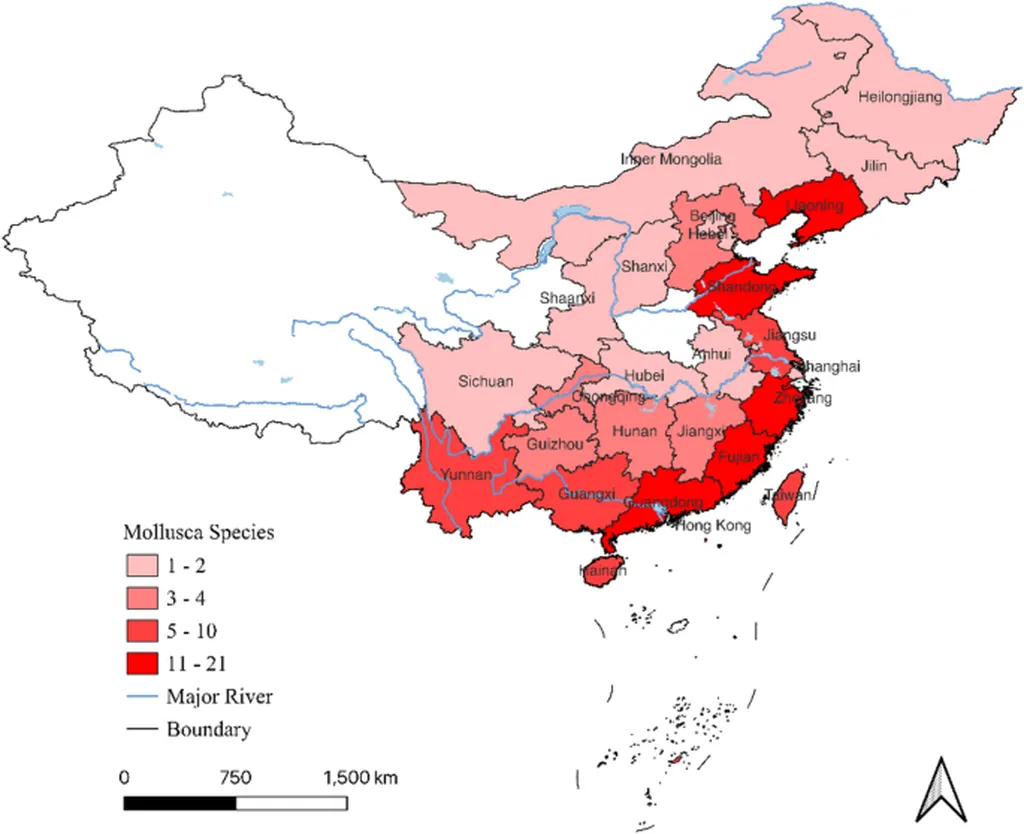
In the vast and intricate web of China’s ecosystems, a silent invasion is underway, one that is reshaping biodiversity and posing significant challenges to the agriculture sector. A recent study published in *Scientific Reports* sheds light on the ecological impacts and management challenges of non-native molluscs in China, offering a comprehensive look at the issue and pointing the way forward.
The research, led by Wen Xiong of the College of Life Sciences at Hubei Normal University, reveals that a staggering 61 non-native mollusc species have found their way into China’s ecosystems. These species, hailing from 15 orders, 23 families, and 41 genera, have been introduced through various pathways, with commercial breeding being the primary route. “The rapid development in China over the past decades has been accompanied by an ongoing influx of non-native species,” Xiong explains, highlighting the complex interplay between economic growth and ecological health.
The study underscores the dual nature of these invasions. On one hand, many of these molluscs are valuable commodities in the commercial breeding sector, offering high nutritional value and economic benefits. On the other, their unintended consequences can be severe. “Some have caused significant negative impacts on environmental health, economic development, human health, and various aspects of aquatic and terrestrial ecosystems,” Xiong warns.
The economic implications for the agriculture sector are particularly noteworthy. While these molluscs can be lucrative, their invasive potential can disrupt native ecosystems, leading to decreased productivity and increased management costs. The study identifies the need for increased research and better management practices to mitigate these impacts.
The research also points to the aquarium trade as a significant pathway for unintentional introductions. This highlights the need for stricter regulations and monitoring in this sector to prevent further ecological disruptions.
As we look to the future, this study serves as a clarion call for more robust research and management strategies. It underscores the urgent need for monitoring, control, and management of non-native molluscs to protect China’s rich biodiversity and the economic sectors that depend on it.
In the words of Wen Xiong, “Increased research on the monitoring, control, and management of non-native molluscs in China is urgently needed.” This research not only illuminates the current state of affairs but also paves the way for future developments in the field, offering a roadmap for balancing economic growth with ecological sustainability.