
In the heart of California’s Monterey County, a region renowned for its agricultural productivity, a silent thief has been sapping the vitality of high-value crops. Not a pest, but a pair of weeds—annual sowthistle and little mallow—have been linked to over $150 million in crop losses, acting as vectors for the devastating Impatiens Necrotic Spot Virus (INSV). Now, a groundbreaking study published in *Scientific Reports* offers a glimmer of hope for farmers battling these invasive plants, leveraging the power of deep learning to transform weed detection and disease prevention.
At the helm of this research is Arun K. Sharma, a scientist from the Department of Biology, Agriculture, and Chemistry at California State University. Sharma and his team have curated the first high-resolution image collection of INSV-associated weeds from Monterey County, captured under greenhouse conditions that mimic the variability of real fields. This dataset fills a critical gap in global repositories, which have historically lacked representation of California’s unique agricultural landscape.
The study compares three convolutional neural networks—ResNet-50, ResNet-101, and DenseNet-121—to classify these visually similar weeds. The results are promising. ResNet-101 achieved the highest median classification accuracy at 91%, while DenseNet-121 demonstrated exceptional F1-score and AUC values exceeding 0.99. “Dataset augmentation played a pivotal role in enhancing model generalization,” Sharma explains, highlighting the importance of robust training data in improving model performance.
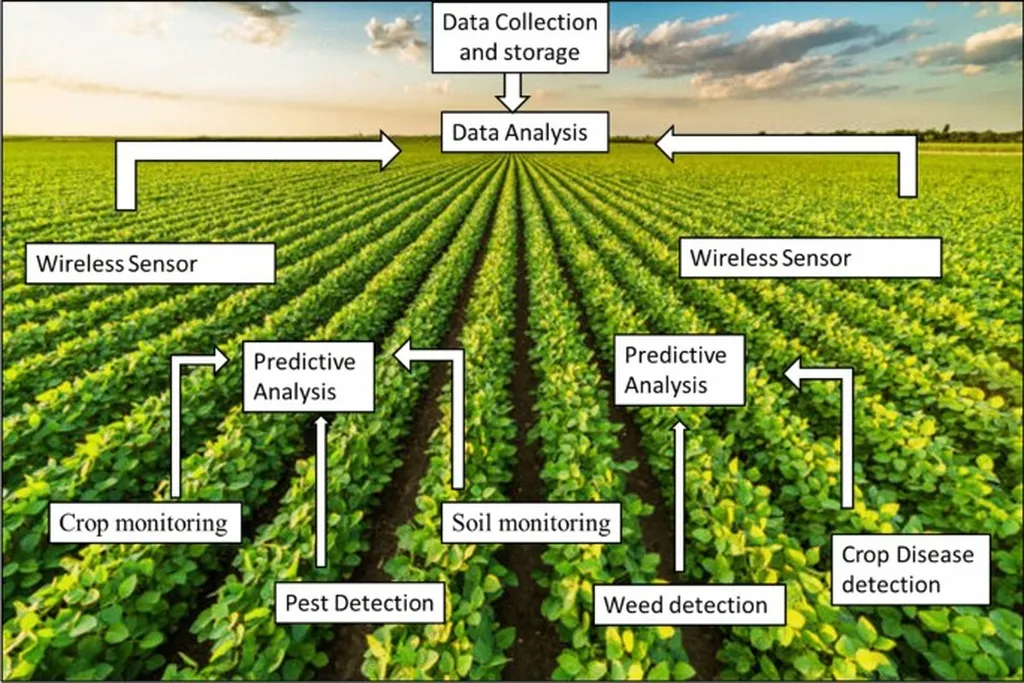
The implications for the agriculture sector are profound. Precision agriculture is becoming increasingly vital in high-value production systems, and deep learning offers a powerful tool for early weed detection. “This research paves the way for real-time detection systems,” Sharma notes, envisioning a future where farmers can implement more targeted and sustainable weed control practices. The ability to accurately identify weeds before they spread could significantly reduce crop losses and improve yields, ultimately boosting the economic resilience of farming communities.
Beyond the immediate benefits, this study underscores the potential of deep learning in shaping the future of agriculture. As technology advances, the integration of AI-driven solutions could revolutionize how farmers manage pests and diseases, leading to more efficient and sustainable farming practices. The research not only addresses a pressing agricultural challenge but also sets a precedent for future innovations in the field.
In a world where climate change and resource scarcity are increasingly threatening food security, the ability to leverage technology for precision agriculture is more critical than ever. Sharma’s work represents a significant step forward, offering a blueprint for how deep learning can be harnessed to protect crops and ensure the sustainability of our food systems. As the agriculture sector continues to evolve, the insights from this study will undoubtedly play a pivotal role in shaping the future of farming.