
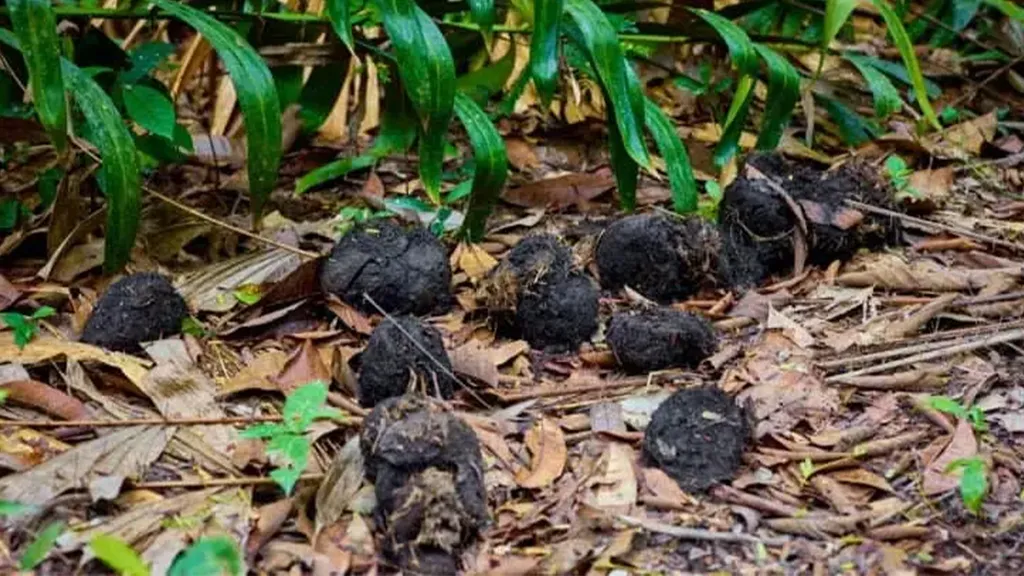
In the heart of Malawi, where the soil’s fertility is under threat and land degradation looms large, a peculiar yet promising solution has emerged from an unlikely source: elephant dung. A recent study published in *Discover Agriculture* has shed light on the potential of elephant dung as an organic fertilizer, offering a glimmer of hope for both farmers and conservationists alike.
The study, led by Chris McCarthy from the Zanvyl Krieger School of Arts & Sciences at Johns Hopkins University, provides a preliminary chemical analysis of elephant dung, comparing its nutrient content and properties with common organic and synthetic fertilizers. The findings are intriguing. Elephant dung exhibits a neutral to slightly alkaline pH, moderate electrical conductivity, and a carbon-to-nitrogen ratio suitable for slow-release soil amendment. These properties suggest that elephant dung could be a viable organic fertilizer, comparable to those already in use in Malawi.
“This study is a starting point,” McCarthy explains. “It provides a baseline for understanding the chemical properties of elephant dung. The next step is to conduct comprehensive field trials to determine its agricultural efficacy.” The potential implications for the agriculture sector are significant. If field trials confirm the benefits, elephant dung could become a valuable resource for farmers, enhancing soil fertility and promoting sustainable agriculture.
The study also highlights the potential for creating connections between conservation and agriculture. Elephants, often seen as a threat to crops and livelihoods, could become allies in the fight against soil degradation. By utilizing their dung as fertilizer, farmers might find a new way to coexist with these majestic creatures, turning a potential nuisance into a valuable asset.
The research is still in its early stages, but the findings are promising. As McCarthy notes, “This is just the beginning. We need more data, more trials, and more collaboration between scientists, farmers, and conservationists.” The path forward is clear: further research and field trials are essential to fully understand the potential of elephant dung as a fertilizer.
In the meantime, the study serves as a reminder that nature often provides solutions to our most pressing problems. By looking beyond conventional methods and exploring unconventional resources, we might find the keys to sustainable agriculture and biodiversity conservation. The journey is just beginning, but the potential is immense.