
In the quest for sustainable agricultural practices, researchers have uncovered a promising approach that could revolutionize soil amendment and waste management. A recent study published in *Sains Tanah: Journal of Soil Science and Agroclimatology* explores the synergistic effects of fly ash (FA) and plant growth-promoting bacteria (PGPB) on maize growth, offering a glimmer of hope for farmers grappling with declining soil fertility and industrial waste accumulation.
Fly ash, a by-product of coal combustion, has long been underutilized despite its rich mineral content. The study, led by Samir Gamal Al-Solaimani from the Department of Agriculture at King Abdulaziz University in Jeddah, investigates the potential of FA as a soil amendment when combined with PGPB. The findings suggest that this combination can significantly enhance maize growth and physiological performance, paving the way for more sustainable agricultural practices.
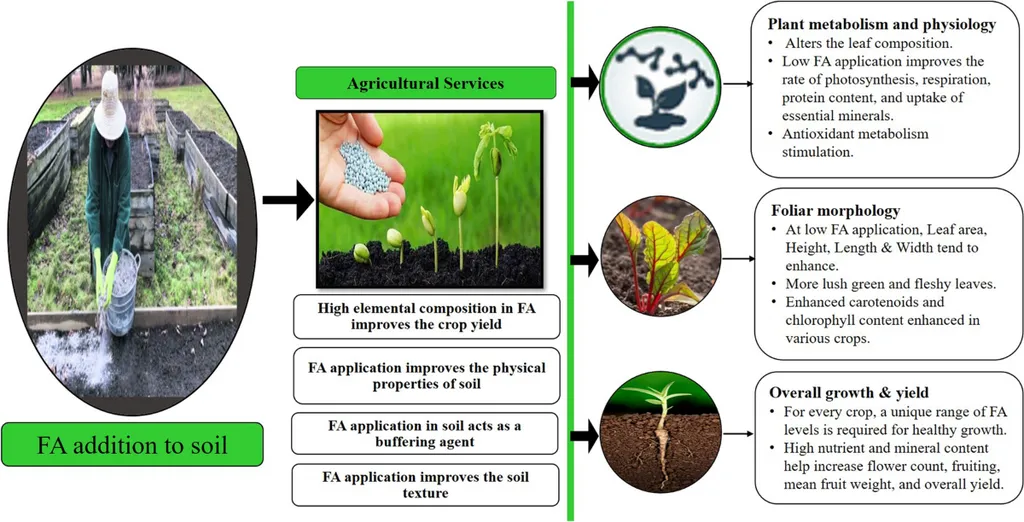
The research team applied varying doses of FA (1–4 t ha-1) to maize plants under controlled conditions, with and without the bacterial strain BSNK7. The results were striking. At a low dose of 1 t ha-1 FA combined with PGPB, the maize plants exhibited a notable increase in fresh and dry biomass, leaf area, and chlorophyll content. “The integrated use of low-dose FA and PGPB not only boosted crop productivity but also mitigated the stress induced by higher doses of FA,” Al-Solaimani explained.
However, the study also revealed the pitfalls of excessive FA application. At a high dose of 4 t ha-1 without bacterial inoculation, the maize plants experienced a significant reduction in biomass, indicating toxicity at elevated doses. This underscores the importance of optimizing FA application rates to avoid adverse effects.
The commercial implications of this research are substantial. Farmers could potentially improve soil fertility and crop yields by recycling industrial waste, thereby reducing the need for chemical fertilizers and minimizing environmental pollution. “This approach offers a sustainable solution to two pressing issues: declining soil health and unsustainable waste accumulation,” Al-Solaimani noted.
The study’s findings open up new avenues for research and development in the agritech sector. Future studies could focus on field-based trials to validate the scalability of this approach and optimize application rates for different crops and soil types. Long-term impacts on soil health and environmental safety also warrant further investigation.
As the agricultural sector continues to evolve, the integration of innovative technologies and sustainable practices will be crucial. This research highlights the potential of bacterial-assisted phytoremediation to enhance crop productivity and soil health, offering a beacon of hope for a more sustainable future.