
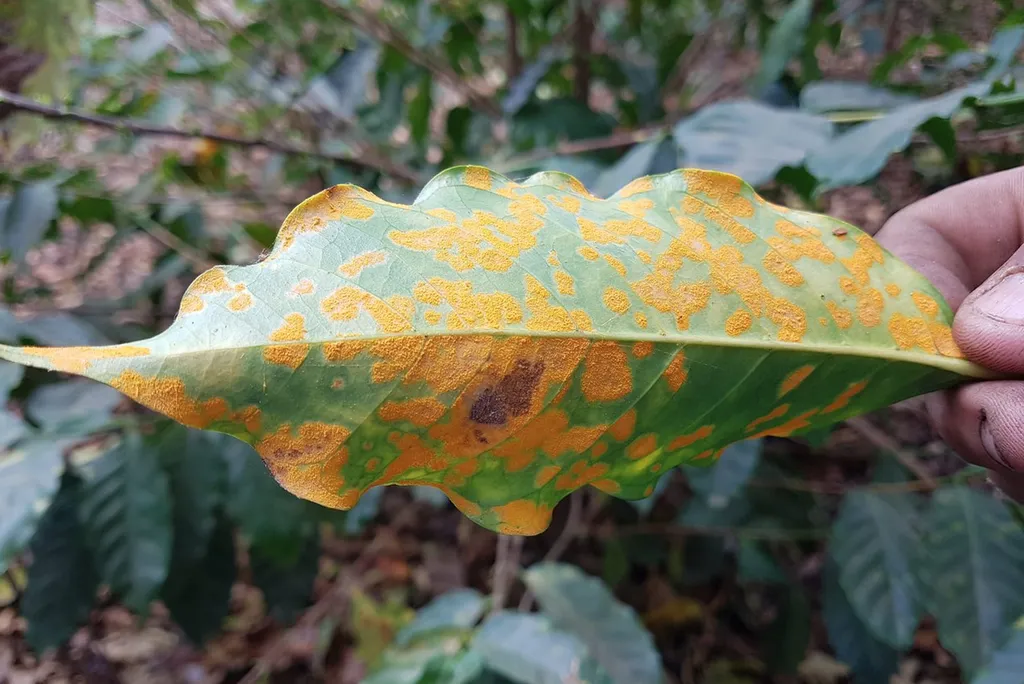
In the heart of India’s coffee country, a silent battle rages beneath the soil, one that could hold the key to combating the devastating coffee leaf rust disease. A recent study published in *Sains Tanah: Journal of Soil Science and Agroclimatology* has shed light on the intricate relationship between soil quality, microbial diversity, and the severity of this disease in Karnataka’s coffee plantations.
The research, led by Poojashree Nagappa Kummur from the Department of Botany at Karnataka University, Dharwad, delves into the often-overlooked world of soil health and its impact on coffee production. By analyzing 29 soil parameters across 29 localities in the major coffee-growing districts of Chikkamagaluru, Kodagu, and Hassan, the study offers a comprehensive look at the physico-chemical properties and microbial diversity of the soil.
The findings are compelling. The study reveals that soil fertility levels and the diverse taxa of rhizospheric microflora play a pivotal role in the health of coffee plants. Beneficial microbes such as Trichoderma sp., Bacillus sp., Penicillium sp., and Pseudomonas sp. were found in abundance, suggesting that these microorganisms could be key allies in the fight against coffee leaf rust.
“Our study indicates that understanding and managing soil microbial communities can significantly influence the severity of coffee leaf rust disease,” Kummur explains. “This knowledge can empower farmers to adopt better soil management practices, ultimately improving both the quality and quantity of coffee production.”
The commercial implications of this research are substantial. Coffee leaf rust disease has been a persistent challenge for farmers, leading to significant yield losses and economic hardship. By focusing on sustainable soil quality and disease management practices, farmers can potentially mitigate the impact of this disease and enhance their livelihoods.
The study’s use of principal component analysis and K-means clustering to classify soil analysis into four distinct clusters provides a nuanced understanding of soil health. This approach could pave the way for more targeted and effective soil management strategies in the future.
As the coffee industry continues to grapple with the challenges posed by climate change and disease, this research offers a glimmer of hope. By harnessing the power of soil microbial communities, farmers and agronomists can work towards more resilient and sustainable coffee production systems.
The study’s insights into sustainable soil quality and disease management practices are particularly timely. With the global demand for coffee showing no signs of abating, the need for innovative and sustainable agricultural practices has never been greater. This research not only highlights the importance of soil health but also underscores the potential of microbial diversity in combating plant diseases.
In the words of Kummur, “The future of coffee production lies in our ability to understand and manage the complex ecosystems beneath our feet. By doing so, we can build a more resilient and sustainable coffee industry for generations to come.”