
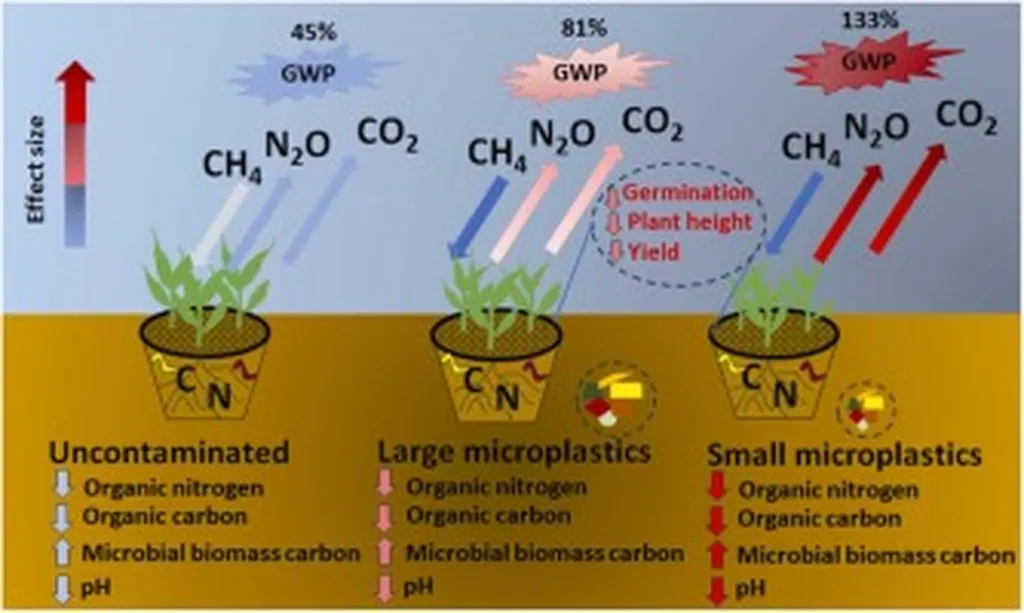
In the ever-evolving landscape of agricultural technology, a recent study published in *PLoS ONE* has shed light on the intricate dance between microplastics, heavy metals, and soil health, with significant implications for maize cultivation. Led by Asma Shabani, the research delves into the combined effects of biodegradable and non-biodegradable microplastics (MPs) and heavy metals (HMs) on maize growth in both acidic and alkaline soils, with a particular focus on the role of plant growth-promoting rhizobacteria (PGPR).
The study, which spanned 50 days, explored the interactions between two types of MPs—biodegradable polylactic acid (PLA) and non-biodegradable low-density polyethylene (LDPE)—and four heavy metals: lead (Pb), cadmium (Cd), zinc (Zn), and nickel (Ni). The findings revealed that the type of microplastic significantly influenced soil properties and maize growth.
PLA was found to increase soil pH, while LDPE had the opposite effect. Both types of MPs elevated electrical conductivity (EC) and dissolved organic carbon (DOC), but LDPE had a stronger impact on EC, and PLA on DOC. The study also highlighted that LDPE enhanced the uptake of heavy metals in maize, whereas PLA decreased it.
The soil’s pH played a crucial role in the outcomes. In alkaline soil, both types of MPs reduced plant biomass, although the reduction was not significant in PLA treatments. In contrast, in acidic soil, PLA increased shoot and root dry weights by 22.5% and 47.95%, respectively. The most significant reduction in shoot and root dry weights was observed in the 5% LDPE treatment without bacteria, with decreases of 33.4% and 42.8% in alkaline soil, and 26.8% and 21.1% in acidic soil.
The introduction of PGPR, specifically Pseudomonas fluorescens (P. fluorescens) and Azospirillum lipoferum (A. lipoferum), proved to be a game-changer. PGPR increased soil DOC, improved plant growth, mitigated the negative effects of LDPE, and amplified the benefits of PLA.
“This study underscores the importance of considering the type of microplastic, soil conditions, and the use of PGPR in managing MPs-HMs contamination,” said Shabani. “The findings suggest that PLA and PGPR could be sustainable strategies for enhancing agricultural productivity in the face of these emerging pollutants.”
The commercial implications for the agriculture sector are substantial. Asma Shabani’s research highlights the potential for biodegradable materials like PLA to mitigate the negative impacts of microplastics and heavy metals on soil health and crop yields. The use of PGPR as a biofertilizer could also offer a cost-effective and environmentally friendly solution for farmers.
Looking ahead, this research could shape future developments in agritech by promoting the adoption of sustainable practices that minimize environmental impact while maximizing agricultural productivity. The findings suggest a promising avenue for further exploration into the interactions between MPs, HMs, and soil microorganisms, which could lead to innovative strategies for soil remediation and crop protection.
As the agriculture sector continues to grapple with the challenges posed by environmental pollutants, studies like this one provide valuable insights and practical solutions. The integration of biodegradable materials and beneficial microorganisms into agricultural practices could pave the way for a more sustainable and resilient future for farming.