
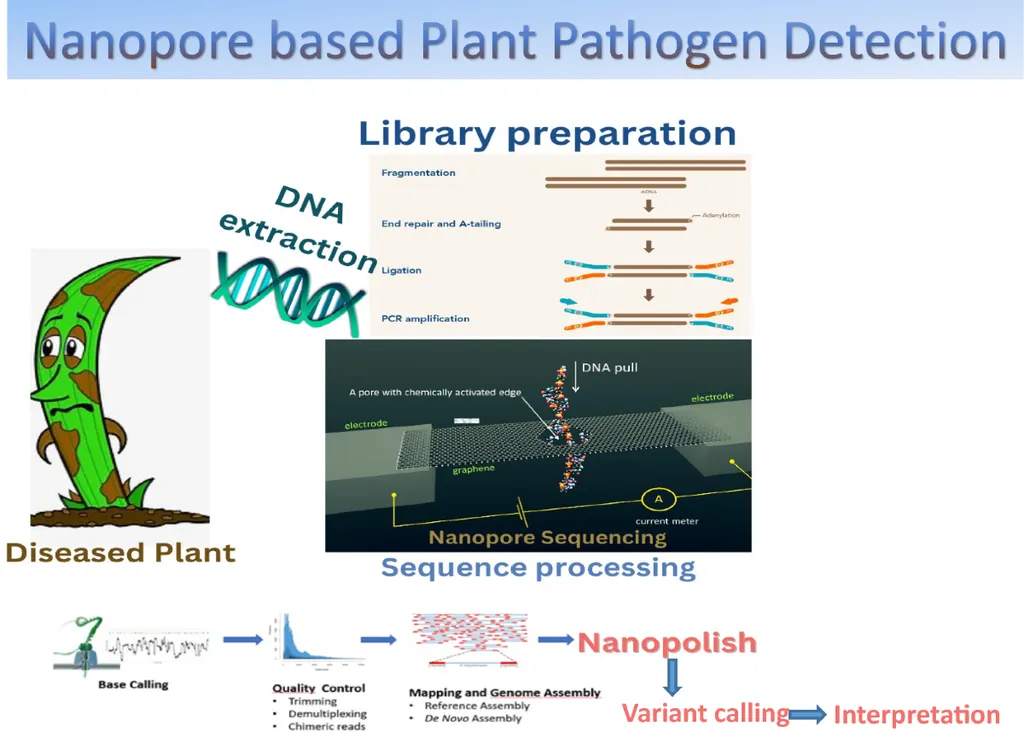
In the ever-evolving landscape of agriculture, the need for swift and accurate identification of plant pathogens has become paramount. A recent study published in *Discover Plants* offers a promising solution, showcasing the potential of nanopore sequencing to revolutionize plant disease management and environmental monitoring.
Traditional methods of identifying plant pathogens often involve time-consuming processes and can be prone to errors, leading to reduced crop yields and significant economic losses. Enter nanopore sequencing, a cutting-edge technology that has emerged as a game-changer in the field of phytopathology. Unlike conventional sequencing methods, nanopore sequencing offers a rapid and highly accurate means of identifying a wide array of pathogens and stress markers.
The study, led by Ayushi Malik from the Nanoparticle Synthesis and Bioinformatics Laboratory at Mohanlal Sukhadia University, delves into the evolution of sequencing techniques in plant pathology. It highlights the limitations of traditional approaches such as selective breeding, chemical treatments, and GMOs, which have faced public acceptance issues due to their ecological impact. “Nanopore sequencing provides a sustainable alternative that enables farmers to make informed decisions for crop enhancement,” Malik explains.
The technology works by measuring electrical conductivity changes as DNA or RNA strands pass through a nanopore. This process allows for real-time, high-throughput sequencing, providing farmers with the data they need to implement targeted disease management strategies. The MinION sequencer, a portable device developed by Oxford Nanopore Technologies, has made this technology accessible even in resource-limited settings.
The commercial implications for the agriculture sector are substantial. By enabling early and accurate detection of pathogens, nanopore sequencing can help prevent the spread of diseases, reduce crop losses, and increase overall yield. This technology also facilitates environmental monitoring, allowing farmers to assess soil health and identify potential stressors that could impact plant growth.
As the agricultural industry continues to grapple with the challenges posed by climate change and increasing global demand for food, the need for innovative solutions has never been greater. Nanopore sequencing offers a glimpse into a future where sustainable agriculture is not just a possibility but a reality.
The study published in *Discover Plants* underscores the transformative potential of nanopore sequencing in plant pathology. As researchers continue to explore its applications, the technology is poised to shape the future of agriculture, paving the way for a more resilient and productive industry.