
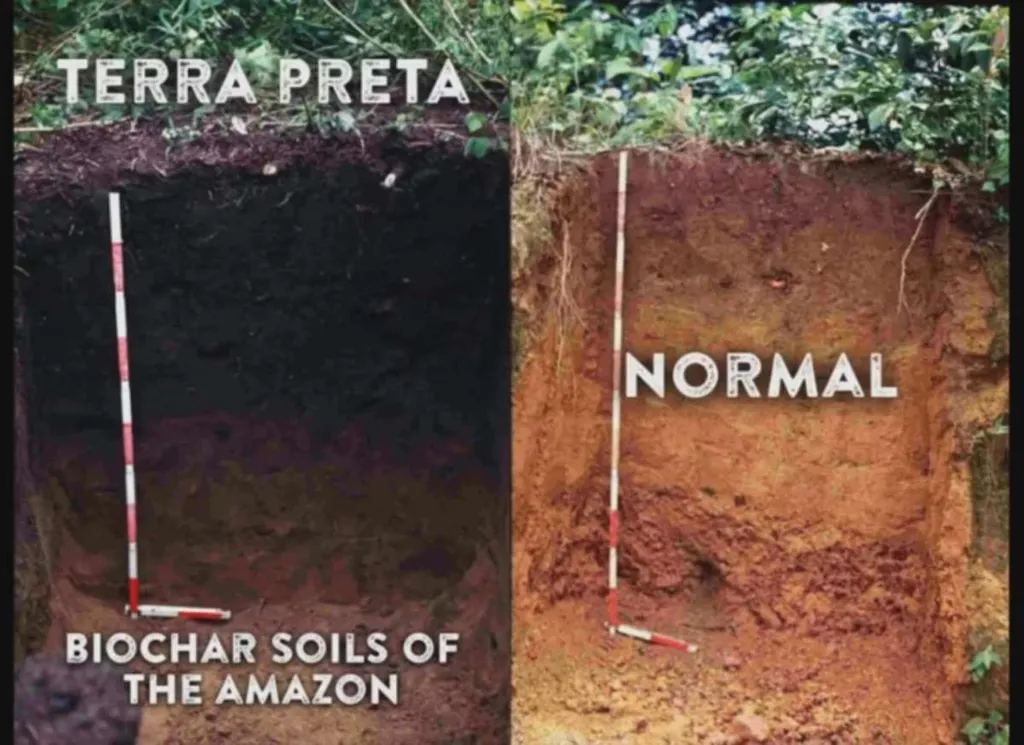
In the heart of South Kalimantan, Indonesia, a groundbreaking study is turning the tide on marginal lands that have long been deemed unproductive. Researchers have found that a soil amendment called pre-Terra Preta can significantly boost the fertility and productivity of degraded lands, offering a beacon of hope for the agriculture sector.
The study, led by Dewi Priany Nasution of the Doctoral Program of Agricultural Science at Lambung Mangkurat University, focuses on the application of pre-Terra Preta—a blend of biochar, organic matter, animal manure, topsoil, and fermented microorganisms—to enhance the growth of Pennisetum purpureum cv. Mott, commonly known as Dwarf elephant grass. This forage crop is a vital resource for livestock feed, and its successful cultivation on marginal lands could have profound implications for the agriculture industry.
The research, published in the ‘Sains Tanah: Journal of Soil Science and Agroclimatology’, reveals that pre-Terra Preta can dramatically improve soil chemical properties. “We observed significant increases in total nitrogen, organic carbon, potassium, and pH levels,” Nasution explains. “These improvements are crucial for supporting plant growth and enhancing soil health.”
The field experiment, conducted in Swarangan Village, Tanah Laut Regency, involved treating 36 plots with varying levels of pre-Terra Preta biochar composition and application rates. The results were striking. The optimal treatment—30 tons per hectare with 60% biochar—yielded the highest plant height, number of leaves, and number of tillers. “The differences were significant, confirming the effectiveness of both biochar levels and application rates,” Nasution notes.
The commercial impacts of this research are substantial. Marginal lands, often considered uneconomical for agriculture, could be rehabilitated and brought back into productive use. This not only expands the available land for forage production but also offers a sustainable solution for soil rehabilitation. “Pre-Terra Preta provides a cost-effective strategy for rehabilitating marginal lands in tropical regions,” Nasution states. “It’s a win-win for both the environment and the agriculture sector.”
The study also opens the door for further research. While the immediate results are promising, long-term studies are needed to assess the sustained impact on soil health, economic viability, forage quality, and livestock performance. “This is just the beginning,” Nasution says. “We need to continue exploring the potential of pre-Terra Preta and other soil amendments to ensure sustainable agriculture practices.”
As the agriculture sector grapples with the challenges of climate change and land degradation, innovations like pre-Terra Preta offer a glimmer of hope. By enhancing soil fertility and productivity, this soil amendment could play a pivotal role in shaping the future of agriculture, ensuring food security, and promoting sustainable land use practices. The study’s findings not only highlight the potential of pre-Terra Preta but also underscore the importance of continued research and innovation in the field of agritech.