
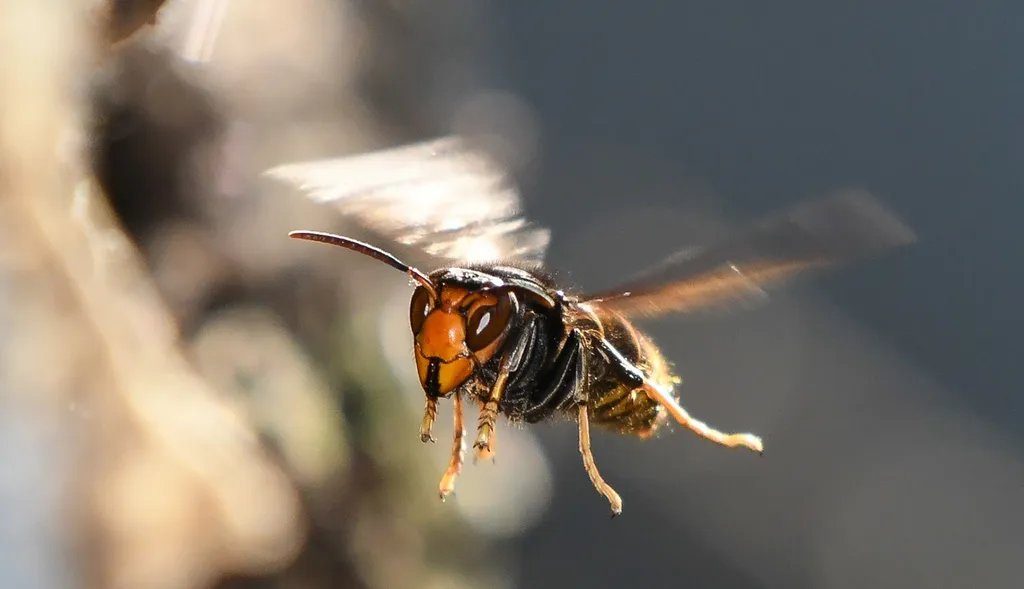
In the ongoing battle against invasive species, scientists have made a significant stride in understanding how to control the yellow-legged hornet, Vespa velutina nigrithorax, a formidable foe to Europe’s ecosystems and agriculture. A recent study published in *Scientific Reports* has assessed the oral toxicity of four common insecticides on this invasive hornet, offering promising insights for pest management strategies.
The yellow-legged hornet, native to Asia, has been wreaking havoc in Europe since its arrival. Its aggressive predation on native insects, rapid reproduction, and wide-ranging impact on biodiversity and agriculture have made it a top priority for ecological control. “This species poses substantial ecological and economic threats,” explains Paula Malaquias Souto, lead author of the study and a researcher at the Centre for Functional Ecology, Department of Life Sciences, University of Coimbra. “Effective control is essential to prevent and minimize its spread and ecological impact.”
The study focused on the acute oral toxicity of four commercial insecticide formulations: acetamiprid, spinosad, cypermethrin, and a mixture of natural pyrethrins. The findings revealed that acetamiprid and spinosad are particularly effective against the hornets. Acetamiprid induced rapid mortality at low doses, while spinosad caused both lethal and sublethal effects, potentially disrupting hornet behavior and colony viability. “Oral exposure generally resulted in higher toxicity than contact exposure,” notes Souto, highlighting the importance of considering multiple exposure pathways in pest control strategies.
For the agriculture sector, these findings are a beacon of hope. The yellow-legged hornet’s predation on pollinators and other beneficial insects can lead to significant crop losses and increased pest outbreaks. Effective control measures can help protect agricultural productivity and biodiversity. “This study provides critical data to improve control strategies against this invasive species,” says Souto. “It supports the development of more effective and environmentally sustainable control strategies.”
However, the researchers caution that further investigations are necessary to confirm the efficacy of these insecticides under field conditions and to evaluate potential ecological risks to non-target species. “We need to ensure that our control measures are not only effective but also safe for the environment,” Souto emphasizes.
The study’s findings could shape future developments in invasive species management, particularly in the use of targeted insecticides. By understanding the specific vulnerabilities of the yellow-legged hornet, researchers can develop more precise and sustainable control strategies. This approach could be applied to other invasive species, offering a more nuanced and effective way to manage ecological threats.
As the agricultural sector continues to grapple with the challenges posed by invasive species, this research provides a valuable tool in the fight to protect crops and ecosystems. By leveraging the insights from this study, stakeholders can work towards more sustainable and effective pest management strategies, ensuring the health and productivity of Europe’s agricultural landscapes.