
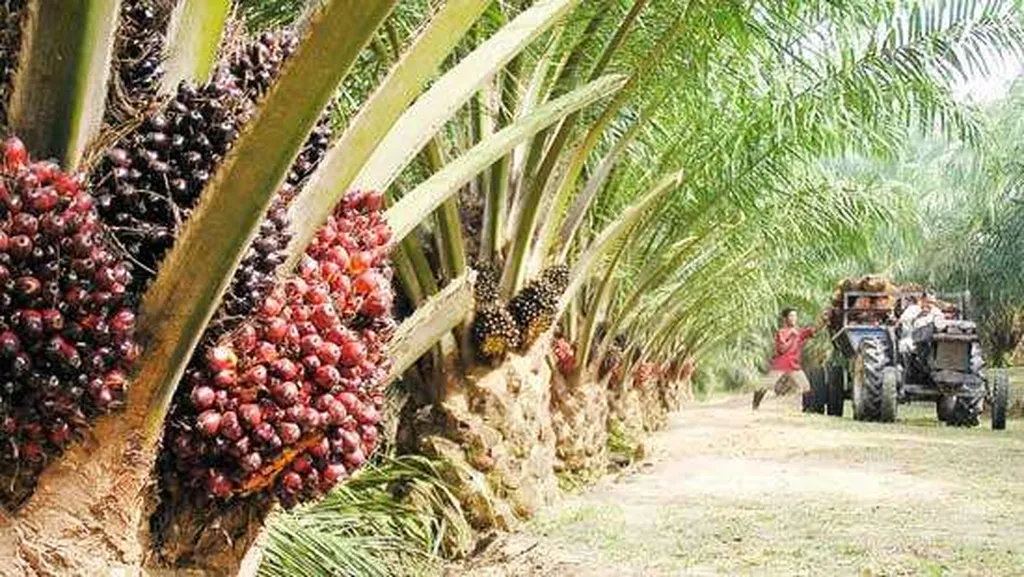
In the lush landscapes of Kalutara, Sri Lanka, a silent transformation is taking place beneath the surface. As oil palm (Elaeis guineensis) cultivation expands, so does the need to understand its impact on the very foundation of agriculture: the soil. A recent study published in *Sains Tanah: Journal of Soil Science and Agroclimatology* has shed light on the spatial variations in soil properties under oil palm cultivation, offering insights that could shape sustainable agricultural practices in the region.
The research, led by Thiramuni Dulshan Sakila Ariyarathna from the Department of Zoology and Environmental Management at the University of Kelaniya, examined three distinct sites within the Culloden Estate. The findings reveal significant spatial differences in soil properties compared to an adjacent grassland reference site. “We observed higher pH, electrical conductivity, porosity, organic matter, and nitrogen levels in the reference site,” Ariyarathna explains. “In contrast, the cultivated sites showed higher bulk and particle densities, cation exchange capacity, and phosphorus content.”
These variations are not merely academic; they have profound implications for the agriculture sector. Soil compaction, indicated by higher bulk density in cultivated sites, can affect root penetration and water infiltration, potentially impacting crop yield. However, the study also notes that while soil properties differed from the reference site, they remained within acceptable global ranges for oil palm cultivation, suggesting no major soil degradation.
The absence of a directional pattern in soil properties within the plantation indicates that local management practices may play a significant role. “Our cluster analysis revealed three sub-clusters, with Sites 2 and 3 forming one group, while Site 1 and the reference site formed separate groups,” Ariyarathna adds. This highlights the need for tailored soil management strategies within a single plantation.
The study underscores the importance of broader, multi-site research to support sustainable soil management. As oil palm cultivation continues to expand, understanding and mitigating its impact on soil health will be crucial for maintaining productivity and environmental sustainability. The findings could guide farmers and agronomists in adopting practices that preserve soil health, ultimately benefiting the agriculture sector’s bottom line.
In the quest for sustainable agriculture, every discovery is a step forward. This research not only illuminates the current state of soil under oil palm cultivation but also paves the way for future developments in soil management practices. As the agriculture sector grapples with the challenges of climate change and increasing demand, such insights are invaluable. They remind us that the health of our soils is intrinsically linked to the future of our food systems.