
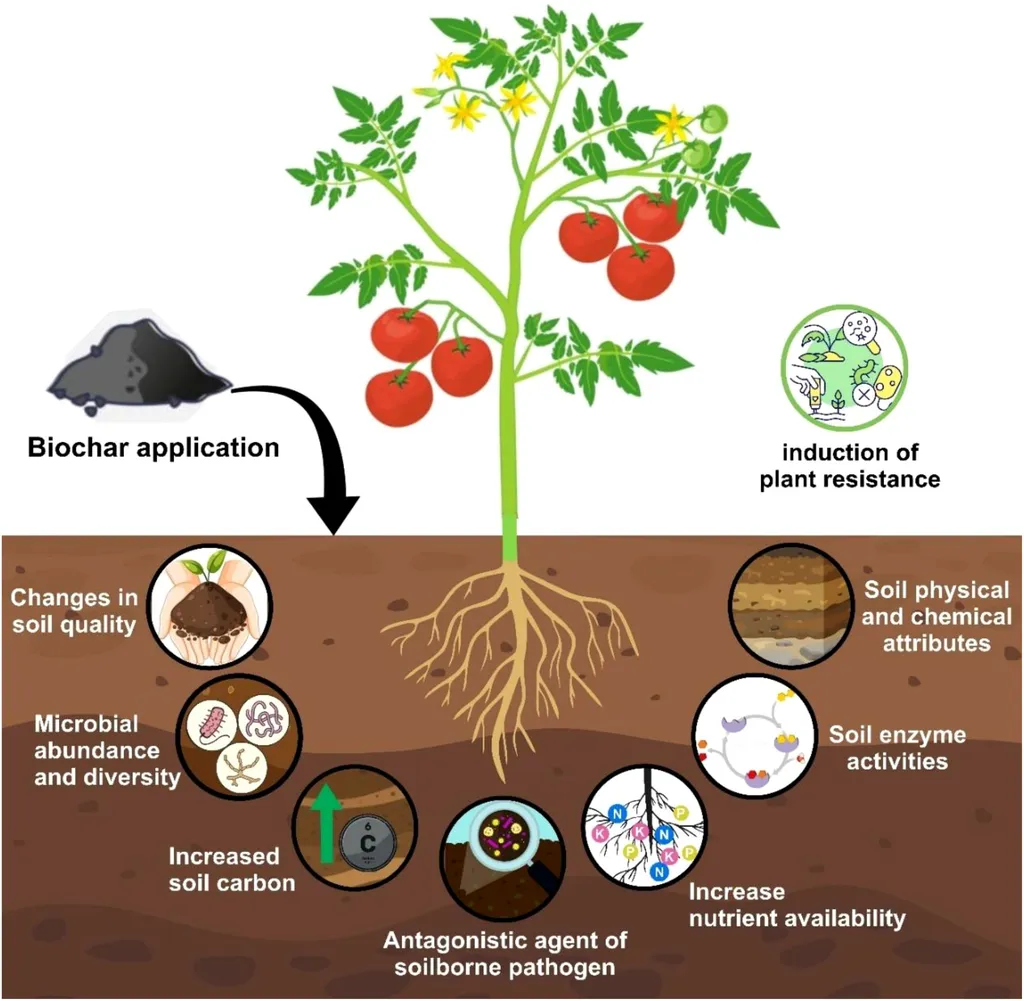
In the ever-evolving landscape of agricultural technology, a groundbreaking review published in the journal *Biochar* is challenging the one-size-fits-all approach to soil enhancement. Led by Adnan Mustafa of the Guangdong Provincial Key Laboratory of Applied Botany at the South China Botanical Garden, Chinese Academy of Sciences, the research delves into the nuanced world of engineered biochar and its potential to revolutionize crop production, protection, and soil remediation.
Biochar, a carbon-rich product derived from the thermochemical conversion of biomass, has long been recognized for its ability to improve soil health. However, Mustafa’s review highlights that its true potential lies in tailored applications. “The key is to optimize biochar for specific functional goals,” Mustafa explains. “Whether it’s enhancing nutrient availability, stimulating beneficial microbial communities, or suppressing pathogens, the approach must be purpose-driven.”
The review explores how different modifications to biochar—such as nutrient enrichment, antimicrobial functionalization, and surface engineering—can drive these outcomes. For instance, nutrient-enriched biochar can boost crop yields by making essential nutrients more available to plants. Meanwhile, antimicrobial biochar can protect crops by suppressing soil-borne pathogens. Surface-engineered biochar, on the other hand, can immobilize soil contaminants, aiding in environmental remediation.
However, the path to widespread adoption is not without challenges. The review underscores the need to balance competing objectives, such as nutrient availability for crop growth versus contaminant immobilization for remediation. It also highlights the spatial and temporal variability of biochar effects in the rhizosphere—the dynamic zone of soil surrounding plant roots.
“Biochar presents clear synergistic benefits, from improving soil structure to enhancing water retention and reducing greenhouse gas emissions,” Mustafa notes. “But its practical application faces challenges related to rhizosphere complexity and economic constraints.”
Despite these hurdles, the review points to promising innovations on the horizon. Nanocomposite biochars, bioprimed biochars, and biochar-microbe synergies are just a few examples of emerging technologies that could pave the way for precision agriculture and sustainable land management.
The commercial implications for the agriculture sector are substantial. As the global population continues to grow, the demand for sustainable and efficient crop production methods is more pressing than ever. Engineered biochar offers a versatile tool to meet these demands, potentially boosting yields, enhancing crop resilience, and promoting environmental sustainability.
Looking ahead, the review emphasizes the importance of long-term field studies to evaluate the sustainability of biochar applications. It also outlines opportunities for biochar in climate change mitigation, waste valorization, and agroecological resilience.
As the agriculture sector grapples with the challenges of a changing climate and increasing food demand, the insights from this review could shape future developments in the field. By leveraging the latest research on biochar’s mechanisms, challenges, and opportunities, farmers and agritech innovators can work towards a more sustainable and productive future.
In the words of Mustafa, “The future of agriculture lies in precision and sustainability. Engineered biochar is a powerful tool in our arsenal to achieve these goals.”