
In the heart of East Africa, a silent revolution is brewing, not in the bustling streets of Dar es Salaam, but within the very leaves and stems of Tanzania’s diverse flora. A recent review published in *Discover Applied Sciences* sheds light on the untapped potential of endophytic fungi, microscopic organisms that live within plant tissues, offering a sustainable alternative to the direct exploitation of medicinal plants. The lead author, Joseph I. Massawe from the Department of Biology at the University of Dodoma, has been at the forefront of this research, exploring the taxonomic diversity and bioprospecting potential of these fungi.
Endophytic fungi have long been recognized globally for their ability to produce a vast array of bioactive compounds, with applications ranging from medicine to agriculture and industry. However, in Tanzania, research in this area is still in its infancy, presenting both challenges and opportunities. “The potential is immense, but we are just scratching the surface,” Massawe remarked, highlighting the need for further exploration.
The review reveals that most of the endophytic fungi species reported in Tanzania belong to the phylum Ascomycota, with notable species such as *Aspergillus aculeautinus* and *Penicillium menonorum* showing promise for various applications. These fungi could potentially produce compounds that enhance plant growth, protect against pests, or even contribute to the development of new agricultural products.
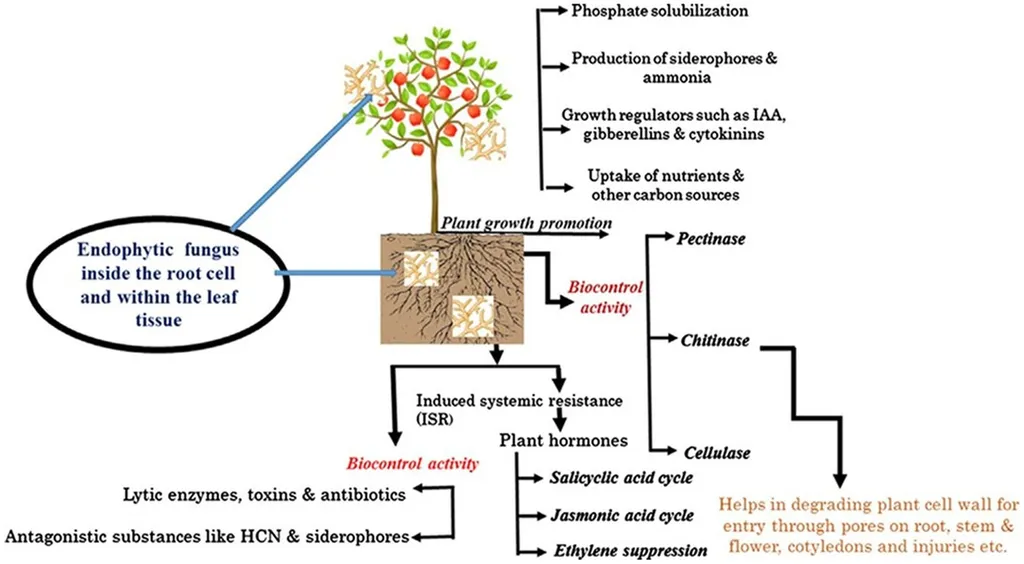
One of the most exciting aspects of this research is its potential impact on the agriculture sector. Endophytic fungi can form symbiotic relationships with plants, enhancing their growth and resilience. This could lead to the development of biofertilizers and biopesticides, offering sustainable alternatives to chemical inputs. “By harnessing the power of these fungi, we can promote more sustainable and environmentally friendly agricultural practices,” Massawe explained.
However, the review also highlights the need for more comprehensive studies, particularly in the industrial applications of these fungi. The vast ecosystems of Tanzania, from the Serengeti plains to the Usambara mountains, hold untold diversity of endophytic fungi, waiting to be discovered and studied. The integration of metagenomics techniques could unlock new possibilities, enabling scientists to explore the genetic potential of these fungi in greater detail.
The implications of this research extend beyond Tanzania, offering insights that could guide future studies in other regions. By consolidating the current knowledge and identifying gaps, Massawe’s review serves as a valuable resource for scientists and researchers worldwide. It underscores the importance of sustainable bioprospecting, not just for the discovery of new compounds, but also for the preservation of biodiversity and the promotion of environmentally friendly practices.
As the world grapples with the challenges of climate change and environmental degradation, the exploration of endophytic fungi offers a beacon of hope. These microscopic organisms, hidden within the plants of Tanzania, could hold the key to a more sustainable future, one where the needs of agriculture, industry, and medicine are met without compromising the health of our planet. The journey has just begun, and the potential is immense.