
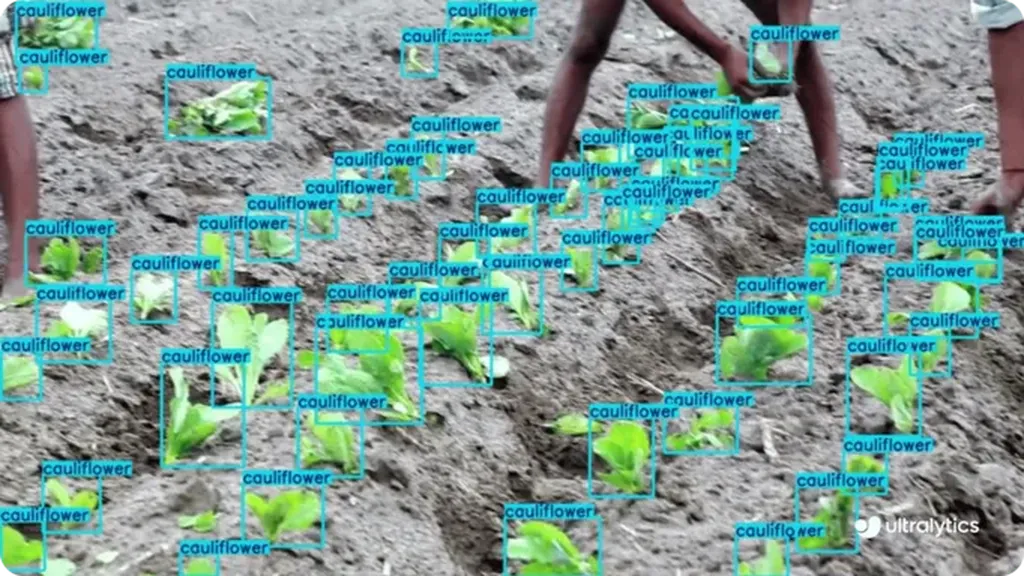
In the rapidly evolving world of precision agriculture, real-time monitoring of crop health is becoming increasingly crucial for farmers to make informed decisions. A recent study published in *Scientific Reports* introduces an enhanced deep-learning framework that leverages the YOLO (You Only Look Once) object-detection architectures to revolutionize plant health monitoring. The research, led by Anurag Rana from the Yogananda School of AI, Computers, and Data Sciences at Shoolini University, compares the performance of YOLOv8 and the newly released YOLOv11 in detecting and classifying leaf health across diverse species, growth stages, and lighting conditions.
The study curated a dataset of 5,000 high-resolution images, annotated as healthy, stressed, or damaged, to train and evaluate the models. The researchers developed an end-to-end training pipeline that included extensive data augmentations, transfer learning from COCO weights, and GPU-accelerated fine-tuning. The results were impressive, with YOLOv11 achieving a mean Average Precision (mAP) of 93.3% at a 0.5 IoU threshold and 76.5% across a range of IoU thresholds (0.5:0.95), outperforming YOLOv8 by a notable margin.
“YOLOv11’s architectural refinements deliver measurable accuracy gains with only a modest computational overhead,” Rana explained. “This makes it preferable for applications where detection fidelity is paramount.”
The implications for the agriculture sector are substantial. Real-time, accurate assessment of crop conditions can lead to timely interventions, reducing crop losses and improving yields. The framework’s ability to maintain real-time throughput, with inference latency of just 15 milliseconds per image on an RTX 3060, ensures that it can be integrated into existing agricultural systems without significant delays.
The study also identified remaining challenges, such as occlusions, visually ambiguous symptoms, and domain shift. To address these, the researchers proposed strategies like multi-spectral inputs, temporal modeling, and edge-side quantization. These solutions could pave the way for even more robust and reliable plant health monitoring systems in the future.
As the agriculture industry continues to embrace technological advancements, the adoption of AI-driven solutions like the one proposed by Rana and his team could become a game-changer. By providing farmers with real-time, accurate data on crop health, these systems can enhance decision-making processes, optimize resource use, and ultimately contribute to more sustainable and productive agricultural practices.
The research not only sets a dependable baseline for AI-driven plant health monitoring but also opens up new avenues for future developments in precision agriculture. As the technology evolves, we can expect to see even more sophisticated systems that integrate multiple data sources and advanced analytics to provide comprehensive insights into crop health and overall farm management.