
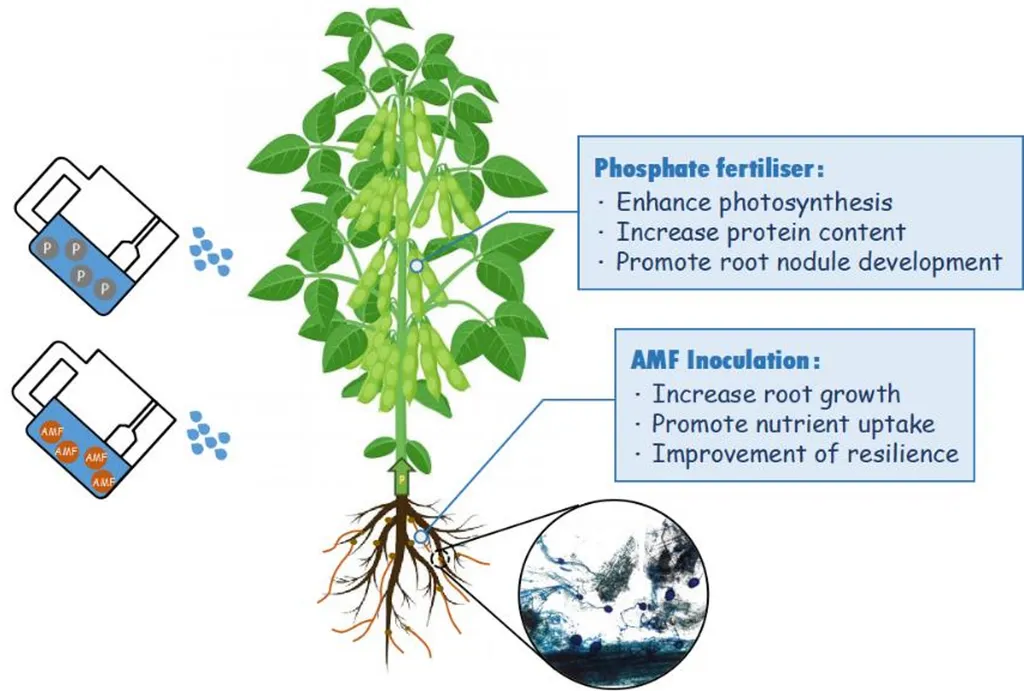
In the quest for sustainable and productive soybean cultivation, researchers have turned to an unlikely duo: arbuscular mycorrhizal fungi (AMF) and silicon (Si). A recent study published in the *Journal of Sustainable Agriculture and Environment* sheds light on how these two elements can significantly enhance soybean growth and resilience, offering promising avenues for the agriculture sector.
Soybean, a staple crop globally, faces numerous challenges, including pest infestations and environmental stresses. Traditional methods of combating these issues often rely on chemical interventions, which can have detrimental effects on the environment and human health. The study, led by Lucas Adjuto Ulhoa from the Departamento de Ciências da Produção Agrícola at Universidade Estadual Paulista in Jaboticabal, São Paulo, Brazil, explores the potential of AMF and Si as eco-friendly alternatives.
AMF are naturally occurring fungi that form symbiotic relationships with plant roots, enhancing nutrient uptake and improving plant health. Silicon, on the other hand, is a beneficial element that strengthens plant structures and boosts resistance to various stresses. The research demonstrates that when applied individually or in combination, AMF and Si can positively influence soybean development and improve the crop’s tolerance to insect pests.
“Our findings indicate that the application of AMF and Si to the soil can significantly enhance soybean growth and resilience,” Ulhoa explained. “This is a crucial step towards developing sustainable agricultural practices that can withstand the challenges posed by climate change and pest infestations.”
The study’s results are particularly relevant for the agriculture sector, as they offer a sustainable and effective solution to some of the most pressing challenges in soybean cultivation. By enhancing plant growth and resistance, AMF and Si can potentially reduce the need for chemical pesticides and fertilizers, leading to more environmentally friendly farming practices.
Moreover, the cumulative effects of AMF and Si when applied together suggest that a combined approach could be even more beneficial. This opens up new possibilities for integrated pest management and crop protection strategies, which are essential for ensuring food security and sustainability.
The research also highlights the importance of understanding the complex interactions between plants and their environment. By harnessing the power of natural symbioses and beneficial elements, farmers can develop more resilient and productive crops, ultimately contributing to a more sustainable future for agriculture.
As the agriculture sector continues to evolve, the findings of this study could shape future developments in crop protection and sustainable farming practices. By embracing innovative solutions like AMF and Si, farmers can not only improve their yields but also contribute to the preservation of the environment for future generations.