
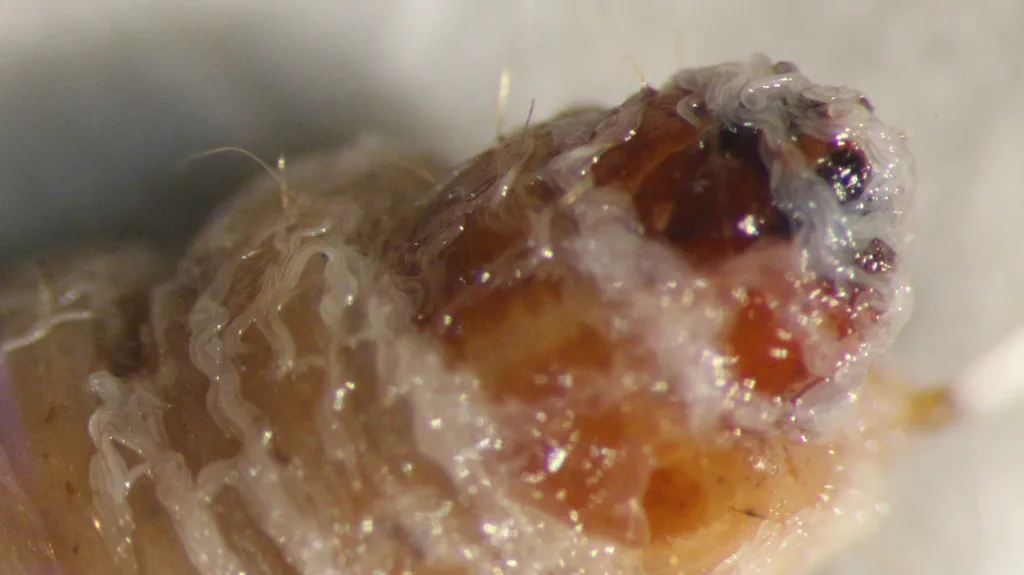
In the lush, tropical landscapes of Bali, Indonesia, a new species of nematode has been discovered, adding a fresh chapter to the intricate world of plant-parasitic nematodes. The newly identified species, Xiphinema baliense sp. nov., belongs to the X. americanum-group, a collection of nematodes known for their potential to transmit plant viruses and impact agricultural productivity.
The discovery, published in the Journal of Nematology, was led by Kornobis Franciszek from the Institute of Plant Protection – National Research Institute in Poznań, Poland. The new species was found in the rhizosphere of native vegetation, highlighting the importance of understanding local ecosystems and their potential impacts on agriculture.
Xiphinema baliense sp. nov. is characterized by several distinctive features, including a moderately long body, a well-developed odontostyle, and a conoid tail. The absence of males in the samples collected suggests a parthenogenetic reproduction strategy, a trait shared with other members of the X. americanum-group.
The commercial impacts of this discovery are significant. Nematodes like Xiphinema baliense can transmit plant viruses, leading to reduced crop yields and economic losses for farmers. “Understanding the diversity and distribution of these nematodes is crucial for developing effective management strategies,” says Franciszek. By identifying and studying this new species, researchers can better predict its potential impact on agriculture and develop targeted control measures.
The research also sheds light on the phylogenetic relationships within the X. americanum-group. Using molecular data from the D2–D3 expansion segments of 28S rRNA, ITS1, partial 18S rRNA, and COI genes, the study reconstructs the evolutionary history of these nematodes. This information is vital for understanding the spread and adaptation of these pests, ultimately aiding in the development of more resilient crops.
The discovery of Xiphinema baliense sp. nov. underscores the importance of continued research in nematology. As Franciszek notes, “Each new species we discover brings us one step closer to understanding the complex web of interactions that shape our ecosystems.” This knowledge is not only academically valuable but also has practical applications in agriculture, helping to safeguard food security and economic stability.
As the agricultural sector faces increasing challenges from climate change and emerging pests, the insights gained from this research could shape future developments in pest management and crop breeding. By staying ahead of these challenges, we can ensure a more sustainable and productive future for agriculture.