
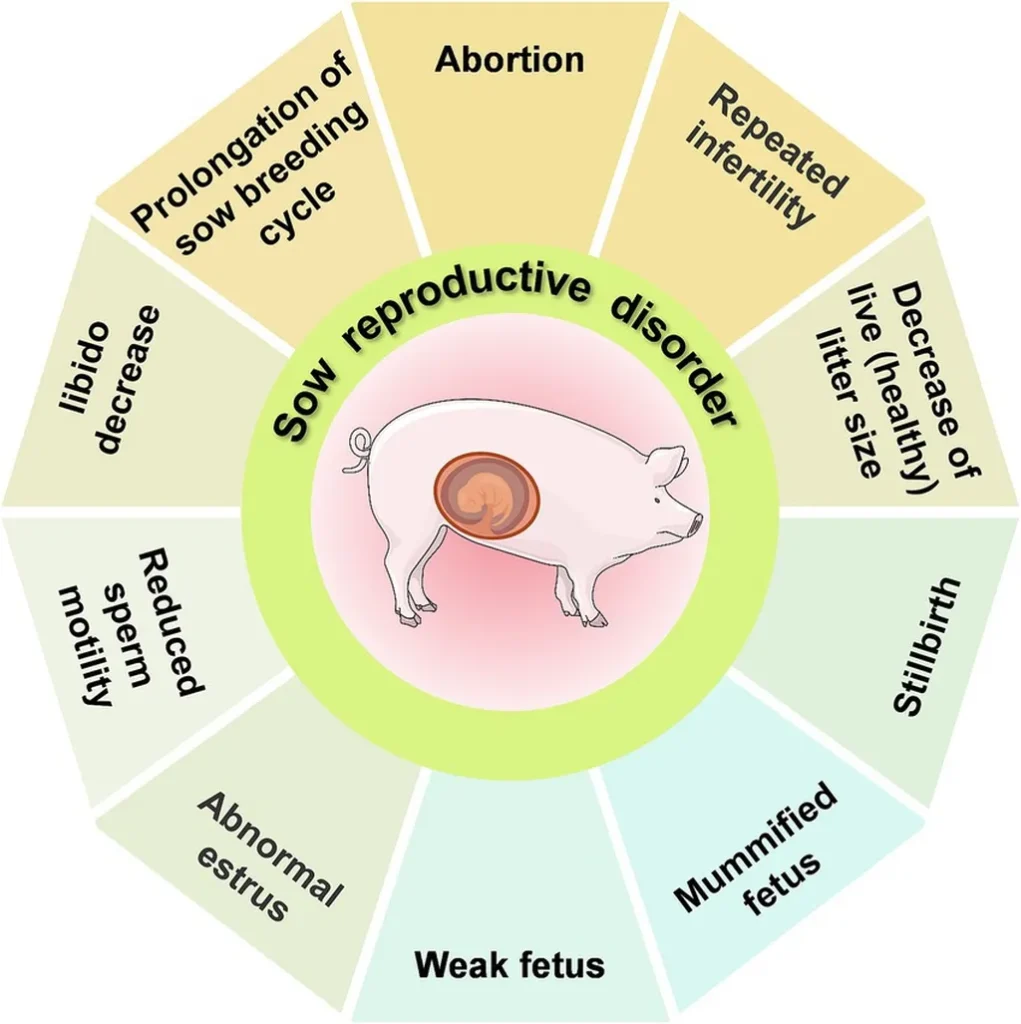
In a groundbreaking study published in *Animal Nutriomics*, researchers have uncovered a promising approach to enhancing sow reproductive performance through dietary interventions. The study, led by Zhenhong Yan from the National Key Laboratory of Agricultural Microbiology at Huazhong Agricultural University, explores the impact of supplementing early pregnancy diets with sodium butyrate, selenium yeast, and soy isoflavones on litter size and neonatal piglet health.
The research highlights a significant increase in litter size and the number of normal neonatal piglets when sows are fed a diet enriched with these specific nutrients. This finding is particularly noteworthy for the agriculture sector, where improving reproductive efficiency in livestock can lead to substantial economic gains.
“Our study demonstrates that targeted dietary interventions can positively influence reproductive outcomes in sows,” said Yan. “By optimizing the diet with these key nutrients, we observed not only an increase in litter size but also a reduction in the number of stillborn piglets, which is a critical factor for farmers.”
The study delves into the underlying mechanisms, revealing that these dietary supplements enhance sex hormone synthesis, boost antioxidant capacity, and modulate gut microbiota in sows. These physiological improvements contribute to better reproductive health and overall productivity.
The commercial implications of this research are vast. For pig farmers, the ability to increase litter size and ensure the health of neonatal piglets can translate into higher yields and reduced economic losses. This dietary strategy could become a standard practice in the industry, offering a cost-effective and sustainable solution to improve reproductive performance.
Moreover, the findings open new avenues for research into the role of gut microbiota in animal health and reproduction. Understanding how dietary components influence gut health could lead to further innovations in animal nutrition and breeding practices.
As the agriculture sector continues to seek sustainable and efficient ways to meet global food demands, this research provides a compelling example of how science and technology can drive progress. The study not only offers immediate benefits for pig farmers but also sets the stage for future developments in animal nutrition and reproductive health.
The research was published in *Animal Nutriomics*, with Zhenhong Yan as the lead author, affiliated with the National Key Laboratory of Agricultural Microbiology, Frontiers Science Center for Animal Breeding and Sustainable Production, Hubei Hongshan Laboratory, College of Animal Sciences and Technology, Huazhong Agricultural University, Wuhan, Hubei, P. R. China. This study underscores the importance of interdisciplinary research in addressing critical challenges in agriculture and paves the way for innovative solutions that can benefit both farmers and consumers alike.