
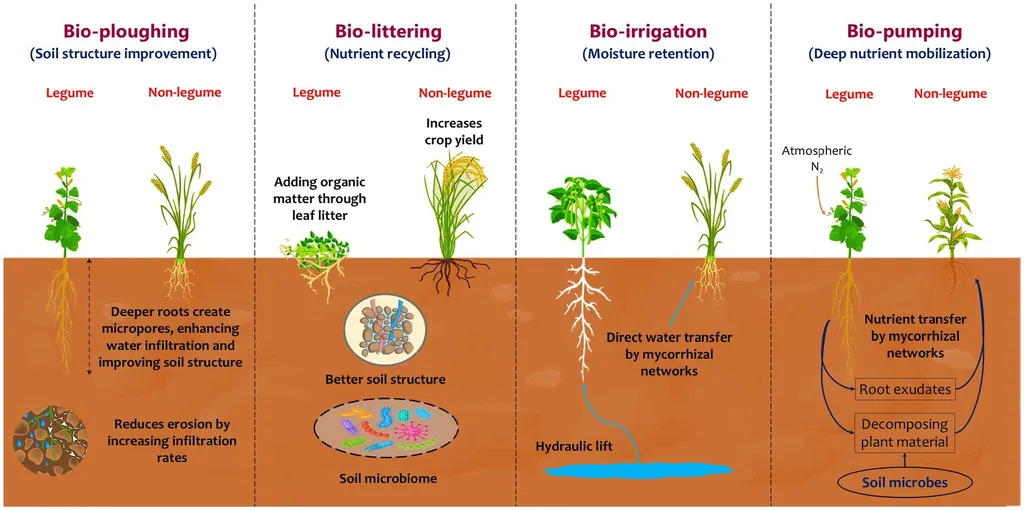
In a world grappling with the realities of climate change, farmers are facing prolonged droughts and water scarcity, which threaten the stability of wheat yields. A recent study published in the *Journal of Sustainable Agriculture and Environment* offers a promising solution: strip intercropping wheat with coriander. The research, led by Katja Kampmann from the Department of Soil Science and Plant Nutrition at Hochschule Geisenheim University in Germany, reveals that this intercropping method can enhance water-use efficiency and maintain wheat yields even under reduced irrigation.
The study focused on spring wheat (Triticum aestivum ‘Quintus’) and taprooted coriander (Coriandrum sativum ‘Jantar’). The experiments were conducted in 120-liter containers filled with sandy loam, under two irrigation regimes: well-watered (60% of soil maximum water-holding capacity) and reduced irrigation (40%). The results were striking. Under reduced irrigation, the wheat grain yield in the intercropping system remained comparable to that of sole wheat, even though the intercropped pots contained only half as many wheat plants. This suggests that intercropping can help farmers maintain yields while using less water, a critical advantage in drought-prone regions.
One of the most significant findings was the improvement in water-use efficiency (WUE) in the intercropping system. “WUE, calculated as total wheat grain yield per pot per liter of applied water, was significantly higher in the intercropping system compared to the system where wheat was growing alone under the same water regime,” Kampmann explained. This means that farmers could potentially achieve the same or even higher yields with less water, a game-changer for sustainable agriculture.
Moreover, the study found that wheat crude protein content was higher under reduced irrigation in both the intercropped and stand-alone systems compared to well-watered conditions. This could have implications for the nutritional quality of wheat, benefiting both farmers and consumers. Coriander seed yield was not significantly affected by irrigation, indicating that this intercrop can thrive under varying water conditions.
The commercial impacts of this research are substantial. As water resources become increasingly scarce, farmers need strategies to maintain productivity without compromising yield or quality. Intercropping wheat with coriander offers a sustainable solution that can be easily integrated into existing farming practices. It also opens up new opportunities for diversified cropping systems, which can enhance biodiversity and soil health.
Looking ahead, this research could shape future developments in the field of sustainable agriculture. As Kampmann noted, “These results indicate that wheat–coriander intercropping enhances WUE compared to the sole wheat system, stabilizing wheat yield under water-limited conditions.” This finding could inspire further studies on intercropping systems involving other crops, potentially leading to a broader range of sustainable farming practices.
In conclusion, the study by Kampmann and her team highlights the potential of intercropping to address the challenges posed by climate change. By enhancing water-use efficiency and maintaining wheat yields, this method offers a practical and sustainable solution for farmers worldwide. As the agriculture sector continues to evolve, such innovative approaches will be crucial in ensuring food security and environmental sustainability.