
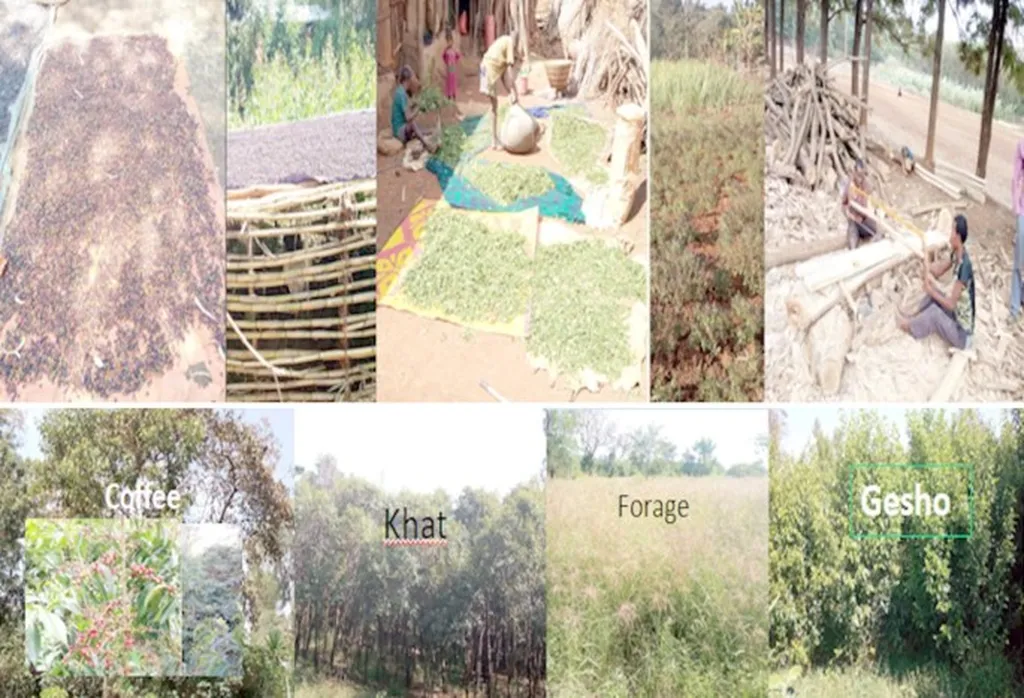
In the heart of Ethiopia’s Amhara Regional State, a quiet revolution is taking root, quite literally. Farmers in the Minjar Shenkora district are increasingly embracing Parkland Agroforestry, a practice that intertwines trees with crops and livestock, and it’s not just about greening the landscape. This age-old practice is proving to be a powerful ally in the fight against climate change and a boon for local economies.
A recent study published in the ‘International Journal of Forestry Research’ and led by Reta Eshetu from the Amhara Region Agriculture Research Institute, delves into the farmers’ perceptions and management practices of Parkland Agroforestry. The research reveals that nearly all farmers surveyed recognize the immense potential of these practices in providing a range of ecosystem services and counteracting climate change.
Parkland Agroforestry is not just about planting trees; it’s about creating a sustainable agricultural ecosystem. “The farmers understand that these practices enhance carbon sequestration and bolster the resilience of their agricultural systems,” says Reta Eshetu, the lead author of the study. This understanding is crucial, as it translates into tangible benefits for the agriculture sector.
The study employed a two-stage stratified random sampling method to select 110 farmers from four kebeles (the smallest administrative division in Ethiopia) for household surveys. The survey aimed to gauge households’ perception of the socioecological benefits of Parkland Agroforestry. A Likert scale facilitated the analysis of the farmers’ views, providing a quantitative measure of their perceptions.
The findings are promising. Farmers recognize the potential of Parkland Agroforestry to provide alternative income sources, a critical factor in rural development. The practice can diversify farmers’ livelihoods, making them less vulnerable to market fluctuations and climate variability.
Moreover, the study highlights the need for stricter enforcement of local bylaws and regulations to prevent illegal tree felling and uncontrolled grazing. These measures are essential to sustain and improve the ecosystem services provided by Parkland Agroforestry.
The study also raises important questions about the impacts of mechanized plowing and harvesting on the growth and natural regeneration of seedlings. As agriculture becomes increasingly mechanized, understanding these impacts will be crucial for maintaining the benefits of Parkland Agroforestry.
This research could shape future developments in the field by emphasizing the importance of local knowledge and perceptions in shaping sustainable agricultural practices. It underscores the need for policies that support and enhance these practices, providing a roadmap for integrating traditional knowledge with modern agricultural techniques.
As the world grapples with the challenges of climate change and food security, the insights from this study offer a beacon of hope. They remind us that sometimes, the solutions we seek are already present in the practices and knowledge of local communities. By understanding and supporting these practices, we can pave the way for a more sustainable and resilient agricultural future.