
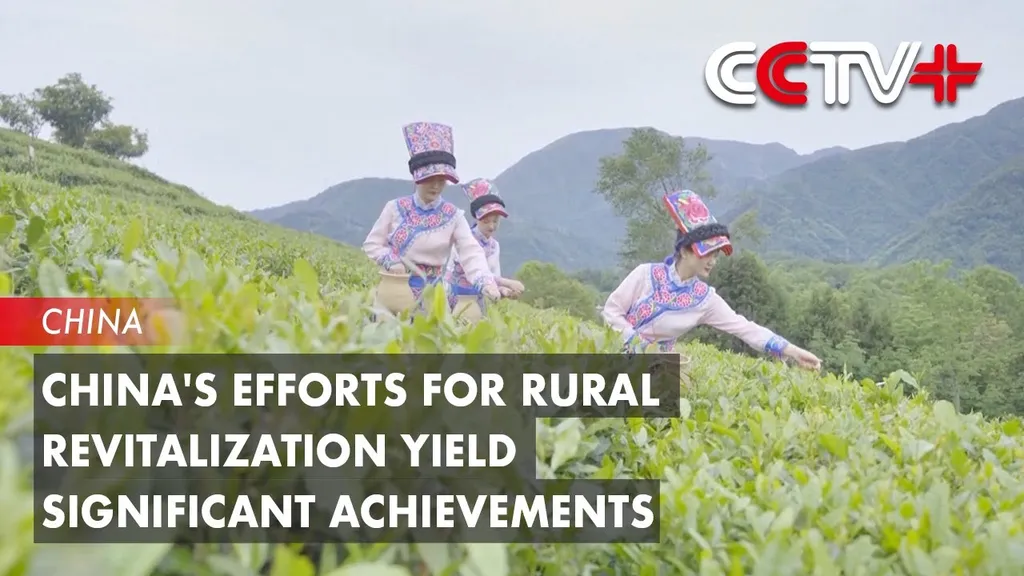
In the heart of China’s rural revitalization strategy lies an emerging industry that’s breathing new life into farmers’ livelihoods: forest therapy. A recent study published in *Frontiers in Forests and Global Change* sheds light on the economic benefits that local farmers accrue through participation in forest therapy base development. The research, led by Haihua Lin from the College of Economics and Management at Inner Mongolia Agricultural University, offers a nuanced look at how this burgeoning sector is reshaping rural economies.
Forest therapy, a key component of China’s ecological industry, is proving to be more than just a wellness trend. It’s a significant economic driver, particularly for farmers residing near forest therapy bases. Using survey data from 795 non-migrant farmers, Lin’s study examines the impact of forest therapy base development on household income. The findings are compelling: participation in forest therapy base development leads to a substantial income boost for participating households.
The study employs the Endogenous Switching Regression Model (ESRM) to estimate the causal impact of participation. The results reveal that the Average Treatment Effect on the Treated (ATT) of employment participation is 0.3676, indicating a significant income increase for participating households. “Compared to the counterfactual scenario, participation reduces income variability by 6.44%, suggesting higher and more stable household income, especially among new participants,” Lin notes.
The study also delves into the heterogeneity of these benefits. It finds an inverted U-shaped impact: forest therapy-based development participation most benefits middle-income farmers. Regionally, the effects vary significantly. In western China, participation significantly raises income for low-income farmers, while in eastern China, the largest gains are observed among middle and high-income farmers.
The mechanisms behind these income enhancements are equally intriguing. The study identifies social network reinforcement and ecological behavioral change as significant partial mediators. “Both social network reinforcement (38.80% mediation) and ecological behavioral change (27.05% mediation) serve as significant partial mediators,” Lin explains. This suggests that the income enhancement operates through dual pathways, highlighting the multifaceted nature of the forest therapy industry’s impact.
For the agriculture sector, these findings underscore the potential of diversifying income streams through ecotourism and wellness industries. The study’s emphasis on heterogeneity and regional differences points to the need for tailored, context-specific policies. As Lin’s research shows, the benefits of forest therapy base development are not one-size-fits-all. Policymakers and industry stakeholders must consider the unique needs and circumstances of different farmer groups and regions to maximize the equitable and sustainable development of the forest therapy industry.
Looking ahead, this research could shape future developments in the field by advocating for targeted policies that address the diverse needs of farmers. It also highlights the importance of understanding the multifaceted impacts of ecotourism and wellness industries on rural economies. As the forest therapy industry continues to grow, so too will its potential to revitalize rural communities and provide sustainable livelihoods for farmers.
In the words of Lin, “These findings underscore the need for targeted, context-specific policies to maximize the equitable and sustainable development of the forest therapy industry within the rural revitalization framework.” As we look to the future, it’s clear that forest therapy is not just a wellness trend—it’s a powerful tool for rural economic development.