
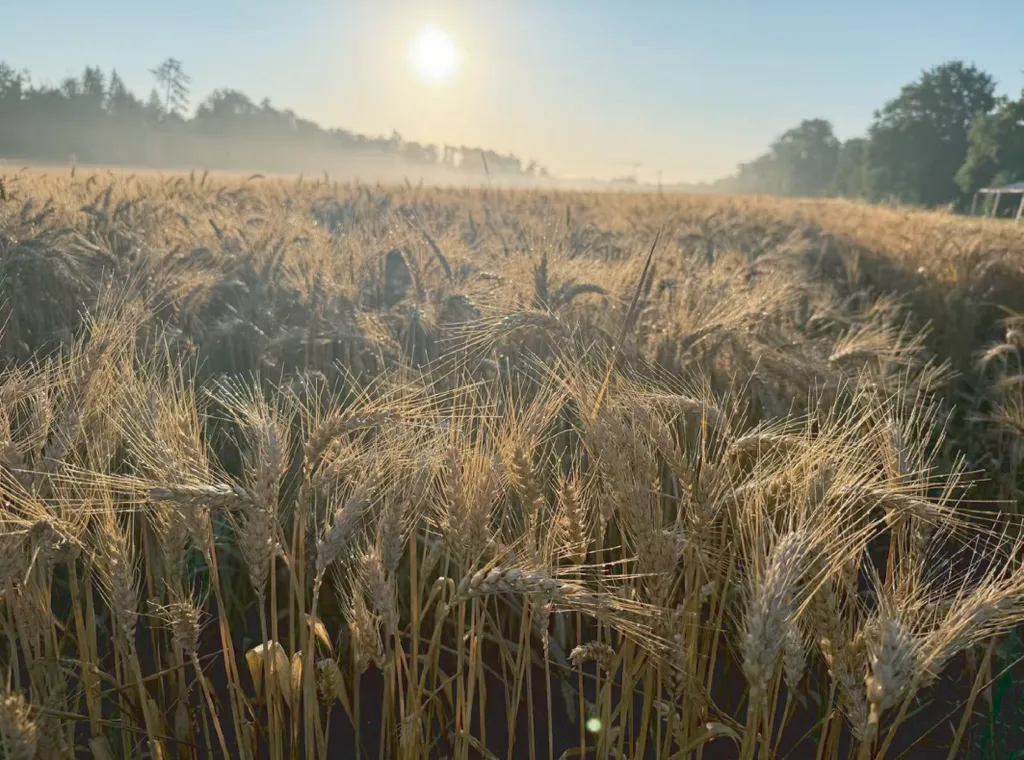
In the quest to bolster agricultural resilience against drought, a recent study published in the *Journal of Sustainable Agriculture and Environment* offers promising insights. Researchers, led by Thi Hoang Ha Truong from the School of Agriculture, Food and Wine at the University of Adelaide, have uncovered that moderate applications of compost can significantly enhance wheat’s ability to withstand drought conditions. This finding could reshape agricultural practices, particularly in regions prone to water scarcity.
The study, conducted over 34 days in a glasshouse setting, explored the legacy effects of different compost rates on wheat growth, nutrient uptake, and soil microbial activity under repeated drought-rewetting cycles. The team compared soils previously amended with moderate (2 t/ha) and high (4 t/ha) rates of compost, alongside freshly-treated chemical fertilizers and an unamended control. Three water regimes were imposed: well-watered, moderate drought, and severe drought.
The results were striking. Moderate historic compost applications improved shoot growth and nitrogen uptake across all water regimes. “This suggests that moderate compost applications can be a viable strategy for enhancing wheat drought resilience and nutrient uptake,” Truong explained. High compost rates and fertilizers increased shoot nitrogen concentration and uptake under well-watered and moderate drought conditions, but the benefits were not as consistent as those seen with moderate compost.
Interestingly, the study found that while high compost rates increased nitrogen and phosphorus availability in the soil, not all added nutrients were effectively taken up by plants or microbes. This indicates that excessive compost application may not always translate to better plant performance. “Our findings suggest that a balanced approach is key,” Truong noted. “Moderate compost applications seem to strike the right balance between enhancing plant resilience and optimizing nutrient uptake.”
The implications for the agriculture sector are substantial. As climate change continues to exacerbate drought conditions, farmers are increasingly seeking sustainable and effective ways to protect their crops. This research highlights the potential of moderate compost applications as a practical and eco-friendly solution. By improving wheat’s drought resilience, farmers can potentially secure more stable yields, even in the face of water scarcity.
Moreover, the study’s focus on the legacy effects of compost applications provides valuable long-term insights. Understanding how historic compost use influences plant and microbial responses under repeated drought conditions can help farmers make more informed decisions about soil management practices.
As the agriculture sector grapples with the challenges posed by climate change, this research offers a beacon of hope. By adopting moderate compost applications, farmers can not only enhance their crops’ resilience but also contribute to more sustainable agricultural practices. The study’s findings underscore the importance of balanced and thoughtful soil management, paving the way for a more resilient and sustainable future in agriculture.