
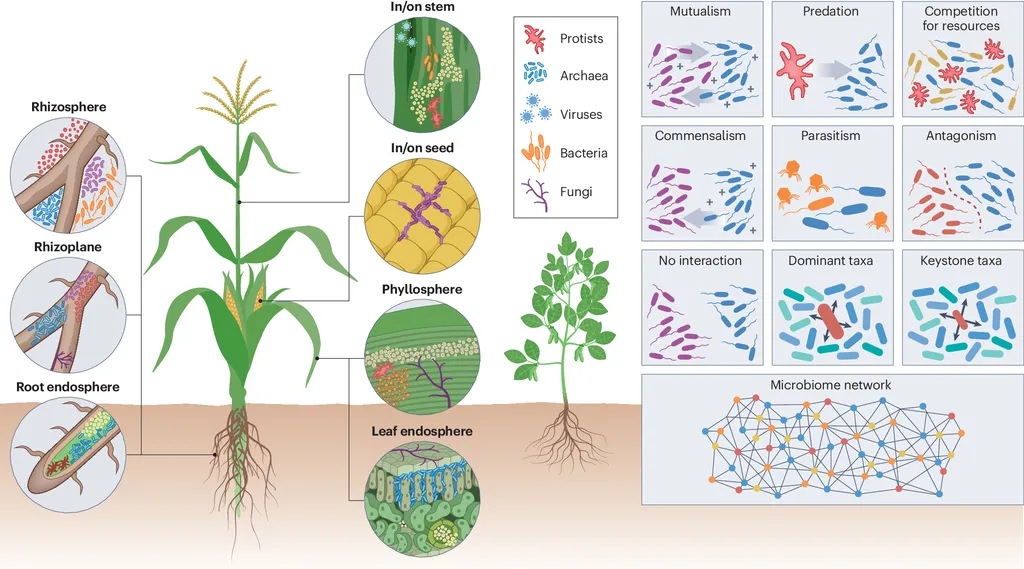
In the heart of Nigeria, a groundbreaking study is shedding light on the microscopic world that thrives on the seeds of indigenous vegetables, offering promising insights for sustainable agriculture. Researchers have uncovered that these seeds harbour diverse and abundant microbial communities, which could play a crucial role in plant health and food production, particularly in smallholder-dependent systems prevalent in Sub-Saharan Africa.
The study, published in the Journal of Sustainable Agriculture and Environment, focused on five economically important vegetable crops: Amaranthus hybridus, Solanum macrocarpon, Corchorus olitorius, Celosia argentea, and Telfairia occidentalis. Using high-throughput sequencing, the team identified a rich tapestry of microbial life, with each plant species hosting its unique bacterial and fungal signatures. “The seed microbiome is a hidden world that’s essential for plant health, development, and adaptation,” said lead author Oluwatosin Ajibade from the Department of Microbiology at Adeleke University in Osun State, Nigeria.
The findings revealed a core seed microbiota comprising potentially beneficial taxa, including genera like Methylobacterium, Burkholderia, Bacillus, and Pseudomonas among bacteria, and Aspergillus and Fusarium among fungi. These microbes could enhance plant growth, protect against pathogens, and improve nutrient uptake, offering a natural and sustainable boost to agricultural yields.
The commercial implications of this research are substantial. By understanding and harnessing these plant-microbe interactions, farmers could enhance crop resilience and productivity without relying heavily on chemical inputs. This is particularly relevant in regions like Sub-Saharan Africa, where smallholder farmers face significant challenges in maintaining sustainable food production.
Moreover, the study provides a foundation for the conservation of these unique plant genetic resources. “Our research shows that indigenous African vegetables harbour diverse and abundant microbial communities which are potentially important for the sustenance of these plants,” Ajibade explained. This knowledge could guide future breeding programs and agricultural practices aimed at preserving biodiversity and improving food security.
The research also opens avenues for developing biofertilizers and biopesticides tailored to specific crops, reducing the environmental impact of conventional agricultural practices. As the global push towards sustainable agriculture intensifies, such innovations could play a pivotal role in shaping the future of farming.
This study not only highlights the intricate relationships between plants and their microbial partners but also underscores the importance of indigenous crops in sustainable agriculture. As we delve deeper into the microbial world, we unlock new possibilities for enhancing food production, conserving biodiversity, and ensuring a more sustainable future for agriculture.