
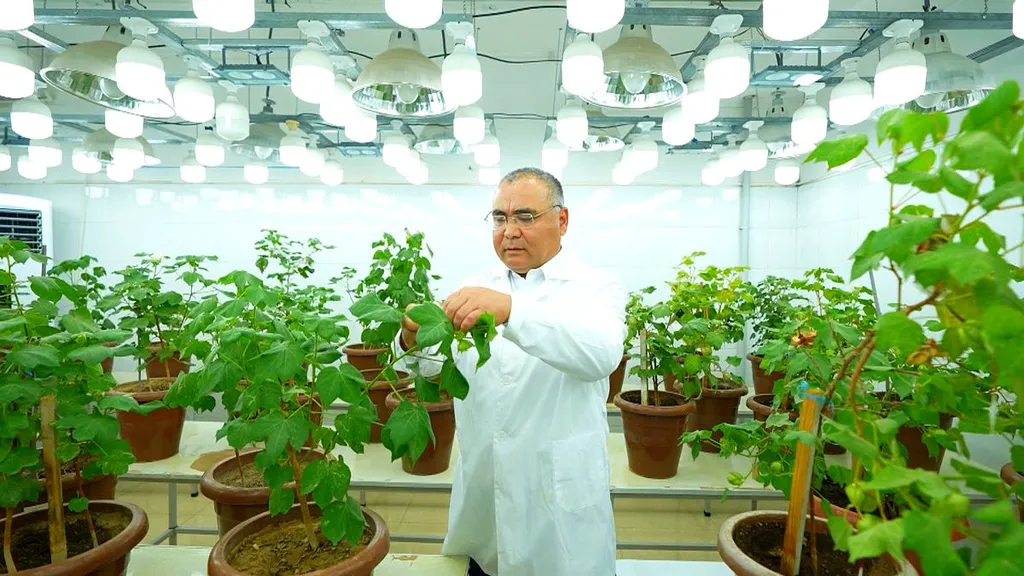
In the face of escalating climate challenges, farmers are constantly seeking innovative strategies to bolster crop resilience and productivity. A recent study published in the *Journal of Sustainable Agriculture and Environment* offers a promising solution for legume crops, particularly common beans, which are vital sources of nutrients but highly susceptible to drought stress. The research, led by Dilfuza Jabborova from the Institute of Genetics and Plant Experimental Biology of the Academy Sciences of Uzbekistan, explores the combined application of biochar and arbuscular mycorrhizal fungi (AMF) to enhance plant growth and soil functionality under drought conditions.
The study, conducted in a net house experiment, evaluated various treatments involving biochar application, AMF inoculation, and a combination of both. The results were striking. Both biochar and AMF treatments significantly improved plant growth parameters and root morphological traits compared to the control under drought stress. However, the real game-changer was the combined application of biochar and AMF, which produced synergistic effects. This combination not only improved root development and soil enzyme activities but also boosted chlorophyll content and microbial biomass.
“Our findings suggest that integrating biochar and AMF applications can effectively mitigate the negative impacts of drought by enhancing soil microbial activity and plant physiological responses,” Jabborova explained. This is a significant breakthrough, as drought stress is a major constraint to agricultural productivity worldwide, particularly in regions where legume crops are a staple.
The commercial implications of this research are substantial. For the agriculture sector, the ability to enhance crop resilience through sustainable practices could translate into more stable yields and improved food security. As climate change continues to intensify, farmers will need all the tools they can get to adapt to changing conditions. The integration of biochar and AMF offers a promising avenue for sustainable agriculture, potentially reducing the need for chemical fertilizers and pesticides while improving soil health.
Moreover, the study provides valuable insights into the mechanisms behind plant growth promotion and soil functionality. By understanding how biochar and AMF interact to enhance root development and soil enzyme activities, researchers can develop more targeted strategies for crop management. This could lead to the development of new agricultural technologies and practices that are both environmentally friendly and economically viable.
As we look to the future, the findings of this research could shape the development of new agricultural technologies and practices. The integration of biochar and AMF offers a promising avenue for sustainable agriculture, potentially reducing the need for chemical fertilizers and pesticides while improving soil health. This could lead to the development of new agricultural technologies and practices that are both environmentally friendly and economically viable.
In the words of Jabborova, “This study provides valuable insights into sustainable practices for legume productivity under drought stress.” As the agriculture sector continues to grapple with the challenges posed by climate change, such insights are invaluable. They offer hope for a future where farmers can not only adapt to changing conditions but also thrive in them.