
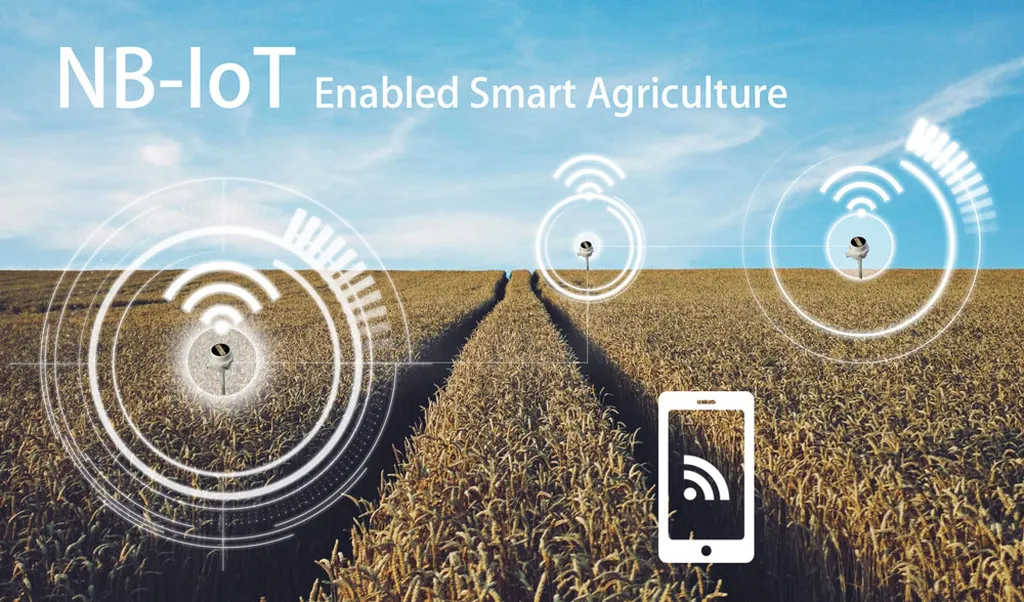
In the quest to modernize agriculture and promote sustainable resource use, researchers have developed a low-cost smart irrigation system that could revolutionize how farmers manage water and energy. The system, detailed in a recent study published in *PLoS ONE*, leverages NB-IoT (Narrowband Internet of Things) technology to offer a cost-effective solution that doesn’t compromise on performance.
The study, led by Yuhang Wang, introduces a three-layer module architecture designed to enhance efficiency in irrigation systems. This architecture not only optimizes resource use but also addresses the high running costs that have historically plagued smart irrigation systems. “The goal was to create a system that is both practical and affordable, meeting the demands of modern agricultural development,” Wang explained.
The system underwent rigorous testing to ensure its reliability and performance. Waveform stability tests revealed that the carrier frequency offset remained within the standard allowable range, reaching -1.50 MHz, with a peak transmit power of -20 dBm. Communication performance tests showed that the optimal communication distance is within 1600 meters, with an ideal packet loss rate of ≤10%. Precision tests demonstrated an average irrigation error of 1.76 in simulations and 1.74 in field tests, meeting industrial accuracy standards.
One of the most significant achievements of this research is the reduction in hardware costs. The total hardware cost of the system is 17.5-29.3% lower than other similar low-cost systems, making it an attractive option for farmers looking to adopt smart irrigation technologies without breaking the bank.
The commercial implications for the agriculture sector are substantial. With water and energy costs on the rise, farmers are increasingly seeking ways to optimize their resource use. This low-cost smart irrigation system offers a viable solution that can help farmers reduce their operational costs while improving the efficiency of their irrigation systems. “This technology has the potential to transform the way farmers approach irrigation, making it more sustainable and cost-effective,” said Wang.
The research also provides new insights into advancing smart agriculture and resource sustainability. By demonstrating that high accuracy and low cost can coexist, this study paves the way for further innovations in the field. As the agriculture sector continues to evolve, technologies like this will play a crucial role in shaping the future of farming.
The study, published in *PLoS ONE*, was led by Yuhang Wang, whose affiliation details are not provided. This research highlights the importance of continuous innovation in agricultural technology and its potential to drive sustainable development in the sector.