
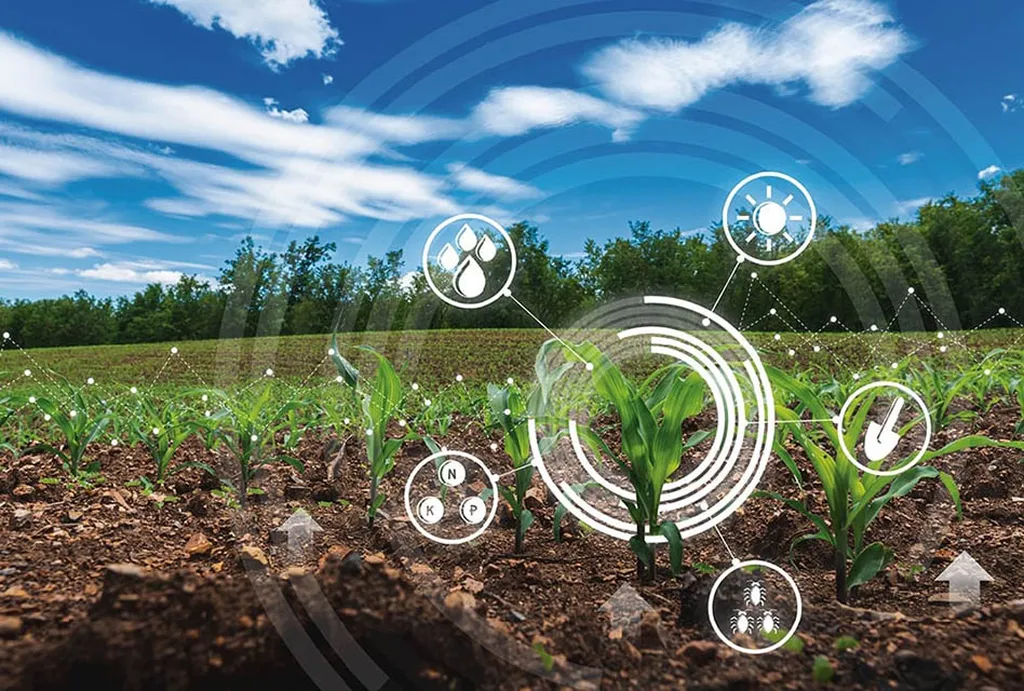
In the ever-evolving landscape of precision agriculture, a groundbreaking study published in *PLoS ONE* has introduced a novel approach to estimating olive leaf area, a critical metric for monitoring plant health and growth. The research, led by Yazgan Tunç, leverages artificial intelligence (AI) and traditional statistical methods to provide farmers and breeders with accurate, non-destructive tools for phenotyping and growth management.
Olive cultivation is a cornerstone of global agriculture, with the fruit and its derivatives playing pivotal roles in culinary, cosmetic, and pharmaceutical industries. However, optimizing yield and quality hinges on a deep understanding of plant physiology, particularly the leaf area, which influences photosynthesis, water use efficiency, and overall plant vigor. Traditional methods of measuring leaf area are often labor-intensive and destructive, limiting their practical application in large-scale farming.
The study in question addresses these challenges by comparing the predictive performances of multiple linear regression (MLR) and artificial neural networks (ANN) in estimating leaf area using simple geometric properties—leaf length and width. The research team collected data from 1,320 leaf samples across 22 olive cultivars, ensuring a broad representation of genetic diversity.
Both MLR and ANN models demonstrated remarkable accuracy. The MLR models explained up to 96% of the variation in leaf area, with low root mean square errors, indicating strong reliability. When cultivar identity was included as a categorical factor, the models captured significant cultivar-specific effects without compromising predictive performance. The ANN models, however, achieved slightly higher accuracy, with determination coefficients exceeding 0.99 and minimal prediction errors. This superior performance highlights the ANN’s ability to model complex, nonlinear relationships, which are often overlooked by traditional statistical methods.
“Our findings suggest that both MLR and ANN models are viable for practical applications in olive cultivation,” said Yazgan Tunç, the lead author of the study. “The ANN models offer a slight edge in accuracy, but the MLR models are equally reliable and easier to implement, making them a practical choice for many farmers.”
The commercial implications of this research are substantial. Accurate, non-destructive estimation of leaf area can revolutionize precision agriculture by enabling real-time monitoring of plant health and growth. Farmers can use these models to optimize irrigation, fertilization, and pest management strategies, ultimately enhancing yield and quality. Additionally, breeders can leverage these tools for rapid phenotyping, accelerating the development of new, high-performing olive cultivars.
Looking ahead, the integration of AI and machine learning in agriculture is poised to transform the sector. As Yazgan Tunç noted, “The potential of AI in agriculture is vast. By harnessing the power of data and advanced analytics, we can develop more sustainable and efficient farming practices, benefiting both producers and consumers.”
The study, published in *PLoS ONE*, represents a significant step forward in this direction, offering practical, scalable solutions for olive cultivation. As the agricultural sector continues to embrace digital transformation, such innovations will play a crucial role in shaping the future of farming.