
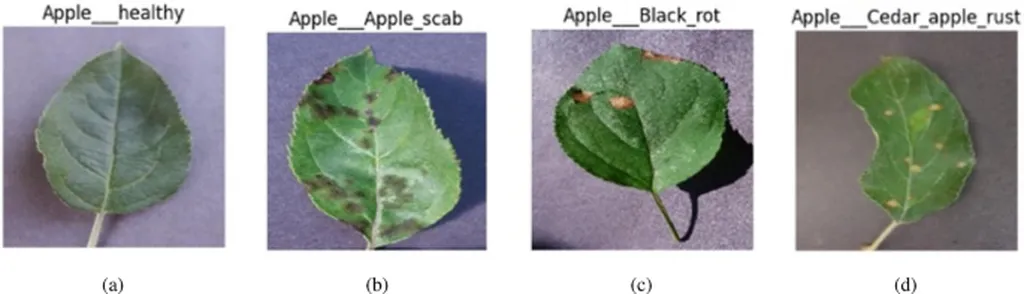
In the ever-evolving landscape of agriculture, technology is playing an increasingly pivotal role in enhancing crop yields and ensuring food security. A recent study published in the Sakarya University Journal of Computer and Information Sciences has made significant strides in this arena, focusing on the detection of apple plant leaf diseases using advanced machine learning techniques. The research, led by Cemal Yüksel from Bandırma Onyedi Eylül University, explores the potential of transfer learning methods to improve the accuracy and reliability of disease detection in apple plants.
The study underscores the critical importance of early disease detection in agriculture. “Enhancements in automated disease detection and analysis can offer significant advantages for taking prompt action,” Yüksel explains. “This proactive approach could help minimize damage to crop yields and ensure healthier produce.” By implementing image processing techniques with apple leaf photographs, the research aims to discriminate between sick and healthy plants, thereby enabling timely interventions.
The research conducted experiments on a real-world dataset comprising 3164 apple leaf images. Traditional machine learning methods were initially applied, but the real breakthrough came with the implementation of transfer learning techniques. Among these, EfficientNetB0 stood out, significantly improving classification accuracy. The results were impressive, with accuracy and F-score values exceeding 99%, indicating a high level of reliability for plant disease detection tasks.
The commercial implications of this research for the agriculture sector are profound. Accurate and timely disease detection can lead to more efficient use of resources, reduced crop losses, and ultimately, higher profitability for farmers. “This technology has the potential to revolutionize the way we approach plant health management,” Yüksel notes. “By integrating these advanced detection methods into existing agricultural practices, we can enhance productivity and sustainability.”
The study’s findings suggest that transfer learning methods could be a game-changer in the field of plant disease detection. As the agriculture industry continues to embrace technological advancements, the integration of machine learning and image processing techniques is likely to become more prevalent. This research not only highlights the current capabilities of these technologies but also paves the way for future developments in agricultural innovation.
In the broader context, the successful application of transfer learning in plant disease detection could inspire similar approaches in other areas of agriculture. From soil health monitoring to pest control, the potential applications of advanced machine learning techniques are vast. As the industry continues to evolve, the synergy between technology and agriculture will undoubtedly play a crucial role in shaping the future of food production.
The research led by Cemal Yüksel from Bandırma Onyedi Eylül University, published in the Sakarya University Journal of Computer and Information Sciences, represents a significant step forward in the integration of technology and agriculture. By leveraging the power of transfer learning, the study demonstrates the potential to enhance disease detection accuracy and improve overall crop health. As the agriculture sector continues to embrace these technological advancements, the benefits for farmers and consumers alike are immense. The future of agriculture is increasingly intertwined with technology, and this research is a testament to the exciting possibilities that lie ahead.