
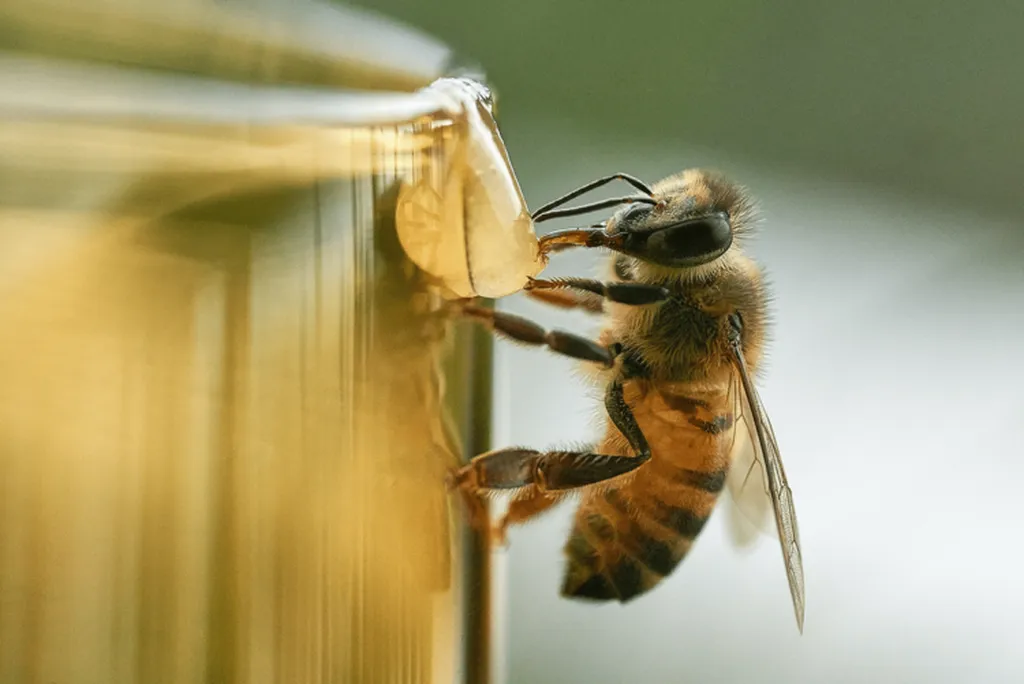
In the heart of Brazilian coffee farms, a tiny, stingless bee is making a big difference. A recent study published in *Frontiers in Bee Science* reveals that the stingless bee *Scaptotrigona depilis* can significantly boost coffee yields, offering a promising avenue for sustainable agriculture. The research, led by Jenifer Dias Ramos from the Brazilian Agriculture Research Corporation – Embrapa Environment, sheds light on the intricate relationship between pollinators, pesticides, and crop productivity.
Coffee production relies heavily on pollination, but the combined effects of managed pollinators and pesticide use on crop yield and pollinator health have remained largely unexplored. Ramos and her team set out to change that. They introduced colonies of *S. depilis* into both conventional and organic coffee farms, measuring coffee yield in branches near and far from the bee colonies. The results were striking: supplemental pollination by these stingless bees increased coffee yield by an impressive 67% in branches closer to the colonies.
“This study highlights the potential of stingless bees as effective pollinators in coffee production,” Ramos explained. “Their contribution to yield enhancement is substantial, and their role in sustainable agriculture cannot be overstated.”
The research also delved into the impact of thiamethoxam, a neonicotinoid insecticide, on colony strength. Low but detectable residues of thiamethoxam and its metabolite clothianidin were found in plant tissues and bee-collected resources. Surprisingly, no significant negative effects were observed on brood production or brood mortality in colonies located in conventional farms compared to those in organic farms. Foraging activity differed between farm types before exposure to coffee bloom but normalized over time.
These findings offer practical insights for developing more sustainable coffee production strategies that align productivity with pollinator health and conservation. “Managed stingless bees can markedly enhance coffee production without experiencing measurable detrimental effects under current label-compliant neonicotinoid use,” Ramos noted.
The commercial implications for the agriculture sector are profound. As the demand for sustainable and eco-friendly farming practices grows, the integration of stingless bees into coffee production could become a game-changer. Farmers can potentially increase their yields while maintaining the health of their pollinator populations, a win-win scenario for both productivity and environmental stewardship.
This research not only underscores the importance of native pollinators but also paves the way for future developments in integrated pest and pollinator management. As the agricultural sector continues to evolve, the insights gained from this study could shape more resilient and sustainable farming practices, ensuring that both crops and pollinators thrive together.
In a world where sustainable agriculture is increasingly becoming a priority, the humble stingless bee might just be the unsung hero of coffee farms, offering a beacon of hope for a more harmonious and productive future.