
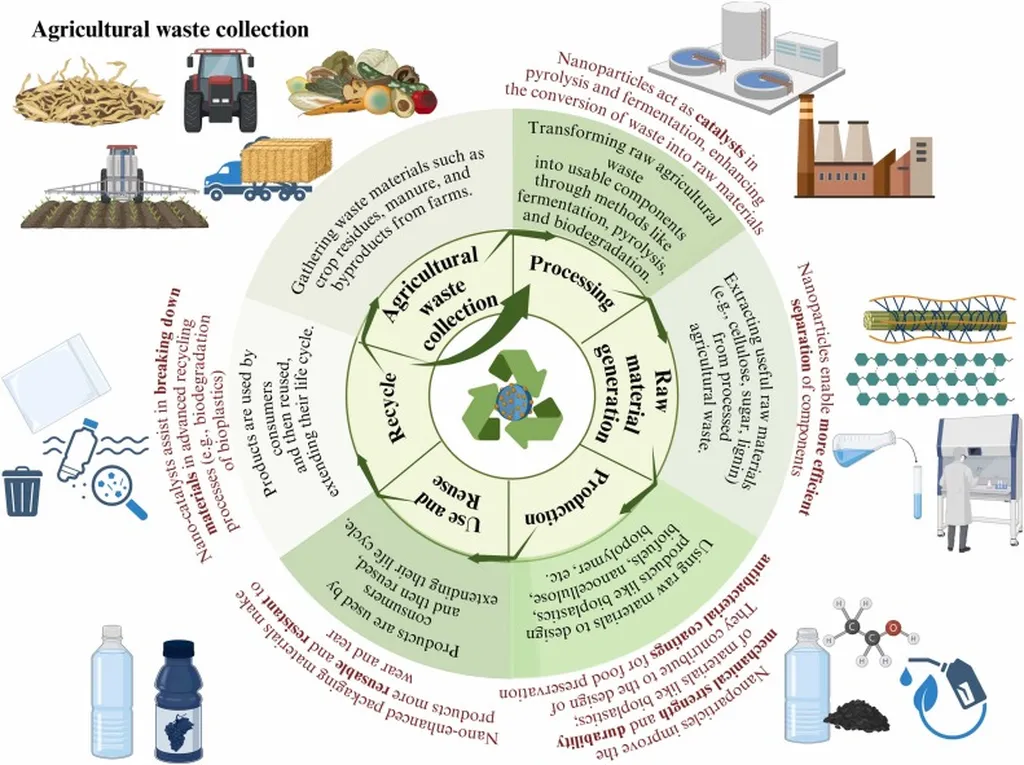
In the heart of Baltimore, Maryland, a quiet revolution is taking place in the agriculture industry. Farmers and ranchers, long burdened by economic pressures and growing environmental scrutiny, are finding innovative ways to transform waste and emissions from a liability into an asset. This shift towards sustainability and profitability is being driven by the development of on-farm technologies designed to capture emissions and convert them into valuable products.
The agriculture industry in the United States is responsible for about 9.4% of direct greenhouse gas emissions, with livestock and manure contributing significantly to methane and nitrous oxide emissions. Rising input costs and market volatility are further straining farmers, making the need for a circular economy on farms more pressing than ever.
Professionals have risen to the challenge, creating a variety of on-farm technologies aimed at capturing emissions and reducing the overall environmental impact of farms. These technologies not only help mitigate emissions but also turn them into profitable outcomes. For instance, farmers can now produce natural fertilizers using innovative technologies. Livestock waste can be converted into biogas, a renewable natural gas, and digestate, a nutrient-rich fertilizer. This not only provides a sustainable source of fertilizer for the farm but also offers an additional revenue stream through the sale of biogas.
Another promising technology involves the creation of clean fertilizer by converting wind and air without any fossil fuels. A device that takes water vapor and nitrogen from the air and uses wind energy to perform ammonia synthesis is a prime example. This process creates fertilizer without heat or emissions, significantly reducing fertilizer expenses and enhancing sustainability.
Water management is another area where technology is making a significant impact. Farmers can now safely reuse leftover wastewater from other agricultural operations. Machines treat the water to remove any potentially toxic substances, making it safe for watering crops or feeding livestock. This not only reduces water waste but also lowers emissions.
Smart tractors, which run on electricity, are another innovation that is helping to reduce emissions. These vehicles can run for hours on a full charge using an oil-cooled thermal system and charge quickly, saving farms money on fuel and cutting back on emissions.
Pesticide application has also seen advancements with the introduction of a new pesticide spray that sticks to leaves, preventing the need for continuous spraying. This not only saves time and money but also reduces the amount of pesticide-related chemicals in the air.
Artificial Intelligence (AI) and the Internet of Things (IoT) are also playing a crucial role in emission capture. Certain AI models can calculate the nutrient cycle of crops and provide farmers with data on when and how to reuse leftover materials. IoT compost devices, on the other hand, provide the necessary moisture and temperatures to decompose organic matter faster, preparing it for reuse. These technologies reduce farm emissions and costs by recycling used materials.
The benefits of emission-capturing technology are manifold. It saves on costs and time, and makes farming practices more sustainable. For instance, farmers can sell back any excess electricity or renewable natural gas generated from these technologies to the energy grid, creating a new source of revenue. Using equipment that generates renewable energy also saves money in the long run. For example, electric trucks cost about $1,066 per year, which is significantly less than a traditional vehicle.
On-site fertilizer production is another area where farms can save money and enhance sustainability. Using fertilizer created through natural methods not only reduces the need for store-bought fertilizer but also allows ranchers to charge premium prices for their products.
To implement emission-to-profit technology, farmers and ranchers should start small and gradually scale up. Understanding the farm through studies, looking at waste streams, potential Return on Investment (ROI) options, and various energy needs is crucial. Identifying the most concerning areas and focusing on technologies that limit the negative impact is a good strategy. While the up-front costs of on-farm technology may be high, the long-term benefits are substantial. Government grants and incentives exist to promote sustainability, and farmers should consider these options if funding is a concern.
In conclusion, new on-farm technologies are creating profits by reducing agricultural costs, saving time, and providing sustainable alternatives to traditional farming practices. Farmers should consider these technologies not as a one-time expense but as a long-term investment to make their farms more resilient and profitable. This shift towards sustainability and profitability is not just a win for farmers but also for the environment and consumers who increasingly demand sustainable and ethically produced food.