
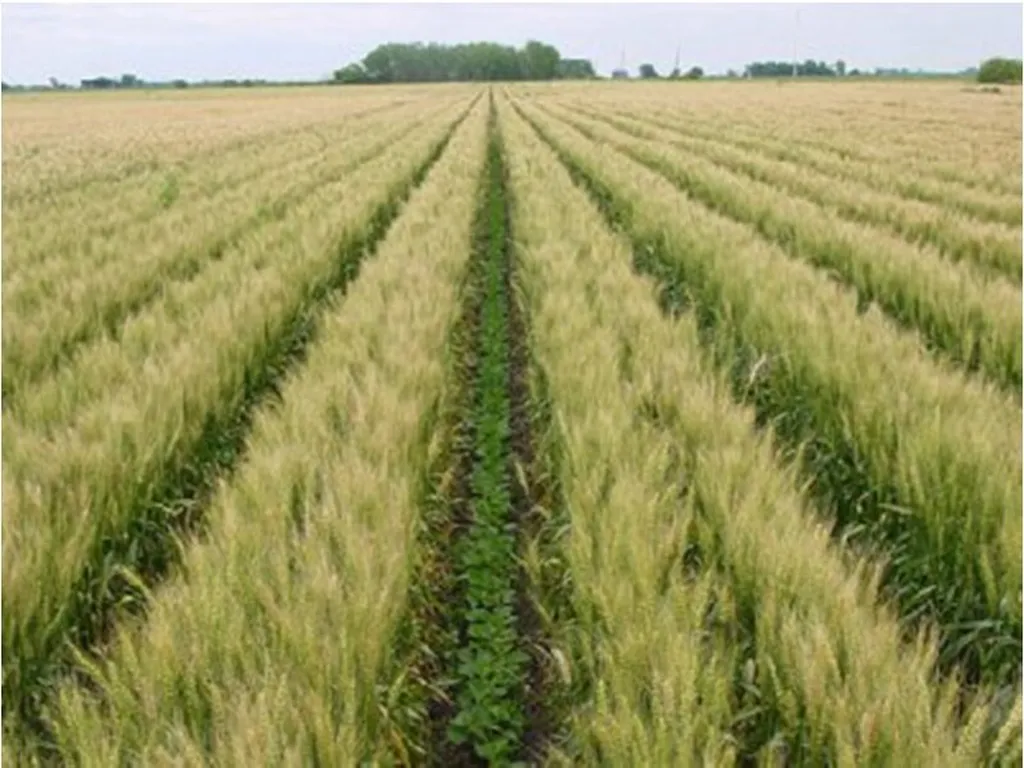
In the quest to feed a growing global population sustainably, farmers and researchers are turning to age-old practices with a modern twist. A recent study published in the *Journal of Agriculture and Food Research* sheds light on the potential of intercropping—growing multiple crop species together—to boost yields and resource efficiency. The research, led by Maryam Mirdoraghi of the Department of Crop Production and Plant Breeding at Shahed University in Tehran, Iran, offers promising insights for the agriculture sector, particularly in the face of climate change and water scarcity.
The study focused on intercropping *Lallemantia iberica* (L. iberica) with chickpeas (*Cicer arietinum* L.) under varying irrigation regimes and sowing dates. The results were striking. The optimal combination of full irrigation and autumn sowing (I20S1) in a 50:50 intercropping system (Ic) yielded a Land Equivalent Ratio (LER) of 2.43, a monetary advantage index (MAI) of 6565.25, and a total land output (TLO) of 3762.3 kg per hectare. These figures highlight the commercial potential of intercropping, offering farmers a pathway to increase productivity without proportionally increasing input costs.
One of the key findings was the dominance of complementary effects (CE) over selection effects (SE) in the intercropping system. “Complementary effects arise from the interplay between different species, such as chickpeas’ deep root systems and nitrogen fixation, which enhance resource-use efficiency and mitigate drought stress,” explained Mirdoraghi. This synergy not only improved overall yield but also made the system more resilient to environmental stresses, a critical factor as climate change intensifies.
The study also revealed that chickpeas, with their competitive edge, thrived under conditions of enhanced nitrogen availability. Meanwhile, the sole cropping system (Ss) suffered a 45% productivity drop under severe deficit irrigation (IS) and spring sowing (S2). However, the intercropping system remained resilient, leveraging nitrogen synergy and reducing intraspecific competition. Autumn sowing further boosted nitrogen uptake and economic returns, aligning with cooler temperatures and seasonal rainfall.
Yet, not all combinations were successful. The Ic (ISS2) treatment resulted in economic losses and shifted species interactions towards competition, reducing the LER by 45%. This underscores the importance of optimal irrigation and sowing conditions for maximizing the benefits of intercropping.
The research offers a blueprint for farmers looking to adopt sustainable, low-input strategies. By harnessing the power of biodiversity and species interactions, intercropping can enhance productivity and resilience, crucial for ensuring food security in a changing climate. As Mirdoraghi noted, “Long-term adaptation strategies will be essential to maintaining these synergies amid increasing environmental challenges.”
The findings published in the *Journal of Agriculture and Food Research* provide a roadmap for future developments in the field, emphasizing the need for tailored approaches that consider local conditions and crop interactions. For the agriculture sector, this research is a call to action—to explore and invest in intercropping systems that can deliver both economic and environmental benefits. As the world grapples with the dual challenges of feeding a growing population and mitigating climate change, such innovations offer a beacon of hope and a practical pathway forward.