
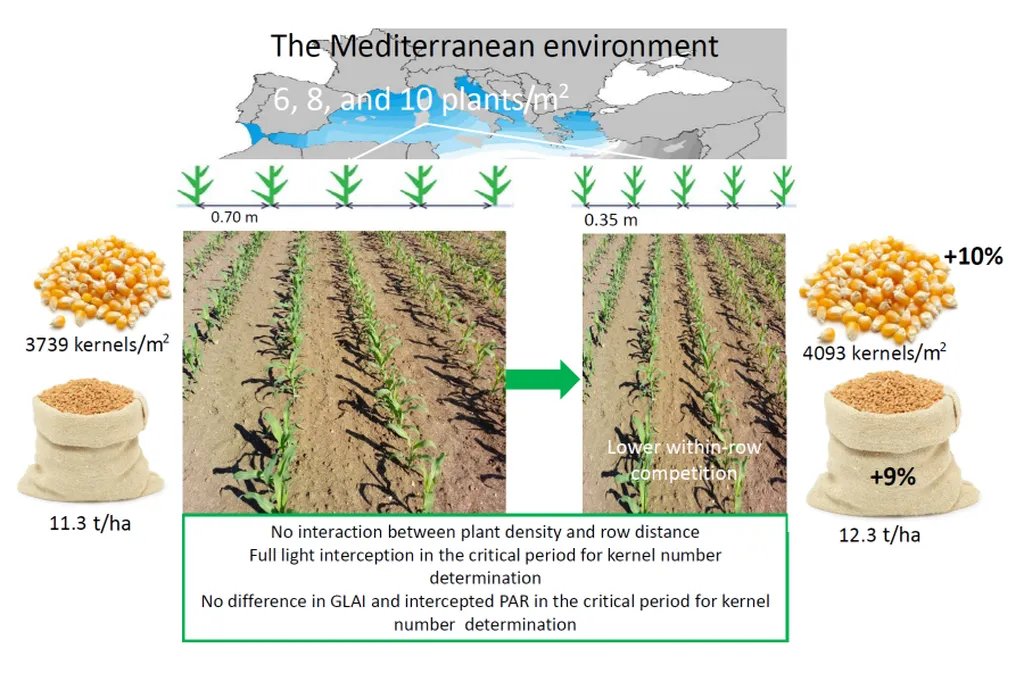
In the pursuit of sustainable agriculture and improved crop yields, a recent study published in the *International Journal of Recycling of Organic Waste in Agriculture* offers promising insights for maize farmers. The research, led by Slameto Slameto, explores the combined benefits of double-narrow row (DNR) planting and biosilica fertilizer derived from rice husk waste, presenting a novel approach to enhancing maize productivity and profitability.
The study, conducted in a completely randomized design with three replications, compared two plant spatial arrangements—DNR and conventional row (CR) plant spacing—across six maize cultivars. The researchers also examined the impact of applying biosilica fertilizer in the form of Si-nanoparticles, either with or without its inclusion. The findings revealed a significant correlation between the number of seeds per row, the number of leaves per plant, and maize grain yield, highlighting these characteristics as key drivers of productivity.
One of the most striking outcomes was the substantial increase in maize productivity when biosilica fertilizer was applied in conjunction with DNR plant spacing. This combination led to a yield boost of 0.96 t ha–1, representing a 9.90% improvement over conventional methods. Moreover, farmers stood to gain an additional net return of USD 183.49 ha–1 per cycle, a figure that underscores the commercial viability of this approach.
“The application of biosilica fertilizer with DNR plant spacing not only enhances yield but also contributes to more sustainable agricultural practices,” said Slameto Slameto, the lead author of the study. “This method leverages agricultural waste, such as rice husks, to create a valuable fertilizer, thereby closing the loop in the agricultural ecosystem.”
The research also identified an exploitable yield gap of 21.35%, suggesting that there is considerable room for further increasing maize productivity. This gap presents an opportunity for farmers to adopt innovative practices that can lead to higher yields and better economic returns.
The implications of this study extend beyond immediate gains in yield and profit. By demonstrating the effectiveness of DNR planting and biosilica fertilizer, the research paves the way for more sustainable and efficient agricultural practices. The use of rice husk waste as a source of silicon fertilizer not only reduces environmental waste but also provides a cost-effective solution for farmers.
As the agricultural sector continues to grapple with the challenges of climate change, resource depletion, and the need for sustainable practices, studies like this one offer a beacon of hope. The integration of agritech innovations with traditional farming methods can drive the sector towards a more resilient and profitable future.
For maize farmers looking to enhance their productivity and profitability, the findings from this study provide a compelling case for adopting DNR planting systems and biosilica fertilizers. The potential for increased yields and net returns, coupled with the environmental benefits, makes this approach a win-win for both farmers and the planet.
As the agricultural community continues to explore and implement these innovative practices, the future of maize farming looks brighter and more sustainable. The research published in the *International Journal of Recycling of Organic Waste in Agriculture* serves as a testament to the power of scientific inquiry and its potential to transform the agricultural landscape.