
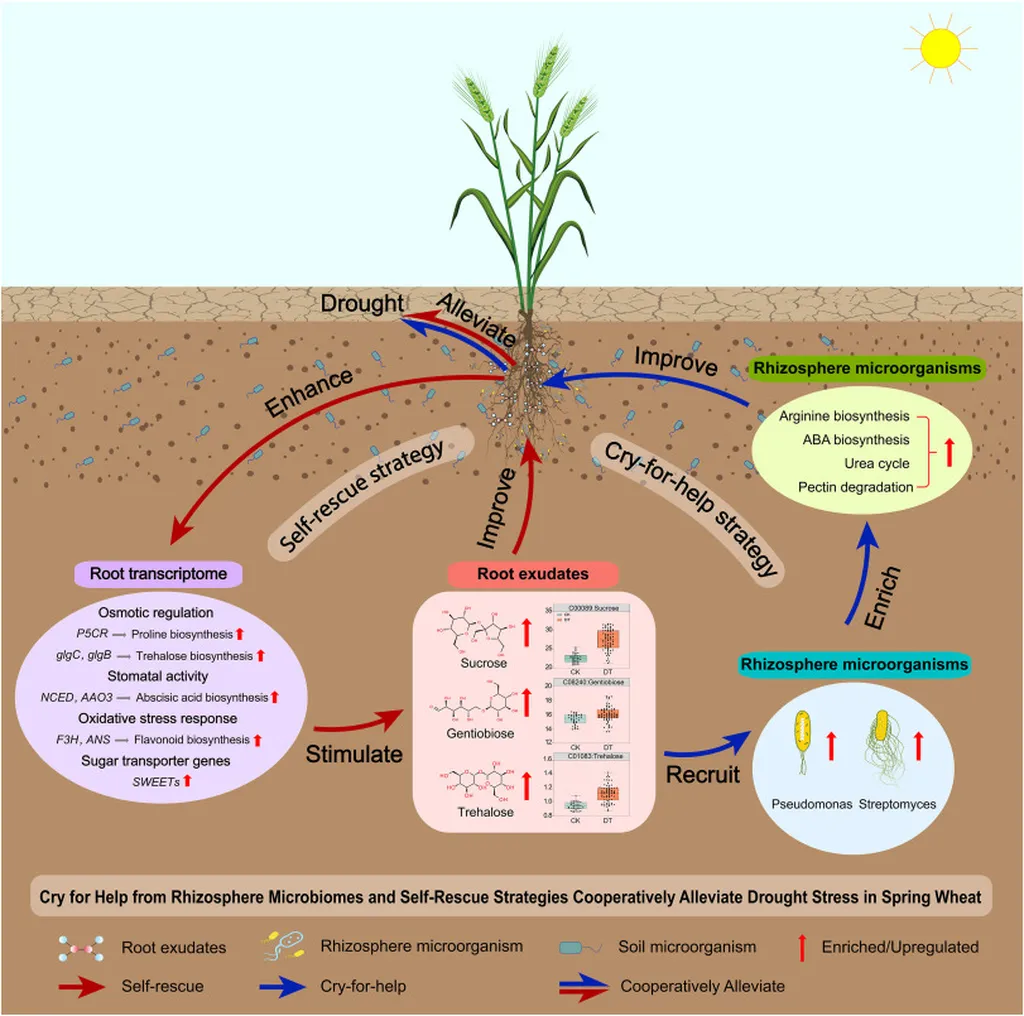
In the face of escalating climate challenges, scientists are turning to nature’s tiniest allies to bolster crop resilience. A recent opinion article published in *Frontiers in Plant Science* sheds light on the promising role of beneficial microorganisms in mitigating drought stress, offering a sustainable alternative to conventional agricultural practices.
Drought stress is a formidable adversary for global agriculture, with climate change and water scarcity intensifying the pressure on farmers. Traditional strategies like breeding and genetic engineering have made strides in improving drought tolerance, but their scalability and adaptability often fall short. Enter microbial interventions—a burgeoning field that leverages the power of plant-associated microorganisms to enhance crop resilience under water-deficit conditions.
The article, led by Kumar D. Gahlot, explores innovative microbial strategies, highlighting the potential of Rhizobium strains, digested distillery spent wash, and multi-omics technologies. Rhizobium strains, known for their symbiotic relationship with legumes, have been shown to significantly improve soil fertility, nodulation, and nitrogen fixation. This not only boosts yields but also enhances soil health in drought-prone regions.
“Developed Rhizobium strains offer a dual advantage: they improve plant health and contribute to sustainable soil management,” Gahlot notes. “This is particularly crucial in regions where water scarcity is a persistent challenge.”
The application of digested distillery spent wash in chickpea (Cicer arietinum) has also yielded promising results. This approach enhances nutrient uptake, photosynthetic activity, and drought tolerance, demonstrating the potential of waste materials in sustainable agriculture.
Advances in genomics, transcriptomics, proteomics, and metabolomics have unveiled the intricate interactions between plants and microbes. These multi-omics technologies identify microbial metabolites and signaling pathways that activate drought-responsive genes and osmo-protective mechanisms. “Understanding these interactions at a molecular level allows us to develop targeted microbial interventions that can be deployed in diverse agricultural settings,” Gahlot explains.
Despite these advancements, translating laboratory results to field conditions remains a challenge due to soil heterogeneity and microbial competition. Precision microbiome engineering, informed by multi-omics data, and the development of tailored microbial consortia represent the next frontier in sustainable agriculture. By integrating ecological complexity with technological innovation, these strategies can reduce chemical inputs, promote regenerative practices, and build resilient agroecosystems.
The commercial implications for the agriculture sector are substantial. Microbial interventions offer a cost-effective and scalable solution to enhance crop resilience, reduce water usage, and improve soil health. This aligns with the growing demand for sustainable and regenerative agricultural practices, driven by consumer awareness and regulatory pressures.
As the agriculture sector grapples with the impacts of climate change, the integration of microbial strategies into mainstream farming practices could be a game-changer. By elevating microbes from supporting roles to central players, we can address drought stress and ensure global food security.
The research, published in *Frontiers in Plant Science* and led by Kumar D. Gahlot, underscores the transformative potential of microbial interventions in sustainable agriculture. As we navigate the complexities of climate change, these tiny allies may hold the key to a more resilient and sustainable future for global agriculture.