
In the heart of Rwanda, Maurice Manishimwe’s small garage in Musango village, just outside the capital Kigali, tells a story of resilience and the growing impact of climate change. Sandwiched between a hill and the Nyabugogo River, Manishimwe’s workshop frequently faces the brunt of heavy rains and flooding. The December 2023 storm, for instance, submerged his shop and destroyed thousands of dollars worth of inventory and tools. Despite his efforts to elevate his workspace and reinforce it against future floods, the threat remains, underscoring the broader challenges Kigali faces due to increasingly intense rainy seasons.
Kigali, known for its lush landscapes and hilly terrain, has historically received nearly 40 inches of rain annually. However, the Rwanda Environment Management Authority (REMA) notes that rainy seasons are becoming shorter and more intense, a trend exacerbated by climate change. The city’s rapid urban growth, with a population increase of 4 percent annually since 2020, has led to extensive concrete construction, reducing the land’s ability to absorb rainwater and increasing runoff. This urban expansion, coupled with decades of wetland degradation due to agriculture, sand mining, and industrial dumping, has significantly diminished the city’s natural defenses against flooding.
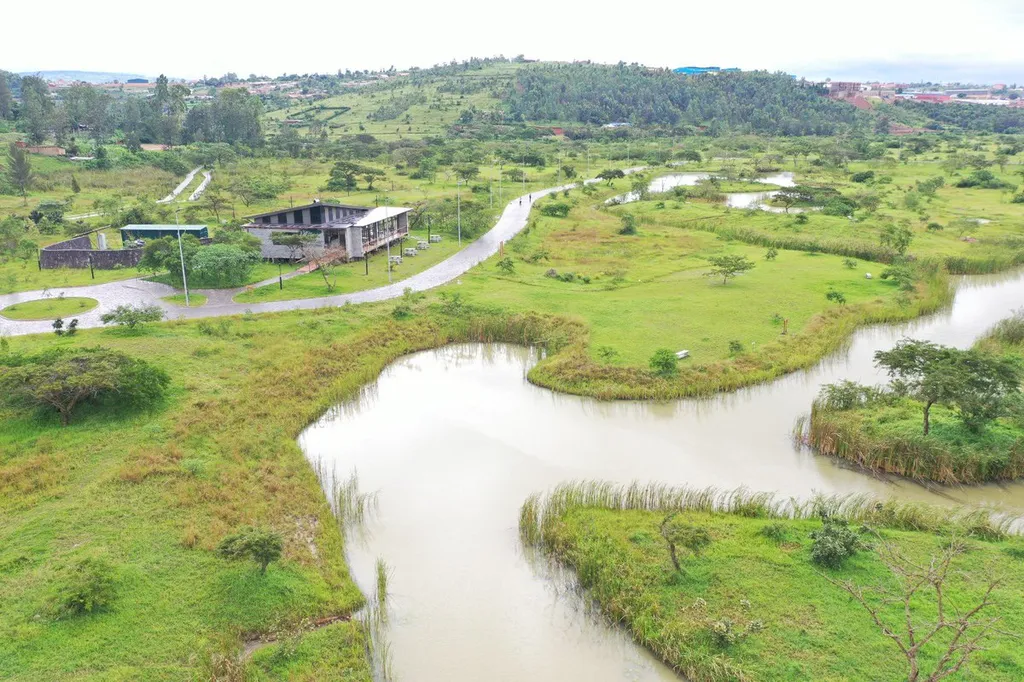
Recognizing the urgent need to protect its citizens and infrastructure, Kigali embarked on an ambitious project nearly a decade ago to restore its wetlands. The city’s initial success in converting a degraded swamp into a functional wetland, complete with ponds, riverine forests, and savannas, has demonstrated the potential of nature-based solutions to mitigate flooding, enhance biodiversity, and create green spaces. This project, spanning over 18,000 acres, aims to restore an integrated wetland system that will reshape Kigali’s landscape and boost its resilience against climate change.
The restoration of Kigali’s wetlands is not just an environmental endeavor but also a strategic economic move. The flooding caused by heavy rains erodes soil, destroys buildings, and infrastructure, leading to tens of millions of dollars in annual damages, according to Rwandan economist Teddy Kaberuka. By investing in wetland restoration, Kigali aims to curb financial losses, protect property, and create sustainable urban spaces that benefit both wildlife and communities.
However, the restoration efforts come with challenges, particularly for the agricultural sector and the investors involved. Many of the areas earmarked for wetland restoration have been informally used for agriculture, providing livelihoods for thousands of farming households. The Kigali Master Plan 2050, which aims to restore and protect 18,000 acres of wetlands, could potentially displace over 14,000 farming households, posing a significant socio-economic challenge. Balancing the need for flood protection and climate resilience with the agricultural needs of the population will be crucial for the success of these restoration projects.
For investors, the wetland restoration projects present both opportunities and risks. On one hand, the creation of green spaces and the enhancement of urban resilience can attract investment in eco-tourism, sustainable urban development, and environmental technologies. On the other hand, the displacement of agricultural activities and the need for alternative livelihoods for affected households require careful planning and investment in social support systems.
As Kigali continues to expand and adapt to the challenges posed by climate change, its wetland restoration projects offer a model for other African cities facing similar issues. The success of these projects will depend on effective design, financing, community engagement, and the ability to balance environmental, economic, and social needs. For the agricultural sector and investors, the implications are significant, highlighting the need for innovative solutions that can support sustainable development and climate resilience.