
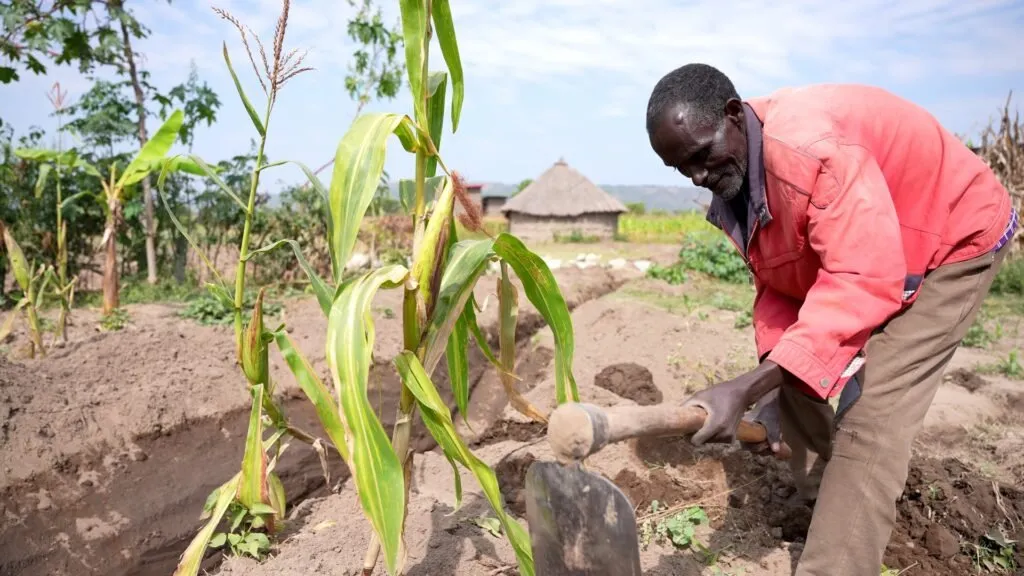
In the heart of western Ethiopia, where the effects of climate change are increasingly threatening food security, a beacon of hope emerges from the fields of climate-smart agriculture (CSA). A recent study published in *Regional Sustainability* and led by Yadeta Bedasa from the Department of Agricultural Economics at Jimma University has shed light on how the combined adoption of CSA practices can significantly boost maize yields, offering a promising path forward for farmers in the region.
The study, which involved 385 households during the 2023–2024 production period, delved into the factors influencing adoption decisions and the impacts of these practices on maize yield. Using the multinomial endogenous switching regression (MESR) model, the researchers found that age, gender, farm size, and education positively influenced the adoption of CSA practices. Conversely, the distance from household residences to markets and plots had a negative impact.
One of the most striking findings was the substantial increase in maize yield for adopters of CSA practices. Specifically, agroforestry, crop diversification, and adjusted planting dates led to yield increases of 0.21, 0.70, and 0.52 t/hm², respectively, compared to non-adopters. “The implementation of combined CSA practices, rather than a single CSA practice, is a great way to mitigate the negative impacts of climate change,” Bedasa emphasized.
The commercial implications of these findings are profound. For the agriculture sector, the adoption of combined CSA practices could mean not only increased yields but also greater resilience to climate change. This could translate into more stable food supplies, improved livelihoods for farmers, and enhanced economic stability in the region. “Ensuring adequate funding, providing incentives, facilitating technical assistance, and fostering community involvement are crucial for the successful implementation of combined CSA practices,” Bedasa added.
The study’s findings suggest that the future of agriculture in western Ethiopia—and potentially in other regions facing similar challenges—lies in the strategic combination of CSA practices. By integrating agroforestry, crop diversification, and adjusted planting dates, farmers can achieve higher yields and better adapt to the changing climate. This research could shape future developments in the field by encouraging policymakers, agricultural extension services, and international organizations to prioritize and support the adoption of these practices.
As the world grapples with the escalating impacts of climate change, the insights from this study offer a practical and effective strategy for enhancing food security and agricultural productivity. The call to action is clear: invest in CSA practices, provide the necessary support to farmers, and foster a collaborative approach to mitigate the adverse effects of climate change. In doing so, we can pave the way for a more sustainable and resilient future for agriculture.