
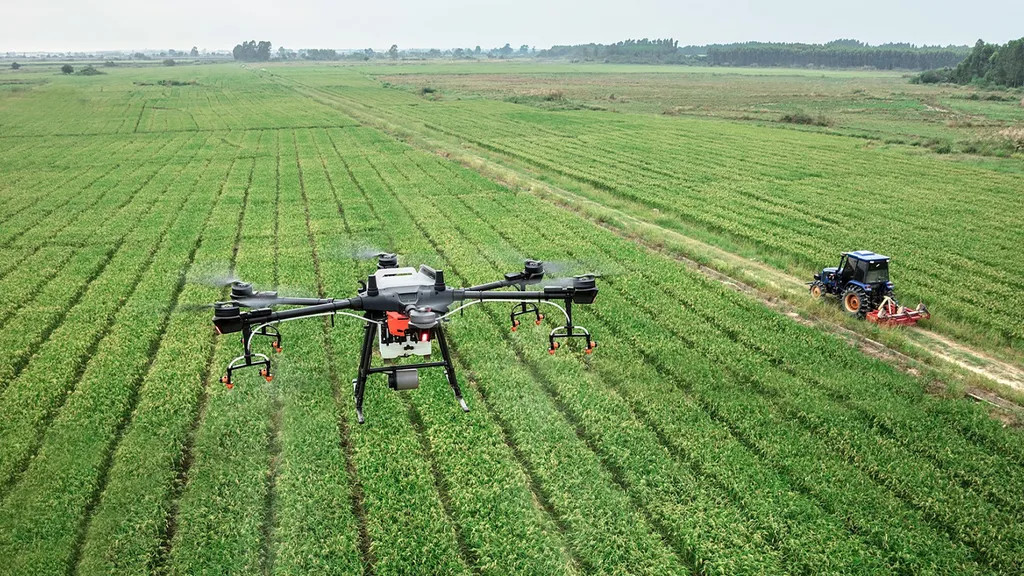
At the foothills of Musanze’s volcanic highlands, a quiet revolution is taking root. Across Rwanda, a new generation of agripreneurs is harnessing innovation, data, and green technology to transform the country’s farming systems. Their mission is clear: to make agriculture more productive, sustainable, and resilient in the face of climate change.
Agriculture is the backbone of Rwanda’s economy, employing about 43% of the workforce and contributing roughly 25% of the nation’s GDP. However, rising temperatures, erratic rainfall, and soil degradation threaten yields and livelihoods. In response, young innovators are proving that climate-smart agriculture is not just a concept, but the future of Rwanda’s food security and rural transformation.
In Musanze District, Shimo Yvette Umurerwa, founder and managing director of Farmiza Limited, is leading this change. Her company cultivates Irish potatoes, broccoli, and beetroots while promoting organic and climate-friendly practices. “As young people, we are the drivers of change,” she says. “Technology is transforming agriculture, and most of these innovations come from youth.”
Farmiza uses precision irrigation tools that measure exactly how much water each plant needs, a significant shift from traditional farming methods. The startup also promotes organic fertilizers and natural pesticides, training local farmers to adopt eco-friendly techniques that restore soil fertility and reduce chemical pollution.
Shimo Yvette believes meaningful change begins at the grassroots level. “I teach nearby farmers how to make and use organic compost,” she explains. “We also encourage solar-powered irrigation, indigenous tree planting, and terracing to prevent soil erosion. These are small steps, but they protect our environment and ensure long-term productivity.”
Her message to aspiring young farmers is simple and powerful: “Start small. Use what you have. You don’t need a lot of capital to begin—only vision, consistency, and passion.”
Several hundred kilometers away, Munyemana Jean Pierre, CEO of Egera Umuhinzi Initiative, is redefining how agricultural challenges can become business opportunities. After working as an agronomist in Rutsiro District, he witnessed the daily struggles farmers face: lack of quality seeds, poor market access, and limited technical support. “I asked myself how I could help as a young agronomist,” he recalls. “That’s when the idea for Egera Umuhinzi Initiative was born—to collect farmers’ problems and turn them into profitable, sustainable solutions.”
Today, his initiative has helped create three youth-led companies in mushroom production, pig farming, and fruit propagation, employing more than 200 workers, both permanent and casual. “We don’t just create jobs,” Jean Pierre explains. “We help families. When people work with us, they can send children to school, buy household needs, and build better lives.”
Egera Umuhinzi’s mushroom enterprise alone produces 200 kilograms per month and is now expanding into mushroom chips and seed tubes for other growers. What started with an initial capital of 100,000 Rwandan francs has grown into a multi-stream business generating hundreds of thousands in monthly income.
Beyond business, Jean Pierre is also reshaping perceptions of farming among Rwanda’s youth. Known online as “agronomme,” he uses social media to share agricultural knowledge, success stories, and concrete opportunities. His message is both urgent and motivating: “We must stop being passive. Opportunities exist everywhere, but they expire because young people are too busy scrolling instead of applying. We need to grab them.”
Both Farmiza and Egera Umuhinzi Initiative share a common vision: making agriculture smarter, cleaner, and more inclusive. Their work reflects Rwanda’s broader push toward climate-smart agriculture, an approach that integrates technology, innovation, and sustainability.
These young pioneers embody a new generation redefining what farming means. They see opportunity in the soil, innovation in the sun, and prosperity in sustainability. Their work proves that climate-smart agriculture is more than a policy—it is a movement powered by creativity, technology, and courage. And as their crops grow, so too does a vision of a Rwanda where young people are not just farming the land; they are farming the future.
To complement private initiatives, the Rwanda TVET Board, with €30 million (Rwf 47 billion) in support from Luxembourg, is establishing agricultural TVET centers of excellence, including one in Busogo Sector, Musanze District. These centers will train young people and farmers in modern, technology-driven agriculture and agro-processing, directly linking education to production. The initiative, part of a national plan to build 30 TVET centers of excellence, aims to boost productivity, create jobs, and promote sustainable agricultural value chains across Rwanda.
As Rwanda advances toward a greener and more digital future, these young pioneers