
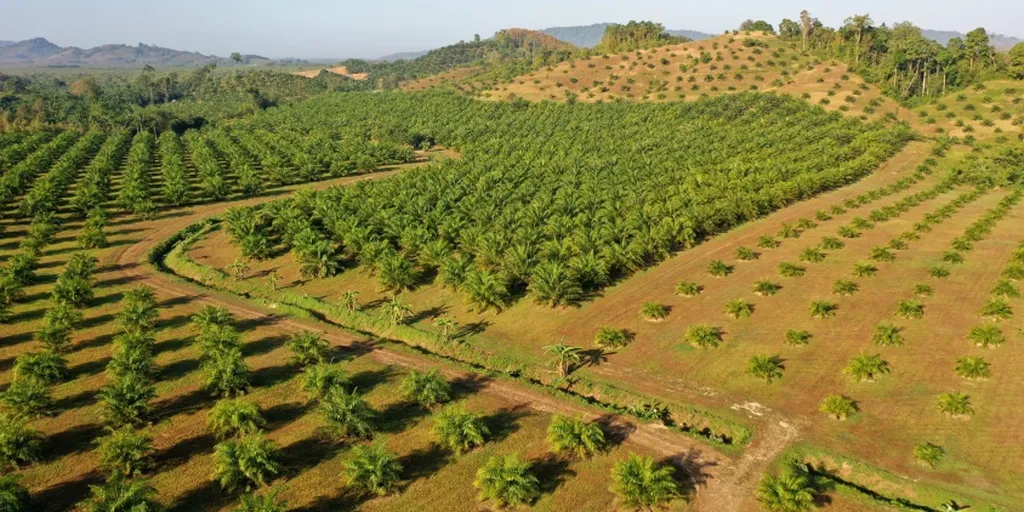
In the heart of Southeast Asia, where the verdant canopies of tropical forests have long given way to the orderly rows of oil palm plantations, a delicate dance between agriculture and conservation is unfolding. A recent study published in *Global Ecology and Conservation* sheds light on how the remnants of high conservation value forests (HCVFs) within oil palm landscapes can support mammal diversity, offering a glimmer of hope for sustainable agriculture.
The research, led by Mohamad Azam Akmal Abu-Bakar from the Department of Biological Sciences and Biotechnology at Universiti Kebangsaan Malaysia, explores the intricate relationship between topography, human access, and mammal diversity in Peninsular Malaysia. By examining three distinct landscape types—monoculture oil palm (OPP), oil palm with forest patches (OPFP), and oil palm adjacent to contiguous forest (OPCF)—the study provides valuable insights into the factors that sustain biodiversity in these heterogeneous landscapes.
The findings reveal that species richness increases with elevation and decreases with proximity to paved roads, while showing a modest decline with increasing distance from unpaved service tracks. “Topography and road context jointly structure mammal communities in oil palm landscapes,” explains Abu-Bakar. “Species richness was higher in elevated, less-accessible terrain, whereas high detection counts in monoculture plantations likely reflect the dominance of generalist species.”
For the agriculture sector, these findings hold significant implications. The study suggests that state-scale actions such as buffering high-elevation forests, limiting new paved-road encroachment, and maintaining vegetated corridors along low-use service tracks could offer practical pathways to reconcile production with biodiversity goals. “By integrating these strategies, we can create a more sustainable agricultural landscape that supports both economic growth and ecological health,” says Abu-Bakar.
The research also highlights the importance of preserving forest patches and contiguous forests within oil palm landscapes. These areas serve as critical refuges for mammal species, supporting higher levels of diversity and abundance. “The presence of forest patches and contiguous forests within oil palm landscapes can significantly enhance mammal diversity,” notes Abu-Bakar. “This underscores the need for conservation strategies that prioritize the preservation of these high conservation value forests.”
As the global demand for palm oil continues to rise, the pressure on tropical forests intensifies. However, this study offers a roadmap for balancing agricultural productivity with conservation efforts. By adopting sustainable practices and integrating conservation strategies into agricultural landscapes, the agriculture sector can play a pivotal role in preserving biodiversity and ensuring the long-term viability of these ecosystems.
The research led by Mohamad Azam Akmal Abu-Bakar, affiliated with Universiti Kebangsaan Malaysia and Universiti Teknologi MARA, provides a compelling case for the integration of conservation strategies into agricultural landscapes. As the world grapples with the challenges of sustainable development, this study offers a beacon of hope, demonstrating that it is possible to reconcile production with biodiversity goals. By embracing these findings, the agriculture sector can pave the way for a more sustainable and ecologically responsible future.