
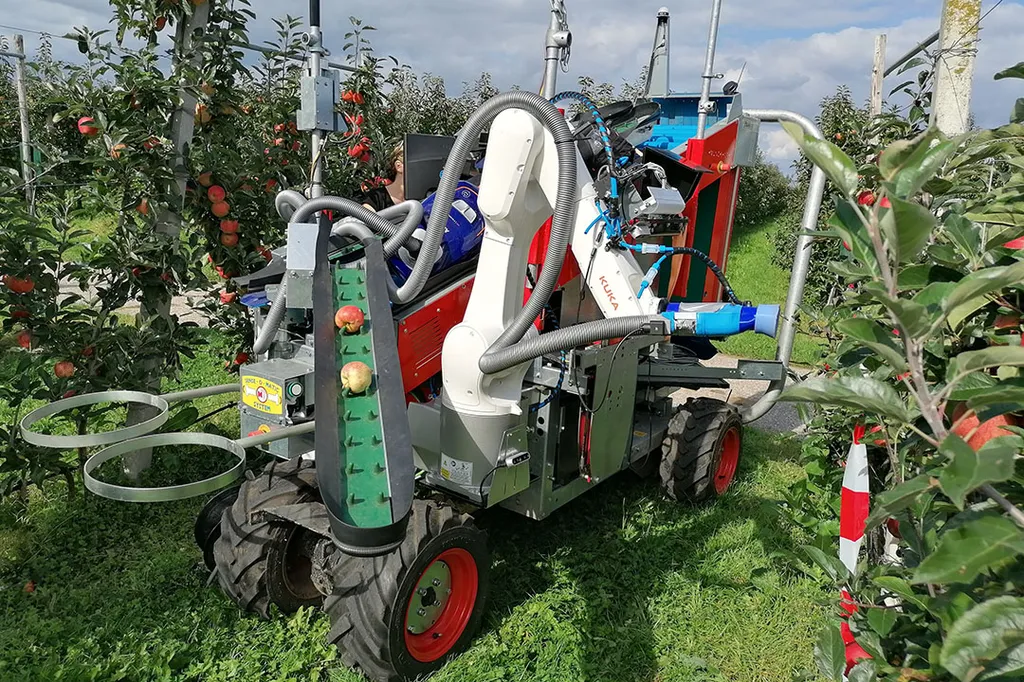
In a groundbreaking development poised to revolutionize the agricultural sector, researchers at Wageningen University & Research (WUR) are pioneering a new era of farm robotics. This innovation focuses on creating autonomous machines that farmers can control through natural language interactions, akin to conversing with ChatGPT. The initiative aims to simplify the complex array of apps, screens, and software platforms that currently overwhelm farmers, streamlining their operations and enhancing efficiency.
The research is centered around developing a smart, integrated interface that seamlessly connects autonomous tractors, field robots, drones, and farm management systems. This integration is crucial as it addresses a significant bottleneck in the adoption of agricultural robotics: the complexity of managing advanced machinery. According to Paul van Zoggel, a researcher at WUR, “Technically, robots are already very capable. The real challenge is managing all that technology in a way that works for farmers.”
Currently, each autonomous robot typically operates within its own software environment, leading to fragmentation that costs farmers valuable time and creates unnecessary barriers. The WUR team envisions replacing these disparate app-based controls with a voice-driven interaction system. Farmers would be able to issue instructions such as fertilizing a specific field, while the system responds with warnings or suggestions, taking into account weather forecasts, local conditions, and nitrogen regulations.
Ard Nieuwenhuizen, a researcher leading the technical development of the interface, emphasizes the practical need for such a system. “Farmers should be able to talk to their robots in the same way they talk to their employees,” he states. The concept leverages large language models (LLMs), similar to those powering consumer tools like ChatGPT, but these models will be trained exclusively on validated scientific and agronomic data. This approach ensures that the system provides reliable answers and recommendations grounded in crop models, regulations, and local farm data.
The potential impact of this innovation is profound. According to WUR, truly conversational interaction between farmers and autonomous machines could become a reality within the next five years. This development would represent a significant shift in agricultural technology, moving beyond smarter robots to systems that actively think along with the farmer. These systems would warn against risky decisions and help optimize operations across the entire farm.
The implications of this research extend beyond mere convenience. By reducing the complexity of managing advanced agricultural technology, WUR’s initiative could accelerate the adoption of robotics in farming. This, in turn, could lead to more precise and efficient agricultural practices, ultimately benefiting both farmers and consumers. The next leap in ag-robotics may not come from hardware alone but from how farmers communicate with their machines, heralding a new era of intuitive and integrated farm management.