
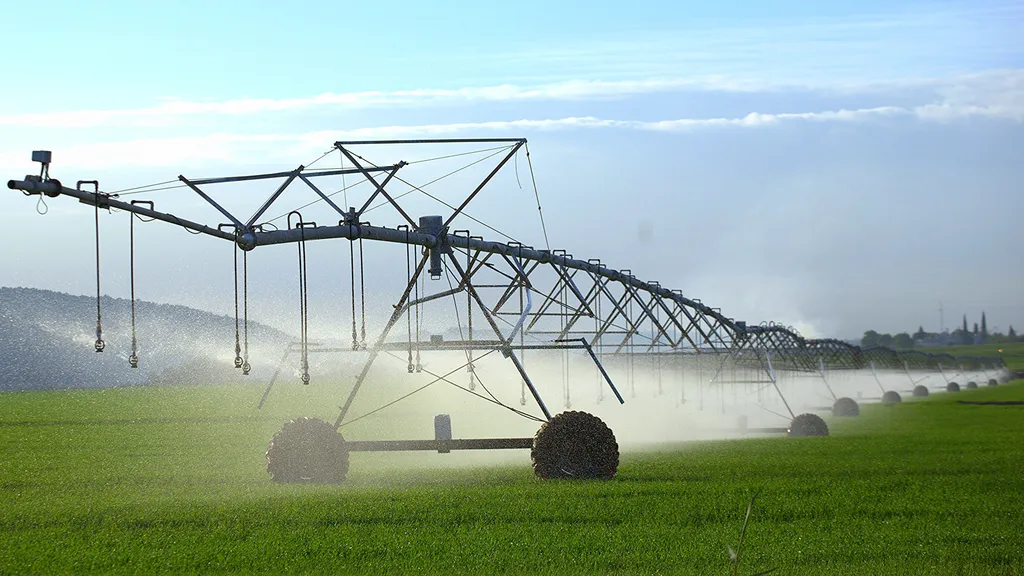
In the heart of Italy’s Campania region, a groundbreaking study is reshaping the way we think about water management in agriculture. Published in the journal ‘Economia Agro-Alimentare’, the research led by Marica Furini from the CREA Research Centre for Agricultural Policies and Bioeconomy in Rome, offers a novel approach to irrigation using treated wastewater, potentially revolutionizing the agricultural sector.
The study addresses a critical challenge: ensuring a sustainable water supply for agriculture amidst climate change. By reusing treated wastewater for irrigation, the research proposes a solution that could significantly bolster the region’s agricultural resilience. “The reuse of treated wastewater is increasingly recognized as a key strategy for ensuring a sustainable water supply in agriculture,” Furini explains. This approach not only conserves precious freshwater resources but also provides a reliable water source for crops, even during droughts.
The innovative methodology integrates data from three primary sources: SIGRIAN for mapping irrigated areas, EEA/SINTAI for classifying wastewater treatment plants, and AGEA for identifying land use in irrigated areas. This integration allows for the association of water quality classes required for each crop with those potentially available from wastewater treatment plants, all while considering the existence of suitable distribution infrastructures.
The focus on high-value crops certified as PDO (Protected Designation of Origin) and PGI (Protected Geographical Indication) adds a layer of economic significance to the study. These certifications are a mark of quality and authenticity, often commanding premium prices in the market. By ensuring a stable water supply for these crops, the research could enhance the commercial viability and profitability of Campania’s agricultural sector.
The results of the analysis highlight the potential of this methodology to guide public policies towards targeted infrastructure investments. These investments aim to protect areas most vulnerable to drought and support high-value crops through advanced technological solutions and integrated water resource planning. “This approach can effectively guide public policies in promoting targeted infrastructure investments,” Furini notes, underscoring the practical applications of the research.
The implications of this study extend beyond Campania, offering a blueprint for other regions grappling with water scarcity and climate change. By adopting similar methodologies, agricultural sectors worldwide could enhance their resilience and long-term prosperity. The research also underscores the importance of integrated water resource planning and the adoption of advanced technological solutions in ensuring the sustainability of the agricultural sector.
As the world faces increasing water challenges, the reuse of treated wastewater for irrigation emerges as a promising strategy. This study not only advances our understanding of water management in agriculture but also paves the way for innovative solutions that could shape the future of the agricultural sector. With the potential to enhance commercial impacts and ensure the resilience of high-value crops, this research marks a significant step forward in the quest for sustainable agriculture.