
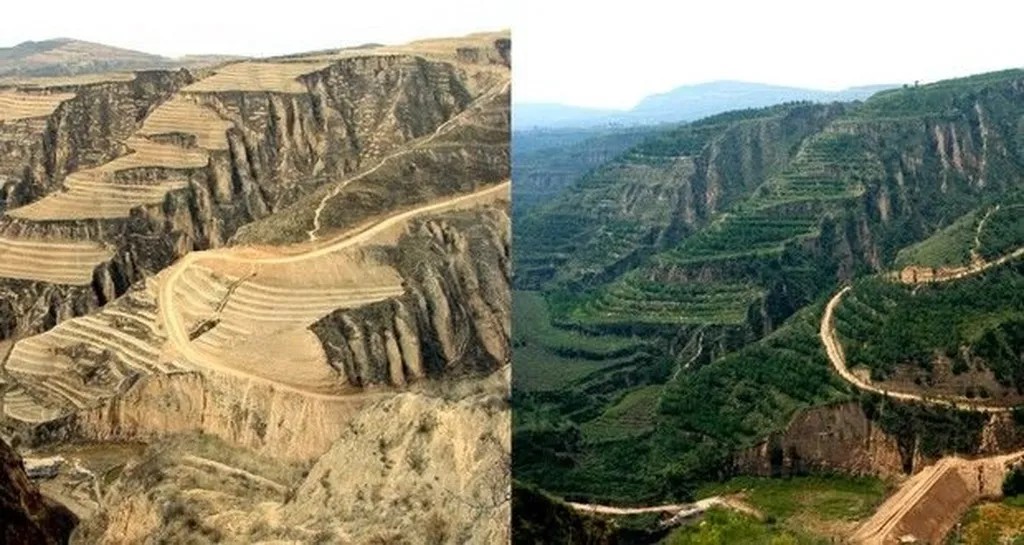
In the heart of China’s Loess Plateau, a three-year study has uncovered a promising strategy to boost winter oilseed rape yields while slashing water use and fertilizer inputs. The research, led by Zijun Tang from Northwest A&F University and Xinjiang Research Institute of Agriculture in Arid Areas, offers a beacon of hope for dryland agriculture, where water scarcity and soil degradation pose significant challenges.
The study, published in *Agricultural Water Management*, explored the interactive effects of different mulching techniques and nitrogen (N) management on the yield and water productivity of winter oilseed rape (Brassica napus L.). The findings reveal that combining film mulching with moderate nitrogen rates can significantly enhance yield and water productivity, offering a sustainable solution for arid and semi-arid regions.
“Film mulching combined with moderate N (210 kg ha⁻¹) achieved a robust seed yield of 3762.7 kg ha⁻¹, comparable to the highest N rate but with 25% less fertilizer input,” Tang explained. This approach also attained superior water productivity, reaching 10.83 kg ha⁻¹ mm⁻¹, a remarkable feat in water-scarce environments.
The research introduced a novel coupled “water–light” efficiency index to diagnose leaf physiological status, providing a new tool for farmers and agronomists to optimize crop management. Structural equation modeling further quantified the driving mechanisms behind these improvements, highlighting the intricate interplay between water supply, physiological demand, and yield formation.
“Film mulching acted as a hydrological regulator by reducing evaporation and stabilizing root-zone soil water,” Tang noted. This stable environment allowed moderate nitrogen to function as a physiological activator, enhancing leaf chlorophyll content and photochemical efficiency without the excessive water depletion often caused by high N inputs.
The study’s findings have significant commercial implications for the agriculture sector. By adopting film mulching with moderate nitrogen rates, farmers can achieve higher yields while reducing input costs and environmental impact. This strategy not only improves water productivity but also promotes sustainable agriculture practices, crucial for long-term food security in dryland regions.
As the global population grows and climate change intensifies, the demand for efficient and sustainable agricultural practices will only increase. This research provides a valuable roadmap for optimizing crop production in water-scarce environments, offering a glimpse into the future of dryland agriculture.
“Prioritizing film mulching with moderate N harmonizes water supply and physiological demand, offering a sustainable strategy for dryland agriculture,” Tang concluded. With further research and implementation, this approach could revolutionize crop management practices worldwide, paving the way for a more resilient and productive agricultural sector.