
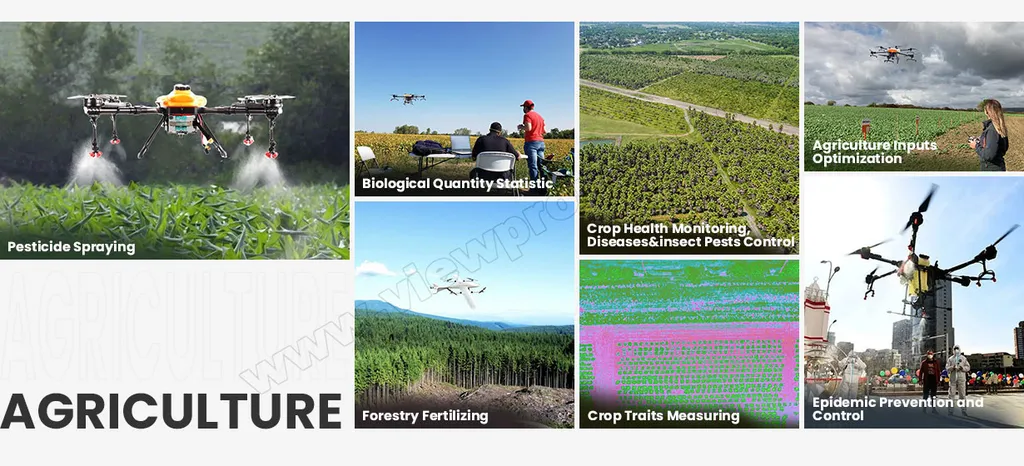
In the ever-evolving landscape of agriculture, technology continues to play a pivotal role in enhancing efficiency and productivity. A recent study published in *Frontiers in Plant Science* offers a glimpse into the future of precision agriculture, focusing on integrated pest management and crop health monitoring. The research, led by Hui Li from the College of Engineering and Technology at Southwest University in Chongqing, China, delves into the intricate world of precision information identification and its potential to revolutionize field management.
Precision agriculture is not a new concept, but the integration of advanced technologies to identify and manage pests and crop health is gaining momentum. The study highlights the importance of real-time data processing and analysis in making informed decisions that can significantly impact crop yields and reduce environmental impact. “By leveraging cutting-edge technologies, we can achieve a more sustainable and efficient approach to agriculture,” Li explains. This approach not only benefits farmers but also has broader implications for the agricultural industry and consumers.
One of the key aspects of the research is the use of integrated control systems that combine various data sources to provide a comprehensive view of crop health and pest infestations. These systems utilize sensors, drones, and satellite imagery to collect data, which is then processed using advanced algorithms to identify patterns and anomalies. This real-time information allows farmers to take targeted actions, such as applying pesticides only where and when they are needed, thereby reducing costs and minimizing environmental impact.
The commercial impact of this research is substantial. For farmers, the ability to monitor crop health and pest infestations in real-time can lead to significant cost savings and increased yields. “Precision agriculture is not just about technology; it’s about empowering farmers with the tools they need to make better decisions,” Li notes. This empowerment can lead to more efficient use of resources, reduced waste, and ultimately, higher profitability.
Moreover, the integration of these technologies can also benefit the broader agricultural industry. By reducing the need for widespread pesticide use, the environmental impact of farming can be minimized, leading to more sustainable practices. This is particularly important in the face of climate change and the increasing demand for food production.
The research also opens up new avenues for future developments in the field. As technology continues to advance, the integration of artificial intelligence and machine learning can further enhance the accuracy and efficiency of these systems. This could lead to even more precise and targeted interventions, further improving crop yields and reducing environmental impact.
In conclusion, the study published in *Frontiers in Plant Science* by Hui Li and colleagues offers a promising glimpse into the future of precision agriculture. By integrating advanced technologies for pest identification, crop health monitoring, and field management, farmers can achieve more sustainable and efficient practices. The commercial impacts of this research are far-reaching, benefiting not only individual farmers but also the broader agricultural industry and consumers. As technology continues to evolve, the potential for further advancements in this field is immense, paving the way for a more sustainable and productive future in agriculture.