
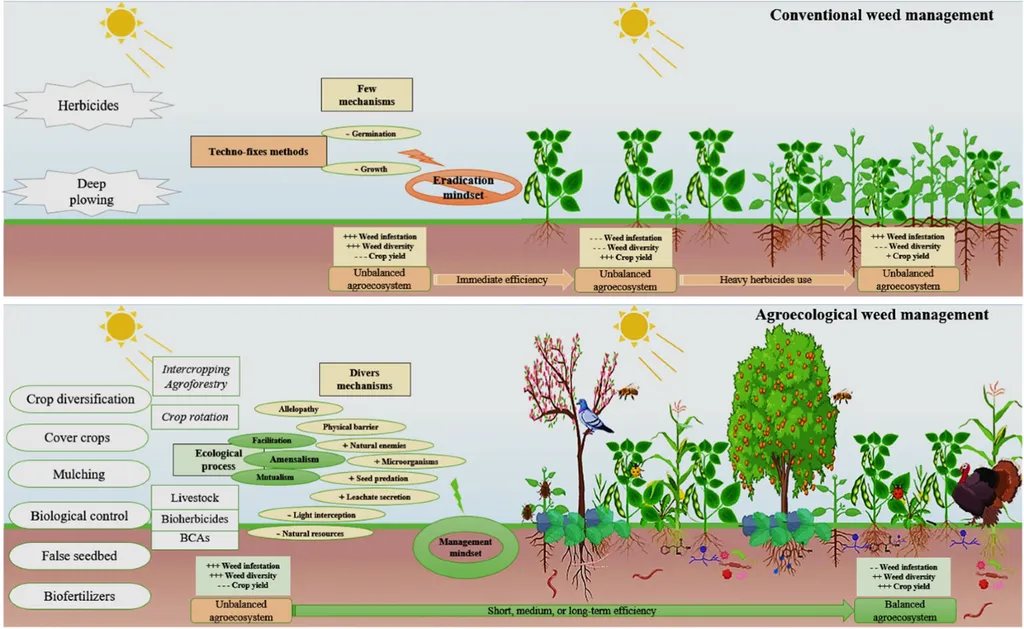
In the heart of Europe, a quiet revolution is taking root, one that could reshape the way farmers tackle one of agriculture’s most persistent foes: weeds. As concerns about the environmental and health impacts of synthetic herbicides grow, so too does the demand for sustainable alternatives. Enter Agroecological Weed Management (AWM), a strategy that’s gaining traction and is now the focus of several EU-funded research projects.
Weeds are more than just an eyesore in fields; they’re a significant challenge that can drastically reduce crop yields, threatening food security and biodiversity. Synthetic herbicides have long been the go-to solution, but their widespread use is increasingly scrutinized. The European Union is pushing for a drastic reduction in pesticide use, and farmers are looking for effective, sustainable alternatives.
AWM is a holistic approach that integrates ecological principles and a variety of practices, from crop rotation and cover cropping to digital tools and mechanical methods. It’s not just about controlling weeds; it’s about balancing productivity with environmental conservation. As Alexandros Tataridas, lead author of a recent article published in ‘Open Research Europe’ and a researcher at the University of Coimbra, puts it, “AWM is about co-designing solutions with stakeholders across the agri-food value chain, prioritizing non-chemical approaches that enhance biodiversity and improve soil health.”
The potential commercial impacts for the agriculture sector are substantial. By reducing reliance on synthetic herbicides, farmers can lower input costs and tap into growing consumer demand for sustainably produced food. Moreover, AWM practices can improve soil health and biodiversity, leading to more resilient farms and increased yields in the long run.
However, the transition to AWM is not without its challenges. Farmers face economic pressures and a lack of education and training in alternative weed management strategies. There’s also the issue of overreliance on herbicides, a habit that’s deeply ingrained in modern agriculture.
To address these challenges, three EU-funded projects are conducting research on AWM approaches. Their collective vision, as outlined in the article led by Tataridas from the Department of Life Sciences at the University of Coimbra, is to make weed management more sustainable and keep EU agriculture competitive.
The research is still ongoing, but the potential is clear. As Tataridas notes, “This paradigm shift aligns with European Union targets to drastically reduce pesticide use in the coming years and promote sustainable farming practices.” The findings from these projects could shape the future of weed management in Europe and beyond, offering farmers a roadmap to a more sustainable and profitable future.
In the coming months, these projects will document their methodologies, findings, and progress, providing valuable insights for farmers, policymakers, and agribusinesses alike. As the agriculture sector grapples with the challenges of sustainability and food security, AWM could emerge as a key strategy, helping farmers to control weeds while protecting the environment and their bottom line.