
At CES 2026, Kubota reaffirmed its global vision to become an “Essentials Innovator for Supporting Life,” a mission that underscores the company’s commitment to addressing critical challenges in agriculture, including labor shortages, an aging workforce, and the pressing need for enhanced productivity. The event served as a platform for Kubota to showcase its latest innovations, emphasizing a human-centric approach to technology and automation.
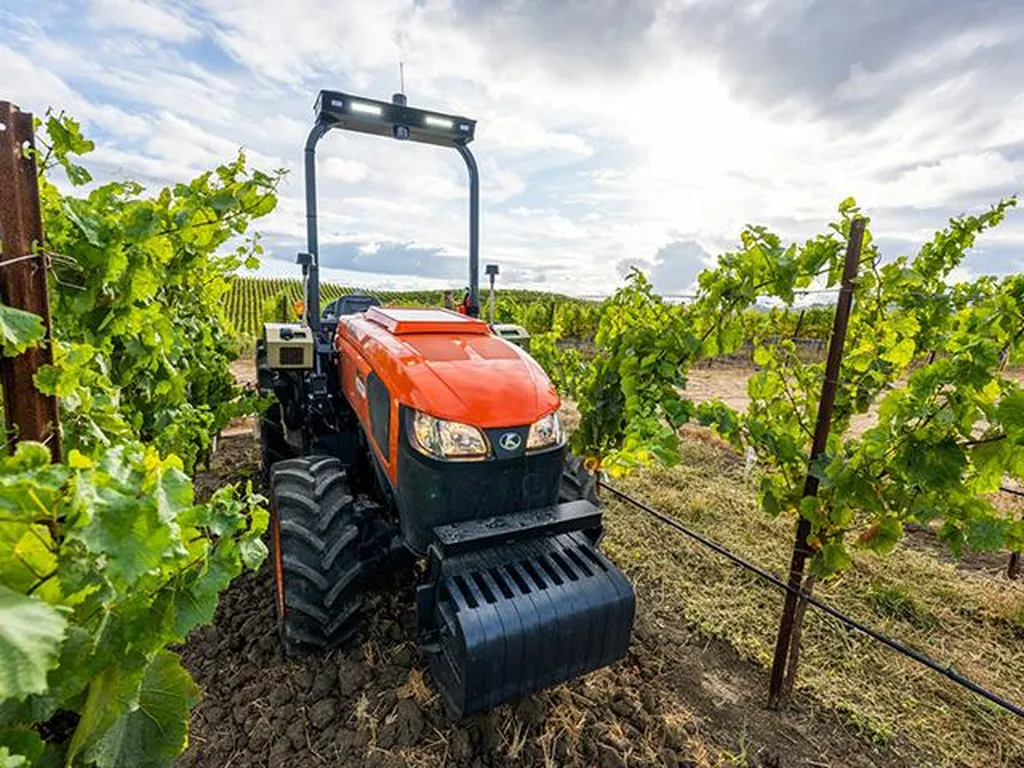
Central to Kubota’s announcements was the commercialization of an autonomous specialty tractor, developed in collaboration with Agtonomy. This advanced tractor, integrated into the Kubota M5 Narrow diesel model, is designed to revolutionize specialty crop operations. By leveraging advanced sensing and artificial intelligence, the autonomous system promises to deliver flexibility and reliability, enabling farmers to operate more efficiently in real-world agricultural environments. This development is a significant step towards mitigating labor challenges and boosting productivity in the sector.
In addition to the autonomous tractor, Kubota introduced a concept versatile platform robot, dubbed the KVPR. This “transformer” robot is engineered to expand, contract, and move along multiple axes, offering the functionality of several machines within a single adaptable platform. The KVPR is designed to support a wide range of tasks across different seasons and operating conditions, reflecting Kubota’s focus on versatility and adaptability.
Kubota also showcased its Digital Twinning technology, a real-time, persistent monitoring system that can scale from tracking individual plants to managing entire agricultural operations. This data-driven approach underscores Kubota’s commitment to compact, intuitive solutions that prioritize the human experience, ensuring that technology serves to enhance rather than complicate agricultural practices.
Todd Stucke, General Manager of Agri Solutions Headquarters at Kubota Japan and President of Kubota North America, emphasized that the company’s innovations are driven by customer needs rather than automation for its own sake. “Our approach is about rethinking how work is performed to make it more intuitive and efficient,” Stucke noted. Brett McMickell, Chief Technology Officer for Kubota North America, highlighted physical AI as a key inflection point for the industry, stating that advancements in decision-making, obstacle detection, and voice recognition will enable real-time insights to support tasking, labor allocation, and operational efficiency.
Early field use of Kubota’s autonomous tractor has already shown promising results. Marc Di Pietra, Regional Service Maintenance Manager for Treasury Wine Estates, shared that the deployment of the Kubota M5 Narrow tractor for mowing and under-vine cultivation has significantly reduced rework and improved efficiency. This early adoption highlights the practical benefits of Kubota’s innovations, allowing teams to focus on higher-value tasks.
Kubota’s long-term innovation approach is rooted in its over 130-year history of addressing societal challenges through engineering. From early water infrastructure projects in Japan to the development of compact tractors and excavators, the company has consistently aimed to deliver smarter, intuitive solutions. The open-platform approach and emphasis on flexibility are intended to accelerate the delivery of technologies that adapt to evolving agricultural and industrial needs.
In conclusion, Kubota’s announcements at CES 2026 reflect a broader strategy to design compact, human-centered technologies that support productivity while addressing the critical challenges facing modern agriculture. By focusing on customer choice and human-centric design, Kubota is poised to make significant strides in enhancing the efficiency and sustainability of agricultural practices worldwide.