
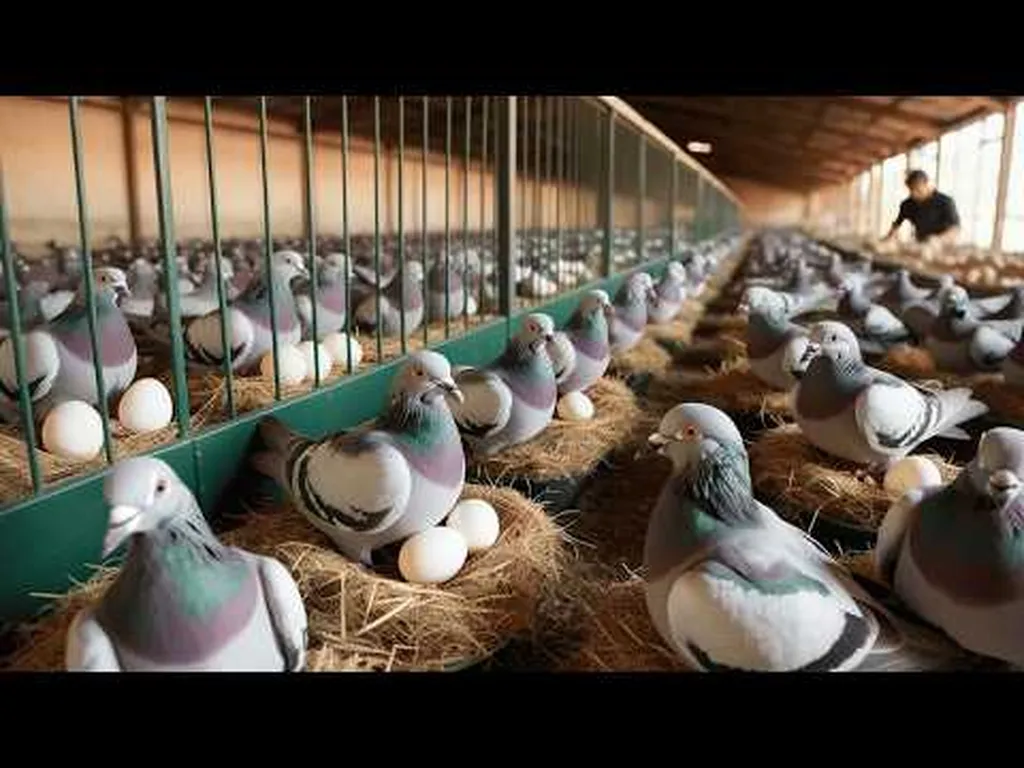
In the world of poultry science, the humble pigeon is often overlooked, but a groundbreaking study published in *Poultry Science* is set to change that. Researchers, led by Leyan Yan from the Key Laboratory for Crop and Animal Integrated Farming at the Jiangsu Academy of Agricultural Sciences, have uncovered how manipulating light schedules can significantly boost reproductive performance in male White King pigeons. This research could have substantial commercial impacts for the agriculture sector, particularly in pigeon farming and broader poultry production.
The study explored the effects of different photoperiod regimes on the reproductive performance, testicular morphology, hormone profiles, and gene expression of the hypothalamic–pituitary–testicular axis in male pigeons. The findings are nothing short of remarkable. By restricting light during the rearing period and then applying specific photostimulation, the researchers observed a dramatic improvement in egg output and fertility rates.
“Light restriction during the rearing period and then photostimulation with 14L:10D or 16L:8D produced the highest egg output and fertility rates,” Yan explained. “This suggests that carefully managed light schedules can optimize reproductive performance in male pigeons.”
The study revealed that pigeons under the S-14L:10D photoperiod exhibited larger bilateral testes, increased seminiferous-tubule diameter and epithelial thickness, and elevated numbers of spermatogenic cells. These pigeons also had significantly higher plasma concentrations of follicle-stimulating hormone (FSH), luteinizing hormone (LH), and testosterone, while prolactin levels were reduced.
The researchers also found that the optimal light program up-regulated genes involved in the hypothalamic–pituitary–testicular (HPT) axis, such as GnRH, FSH, LH-receptor, and steroidogenic enzymes, while down-regulating genes like GnIH, VIP, and PRL. This optimal light schedule also increased the expression of deep-brain photoreceptors, suggesting a shift toward non-visual photoperception that drives reproductive activation.
The implications for the agriculture sector are profound. By understanding and manipulating photoperiods, farmers can potentially enhance the reproductive performance of their pigeon flocks, leading to increased productivity and profitability. This research could also have broader applications in other poultry species, as the underlying mechanisms of photoperiodic regulation are likely to be conserved across birds.
As the agriculture industry continues to seek sustainable and efficient ways to boost productivity, this study offers a promising avenue for exploration. By harnessing the power of light, farmers can optimize the reproductive health of their birds, ultimately contributing to a more productive and sustainable agricultural sector.
The research, published in *Poultry Science* and led by Leyan Yan from the Key Laboratory for Crop and Animal Integrated Farming at the Jiangsu Academy of Agricultural Sciences, represents a significant step forward in our understanding of photoperiodic regulation in poultry. As the industry continues to evolve, this knowledge could prove invaluable in shaping future developments and practices.